
How Does Fuel Tank Size Affect Motorcycle Range and Handling?
SOURCE: KOVE
For most riders, fuel tank capacity is one of the first specs they look at. That’s a good thing. Nobody wants to be staring at a blinking fuel gauge on a lonely road with no fuel station in sight. But bigger tanks are not always better. The extra fuel impacts how far you can ride, and it changes how the bike feels underneath you.
This guide examines the relationship between fuel tank size, range, weight and handling. It also helps you figure out the right size for how you ride.
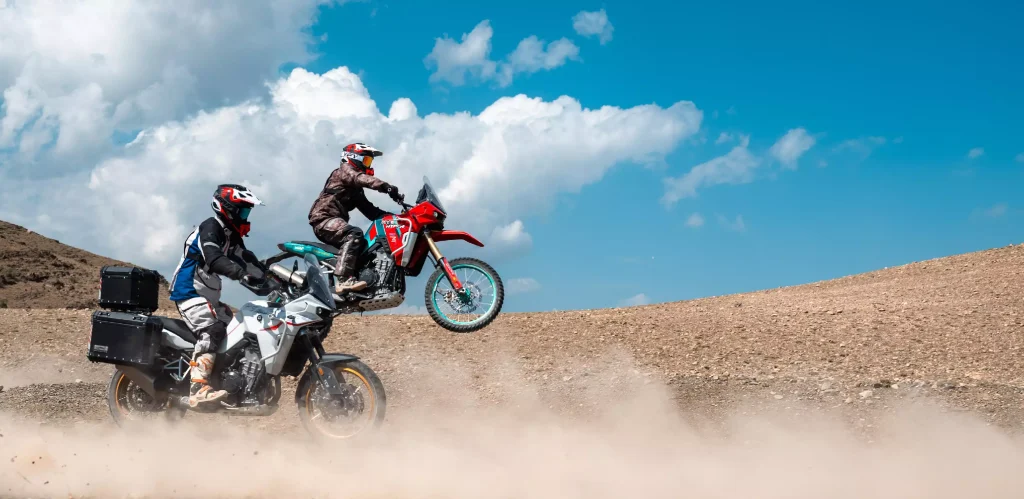
How Far Can You Go on a Full Tank
The range of a motorcycle depends on the size of the fuel tank and the fuel consumption of the motorcycle. That’s why two bikes with the same fuel tank capacity can have very different ranges.
For example, a 20 L tank at a fuel consumption rate of 5 L/100 km gives a theoretical range of about 400 km. At 6.5 L/100 km, the theoretical range drops to around 308 km. In practice, the usable range will be shorter because it’s wise to leave a fuel reserve.
Motorcycle fuel usage in the real world changes depending on how and where you ride:
- Speed: The faster you go, the more wind resistance you have to face, and the more fuel the engine consumes.
- Terrain: Hills, sand and gravel roads all increase the engine’s workload.
- Load: Luggage, a passenger and significant accessories create drag and weight.
- Reserve: Treat the last liter or two as a safety margin, not as range you plan to use.
How Much Does Fuel Add to a Motorcycle’s Weight
Fuel is heavier than most bikers think. Fuel weighs around 0.75 kg per liter, so a 15 L tank adds about 11 kg, a 20 L tank about 15 kg and a 25 L tank about 19 kg.
Even the tank material makes a difference. The KOVE 800X Touring uses a plastic tank that weighs only 4.4 kg, which is 67% lighter than a metal one. Add a full 22 L of fuel and you are carrying roughly 16 kg more on top of that.
The bike’s weight also changes as fuel is used. As the tank empties, the bike becomes lighter, and some riders may notice a difference in how it responds to steering compared with just after a fill-up.
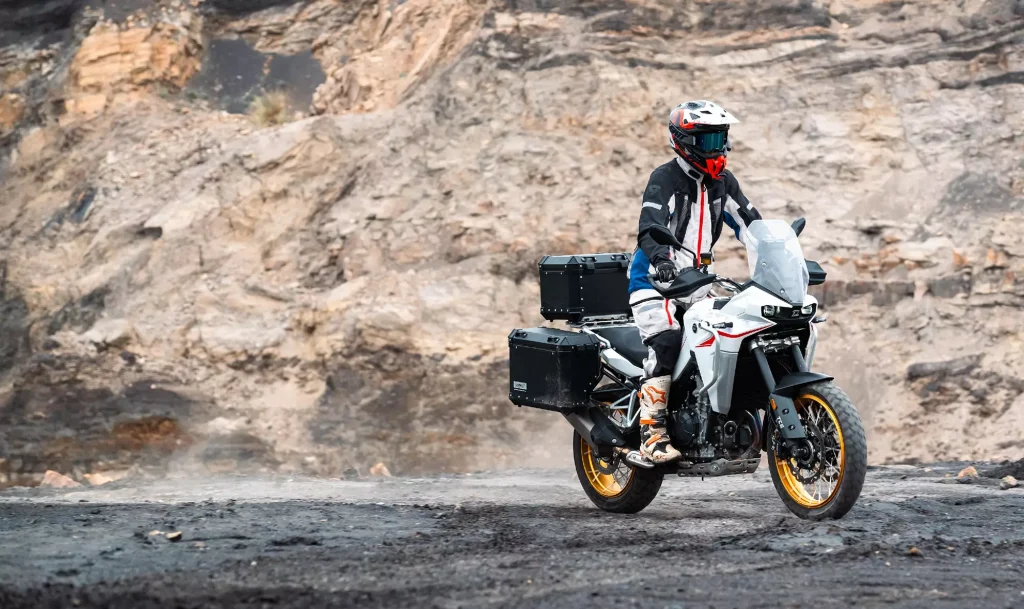
How Can a Larger Fuel Tank Affect Handling
Fuel weight isn’t the whole picture. The tank’s shape and position can affect how a motorcycle handles, even apart from the weight of the fuel it holds.
- Rider space: A wide tank can force your knees apart, making it harder to grip the bike with your legs, especially when standing on the pegs.
- Weight position: Fuel carried higher up or farther forward can affect the bike’s balance and steering feel.
- Low-speed control: U-turns, bumpy hills and tight singletrack need more work when the bike feels top heavy.
- Seat and reach: A big tank can affect your seating position and reach to the bars.
Therefore, the position of a tank is as important as the size of a tank. For example, the KOVE 800X Touring features an integrated 22 L mid-mounted plastic fuel tank. Its central layout helps lower the bike’s center of gravity while combining greater fuel capacity with reduced weight.
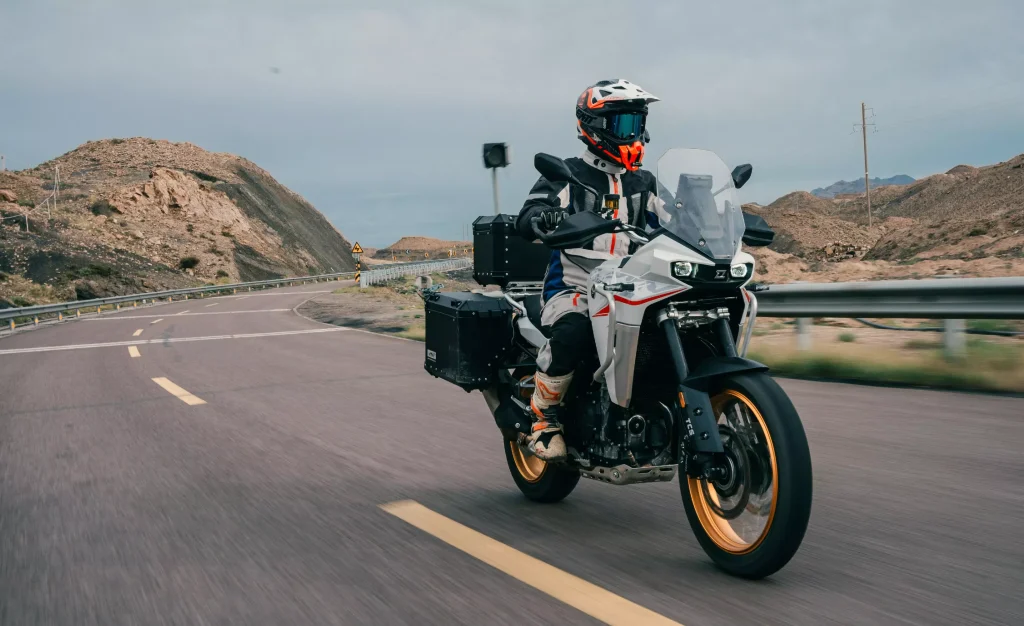
What Size Fuel Tank Do You Need for Your Riding
There is no single right answer. The ideal tank size depends on where you ride and how often you can refuel. A commuter and a rider exploring remote areas have very different fuel range requirements. Below is a table of what to consider for each riding style.
| Riding Style | What to Consider | Why It Matters |
| Daily commuting | Weight and overall size | Fuel stops are usually easier to plan |
| Weekend ADV trips | Range and handling | Some routes have long gaps between fuel stations |
| Long-distance touring | Range and fuel availability | Fewer fuel stops can make long rides easier to plan |
| Technical off-road riding | Weight balance and room to move | Low-speed control often matters more than maximum range |
A simple approach to apply this: think about the longest distance you routinely ride without refueling, and add a comfortable buffer. If most of your rides are short, a larger tank may simply add unnecessary weight.
Choose a Tank That Suits Your Riding
The best tank isn’t the one with the greatest number in the spec sheet, but the one that fits your routes. A longer range gives you more freedom, while a lighter, more compact setup can make the bike easier to handle. Most riders discover the perfect balance after they are honest with themselves about where they ride most.If you are still deciding, browse KOVE’s full range to find the one that matches your next ride.