
What Should Beginners Look for in a Lightweight Off-Road Motorcycle
SOURCE: KOVE
Your first loose-surface ride can feel far more demanding than it looked from the side-lines. A bike that seems impressive on paper may feel tall, heavy, or too sharp once you are dealing with ruts, slow turns, and uneven grip. That is why choosing a lightweight off-road motorcycle for beginners is less about chasing headline power and more about finding a machine that helps you stay relaxed, recover small mistakes, and repeat drills with confidence.
A good beginner off-road motorcycle should suit where you will actually ride, how much control you have at low speed, and how realistic the maintenance routine feels after a dusty day out. In other words, fit, weight, intended use, and supportability matter before prestige.
Which fundamentals matter before engine size or feature lists?
A lightweight off-road motorcycle for beginners should make basic control easier, not harder. Before you compare displacement, suspension brands, or styling, check whether the bike fits your body, your riding area, and your learning pace.
Fit and control should come before headline performance
If a motorcycle feels awkward in a car park, it rarely becomes easier once the ground turns loose. A beginner-friendly enduro bike or motocross model should let you move around naturally, dab a foot when needed, and turn at walking pace without tension.
What to check first:
– Manageable weight: lower mass usually makes lifting, correcting, and restarting less tiring.
– Seat height confidence: a tall seat is not automatically wrong, but it must match your balance and experience.
– Throttle response: predictable power helps you learn traction rather than fear it.
– Clutch feel: a progressive clutch makes starts, hill work, and tight turns far easier.
– Brake control: strong brakes are useful, but the lever feel should be easy to modulate.
Before heading onto loose ground, practise slow turns, controlled stops, and balancing the bike at walking pace. These skills make the first off-road sessions easier to manage.
Key off-road terms worth understanding early
Specifications become far more useful once you know what they mean on the trail or track. A few terms appear on nearly every shortlist, yet they affect beginners in very practical ways.
- Motocross: a track-focused format built for closed-course riding, jumps, berms, and repeated lap practice.
- Enduro: an off-road format intended for trails, varied terrain, and often longer mixed-surface sessions.
- Curb weight: the motorcycle’s ready-to-ride weight with fluids; this influences how heavy it feels during slow manoeuvres and recovery.
- Ground clearance: the distance between the underside of the bike and the ground; more clearance helps over rocks, ruts, and trail obstacles.
- Suspension travel: how much the suspension can move to absorb bumps; more travel usually improves composure on rough surfaces.
Your use case should narrow the shortlist quickly
Many first-time buyers look at bikes by engine size first. However, the better starting point is where the bike will spend most of its time.
- Closed-course track riding: usually rewards a lighter, simpler motocross setup.
- Tight woods or technical trails: favour manageable dimensions, calm control, and recovery ease.
- Open gravel or mixed terrain: needs stability and predictable chassis behaviour.
- Road-linked trail access: points you towards a street-legal enduro direction rather than a pure motocross machine.
If a bike feels manageable during slow turns and stop-start drills, you will have more attention to spare for reading the ground ahead.
A practical way to narrow the right bike type
Once you know the bike’s main job, the choice becomes much less confusing. This step-by-step screen helps you identify whether a so-called stable off-road motorcycle for learning is genuinely suitable or simply sounds suitable in sales literature.
Match the bike to where you will really ride
Most beginners improve faster when their first bike closely matches their actual riding environment. If your riding will be almost entirely on a practice track, a motocross-focused machine often makes more sense than a more complicated dual-purpose option. If you will ride trails and need to connect sections by road, an enduro model may be the better entry-level off-road motorcycle.
Use this quick filter:
– Private track only: favour low weight, direct handling, and repeated lap durability.
– Narrow technical trails: prioritise balance, steering precision, and recovery ease.
– Open gravel and learning drills: look for calm manners rather than aggressive response.
– Road-linked access: check legal suitability, lighting, and practical trail range.
Judge physical manageability, not ego
A bike can be technically excellent and still be wrong for a beginner. What matters is whether you can handle it when tired, off-camber, or slightly off line.
Try these checks in person:
– Lift-from-a-lean test: if the bike tips slightly, can you recover it without panic?
– Slow-turn feel: does it steer naturally at walking pace?
– Standing position: can you stand comfortably without feeling cramped or over-stretched?
– Touch points: bars, levers, and foot controls should feel natural straight away.
The DVSA’s off-road skills testing also highlights slow straight-line control and low-speed precision as common problem areas for riders who are still developing technique. (gov.uk)
Compare maintenance demands realistically
A beginner off-road motorcycle should be easy enough to care for that you will actually keep up with the routine. Dust, mud, chain wear, and fastener checks are part of ownership, so poor service access or weak documentation can turn a good bike into a frustrating one.
Look for:
– Straightforward air filter access after dusty rides
– Published manuals or service information
– Clear warranty terms
– Available after-sales contact
– Parts support that reduces downtime
KOVE provides manuals and service resources through its service area, which can reduce ownership friction for riders still learning maintenance habits.
Keep progression in mind without buying too much bike
You do not want to outgrow a bike immediately, but most beginners also do not benefit from starting with more power than they can use. The best learning platform usually has enough performance to keep teaching you for a long time, while still feeling calm enough that mistakes stay manageable.
A sensible shortlist should offer:
– enough power for skill growth,
– a stable chassis that rewards repeated practice,
– predictable response at low and mid speeds, and
– low enough weight that repeated recovery does not wear you out.
KOVE Lightweight options to assess by riding goal
KOVE’s off-road range gives beginners a useful spread of choices because the bikes are separated by purpose rather than just marketing language. That makes it easier to compare a track-first lightweight dirt bike against a more powerful motocross step-up or a road-linked trail option.
For track-first learners: KOVE MX250 Cross R
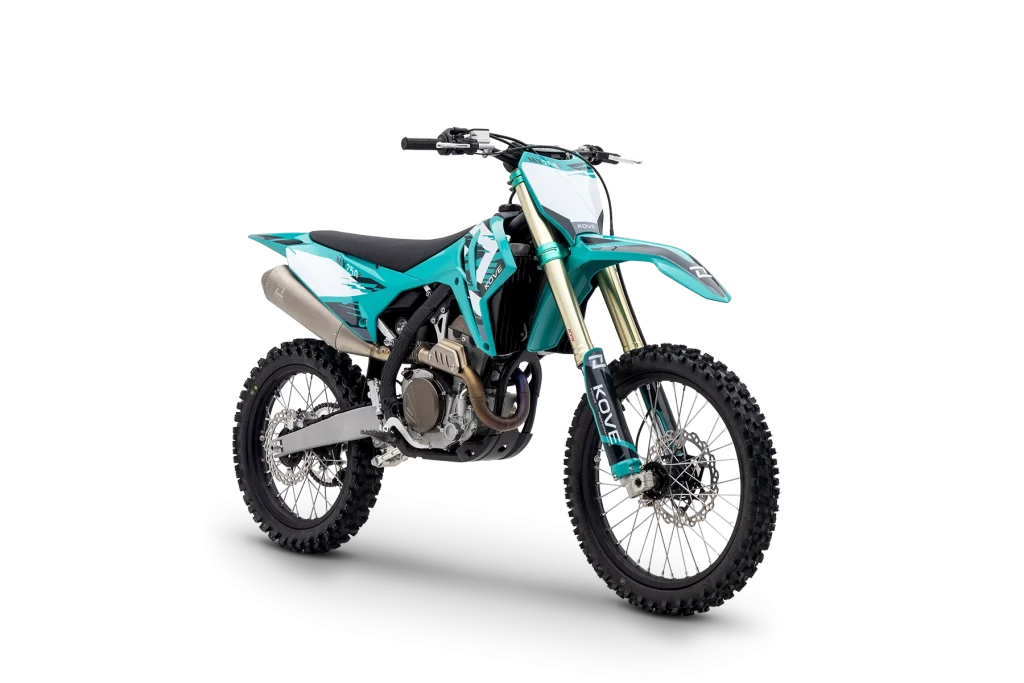
If your goal is to build core technique on a closed course, the KOVE MX250 Cross R is the clearest lightweight off-road motorcycle for beginners in this line-up. KOVE lists a 249.9 cc single-cylinder, water-cooled engine, a 97 kg curb weight, a 960 mm seat height, and a 7 L fuel tank. It also lists 310 mm of ground clearance and fully adjustable KYB suspension, which signals a proper motocross layout rather than a softened general-purpose compromise.
Why it makes sense for learners:
– the lower curb weight helps during low-speed mistakes and repeated restarts,
– the 250-class format is often easier to ride smoothly than a larger motocross bike,
– the specification is strong enough for skill growth without forcing a rushed progression.
In practical terms, this is the model to assess if your riding plan is practice laps, body-position work, corner drills, and confidence building on controlled terrain.
For riders who expect to want more motocross power later: KOVE MX450 Cross R
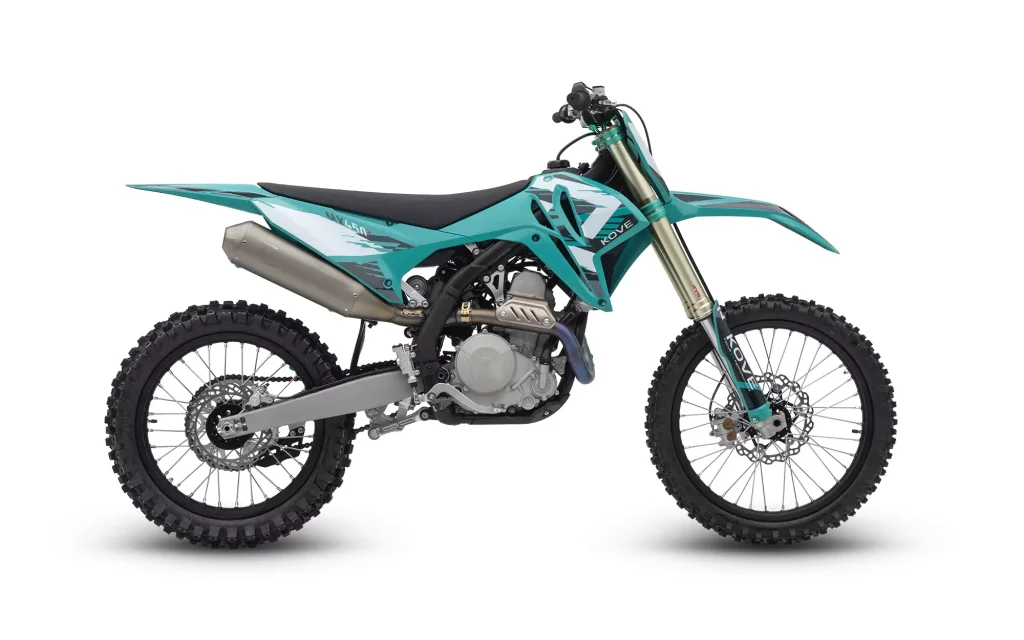
Some riders know they will progress quickly or already have useful throttle and clutch discipline from other bikes. In that case, the KOVE MX450 Cross R is a useful benchmark because it shows what changes when output rises but weight stays very close to the 250-class option. KOVE lists 449.9 cc single-cylinder, and a 98 kg curb weight for the MX450, alongside a 1490 mm wheelbase and 80/100-21 front plus 110/90-19 rear tyres.
What that means for a beginner:
– the weight penalty is small on paper,
– the performance ceiling is much higher,
– the margin for throttle mistakes is narrower.
For trail riders who need road-linked access: KOVE 450 Enduro RE
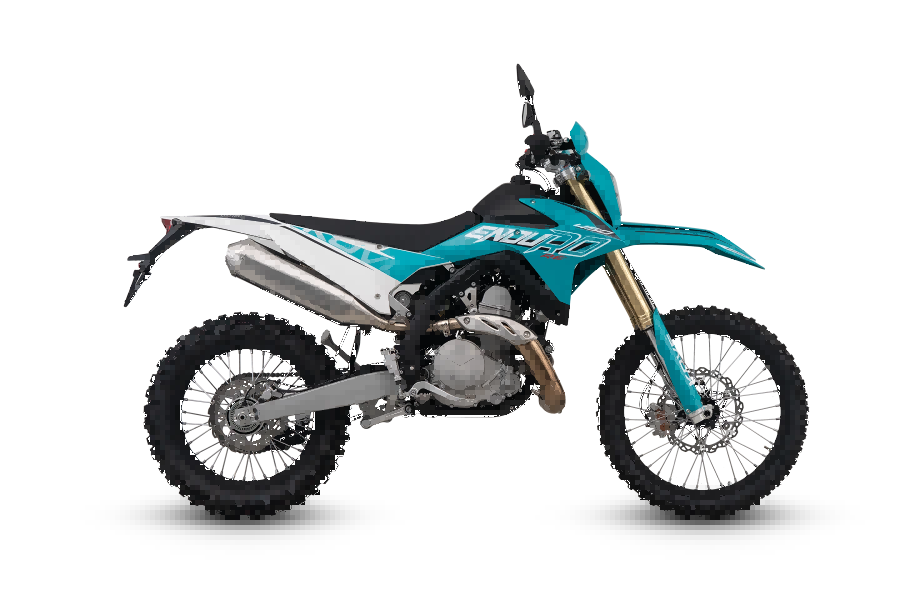
If your riding involves actual trails, changing surfaces, and occasional road links between sections, the KOVE 450 Enduro RE deserves a different kind of evaluation. KOVE lists a 120 kg curb weight, 285 mm of ground clearance, a 960 mm seat height, and a 9.5 L fuel tank for this model. Those numbers point to a more versatile package, but they also show the trade-off: extra practicality and access usually bring more weight than a pure motocross machine.
This model is best considered when:
– you need a trail-oriented format rather than a track-only one,
– your routes may include legal road connections,
– you value versatility more than the lightest possible feel.
For a beginner-friendly enduro bike, the question is not whether the bike is the lightest in absolute terms. It is whether its added capability fits your actual riding pattern well enough to justify the extra mass.
What to compare when two lightweight bikes both seem right
This is where many buyers get stuck. Two motorcycles can both look suitable, yet one will usually support faster learning because it aligns better with your terrain, confidence level, and maintenance habits.
Weight versus intended terrain
Lower weight helps almost everywhere, but especially where you make repeated corrections. In sand, ruts, or slow technical turns, a lighter bike is easier to save and easier to pick up. On the other hand, a trail model may add practical equipment or road-link capability that increases usefulness even if it adds kilograms.
Power delivery versus learning speed
Smoother response nearly always helps early progress. More output can become valuable later, but it shortens the margin for error. If low-speed drills already feel busy, more power is rarely the fix.
Seat height versus confidence at stops
A tall bike is manageable for many riders once technique develops. However, if every stop feels tense, your attention shifts away from terrain reading and clutch control. Confidence at low speed matters more than pride.
Supportability versus ownership stress
A motorcycle that is easy to inspect, clean, and service often keeps beginners riding more consistently. The Health and Safety Executive stresses the importance of maintenance checks such as tyre pressures, brakes, and throttle condition for off-road vehicles, which underlines why supportability should be part of the buying decision rather than an afterthought.
| Comparison point | Usually best for beginners | Watch-out sign |
| Weight | Lower curb weight for repeated practice | Feels tiring after short sessions |
| Power | Progressive, predictable delivery | Abrupt response masks technique issues |
| Seat height | Confidence at stops and slow turns | Constant tip-toe anxiety |
| Bike type | Matches your real riding area | Bought for image, not use |
| Support | Manuals and service access available | Routine care already feels unclear |
Smarter habits and common mistakes on your first shortlist
The best first purchase is rarely the most dramatic one. It is usually the bike that keeps you riding, practising, and improving instead of second-guessing every session.
Best practices for a safer, steadier first choice
A few habits make the selection process much more reliable:
– choose the riding purpose before you compare displacement,
– sit on the bike wearing proper kit if possible,
– check how natural the standing and seated positions feel,
– ask how routine air filter and chain service are handled,
– leave room in your budget for protective equipment.
Common mistakes that hold beginners back
Problems usually start when the buying decision is driven by image rather than learning conditions.
The most common errors are:
– buying too much bike too early, especially in power delivery;
– ignoring maintenance access, then skipping routine care after muddy rides;
– choosing by specification sheet alone, without checking real fit and control;
– forgetting the riding environment, such as buying track-first when road-linked trails are the real use case.
The main takeaway for first-time off-road buyers
A strong first choice feels manageable, predictable, and well matched to the ground you will ride most. If you are trying to choose a lightweight dirt bike or entry-level off-road motorcycle, start with fit, curb weight, control feel, and intended use before engine size becomes the deciding factor.
Within KOVE’s current range, the MX250 Cross R is the clearest track-first starting point for skill-building, the MX450 Cross R is a more demanding progression option, and the 450 Enduro RE makes more sense when trails and road-linked access matter. The right answer is not the most impressive specification. It is the bike you can control calmly enough to keep learning well.