
How to Choose the Best Motorcycle for City Commuting
SOURCE: KOVE
Most guides to city commuting motorcycles start with definitions and end with a list of “top picks.” That’s backwards. The real question riders are asking is simpler: will this bike make my commute easier, or harder? Weight, seat height, engine character, and riding posture matter far more in daily traffic than horsepower numbers ever will. We walk through the actual conditions you’ll face — stop-and-go traffic, tight turns, long red lights — and explain what to look for at each stage of your ride, not just what to buy.
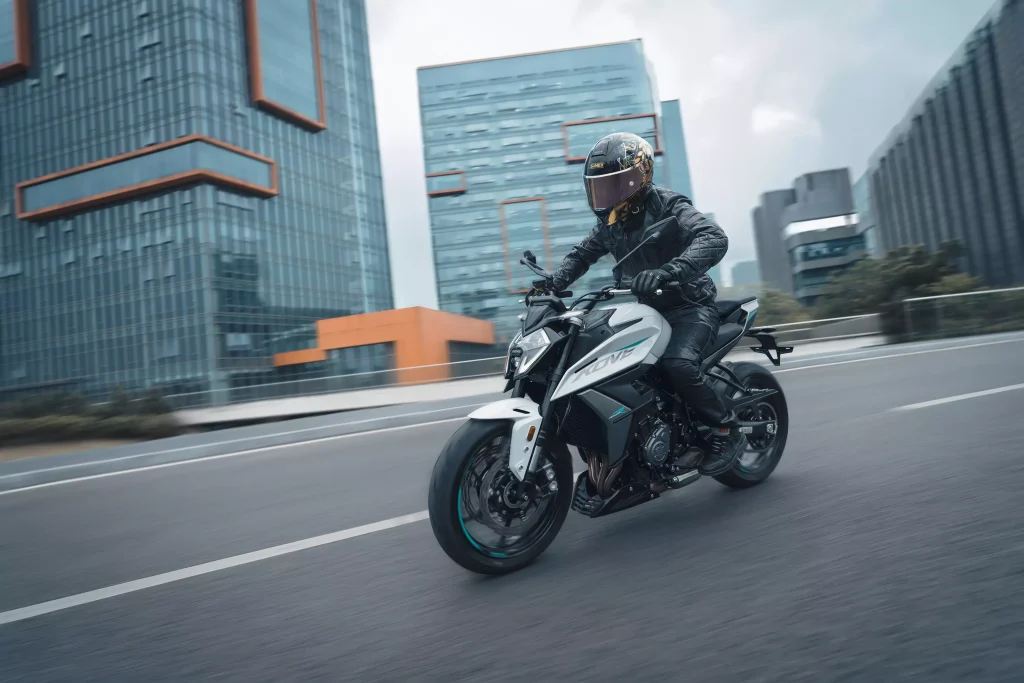
What Actually Makes a Motorcycle Good for City Commuting
Before comparing models, it helps to know what you’re actually evaluating. Five factors consistently separate a bike that feels effortless in traffic from one that feels like a chore:
- Curb weight — how tiring low-speed maneuvering becomes
- Seat height — how confident you feel at every stop
- Engine displacement and torque delivery — how smoothly you handle stop-and-go throttle control
- Riding posture — how your body holds up after 30–60 minutes in the saddle
- Maintenance simplicity — how much daily ownership actually costs you in time and money
None of these exist in isolation. A bike can look perfect on a spec sheet and still feel wrong the moment you’re threading through gridlock. The sections below unpack why.
How Much Does Motorcycle Weight Really Matter in Traffic?
Weight is invisible at speed but very present at a standstill. In heavy traffic, you spend more time paddling the bike forward with your feet, holding it upright at lights, and muscling it through U-turns than you do actually riding it. A heavier machine amplifies every one of those moments.
That doesn’t mean lighter is always better, though. A bike that’s too light can feel nervous on faster arterial roads or in strong crosswinds, especially if your commute includes any highway stretches. The right weight class depends on your route: pure inner-city riders benefit most from staying light, while mixed commuters (city plus expressway) need a bit more mass for stability at higher speeds.
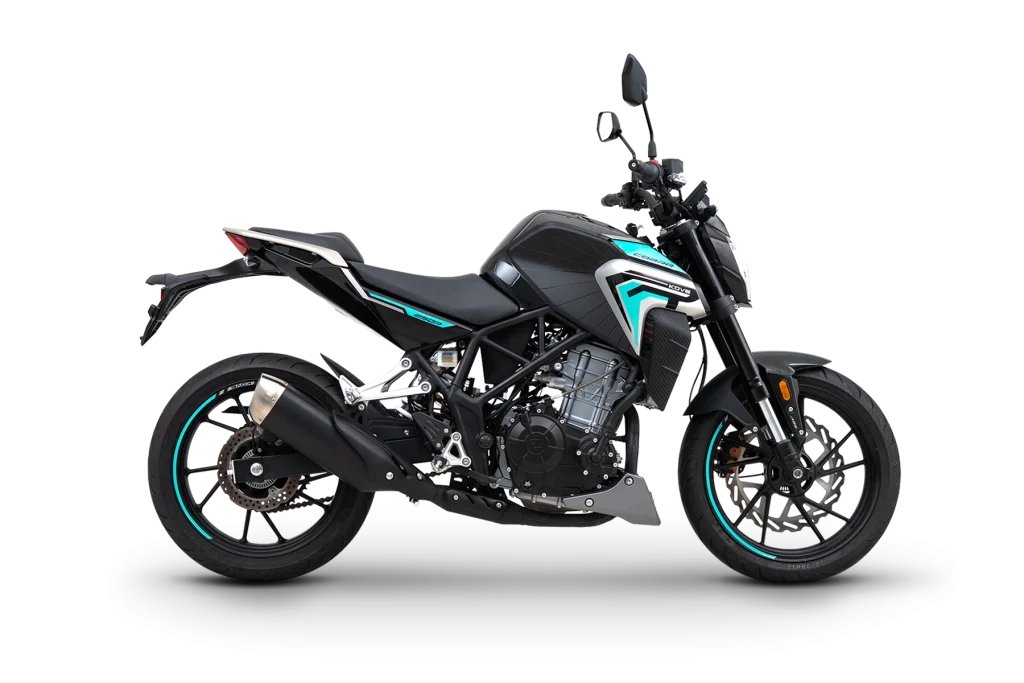
To put this into perspective, KOVE’s naked models — the 250R and 350R — both carry a curb weight of 153kg according to official specifications, which keeps low-speed handling manageable without feeling flimsy on faster roads. It’s a useful reference point: a bike in this weight range is light enough to paddle through a packed intersection but still substantial enough for a mixed commute.
Quick answer: Yes, weight matters — lighter bikes reduce fatigue in stop-and-go traffic, but very light bikes can feel unstable at highway speeds, so match weight to your actual route.
Seat Height and Low-Speed Confidence at Every Stop
Seat height gets overlooked because it seems like a comfort issue, not a safety one. In reality, it’s one of the biggest predictors of low-speed confidence. If you can’t get a stable footing at every red light, you’re more likely to tip the bike during the exact moments — starting from a stop, balancing in slow-moving traffic — where control matters most.
A simple way to self-check: stand next to the bike and see whether you can plant at least the balls of both feet firmly on the ground while seated. Full flat-footed contact is ideal for new riders or those under average height, while more experienced riders may be comfortable with a slightly higher seat if it means better ground clearance or a roomier riding position.
The KOVE 250R and 350R both list a 790mm seat height, which sits on the accessible end for a naked-style commuter and helps riders of varying heights get a confident stance at stops without needing to be tall. This is the kind of detail that matters more in daily traffic than most buyers realize until they’re stuck at a light on an incline.
Quick answer: Lower seat heights improve low-speed balance and stop confidence, especially for new or shorter riders — but they shouldn’t come at the cost of adequate ground clearance for your roads.
Do You Need a Bigger Engine for City Commuting?
This is where a lot of new riders get it wrong. Bigger displacement doesn’t automatically mean a better commuter — it often means a harder one. Larger engines can have sharper power delivery, heavier clutch pulls, and more abrupt low-rev response, all of which turn stop-and-go traffic into a workout rather than a routine.
What actually matters for commuting is torque delivery at low RPM and how progressively the throttle responds just off idle — the range you’re living in for most of a city ride. A bike that pulls smoothly from a stop without snatching is far less tiring than one that needs to be revved hard just to get moving.
That said, displacement isn’t irrelevant — it’s about matching it to your commute type. KOVE’s naked lineup illustrates the range well: the 250R (249cc, 24kW) suits shorter, purely urban commutes; the 350R (344cc, 35kW) adds a margin of power for commutes that mix city streets with faster arterial roads; and the 450R (443cc, inline-four, 48kW) is built for riders who want stronger acceleration and higher top-end capability for longer, mixed-speed routes. None of these is inherently “the” commuter bike — the right choice depends on how much of your ride happens below 40 km/h versus on faster roads.
Quick answer: Not necessarily. Smooth low-RPM torque delivery matters more than raw displacement for stop-and-go traffic; bigger engines only help if your commute includes sustained higher-speed stretches.
Riding Posture and Long-Term Comfort
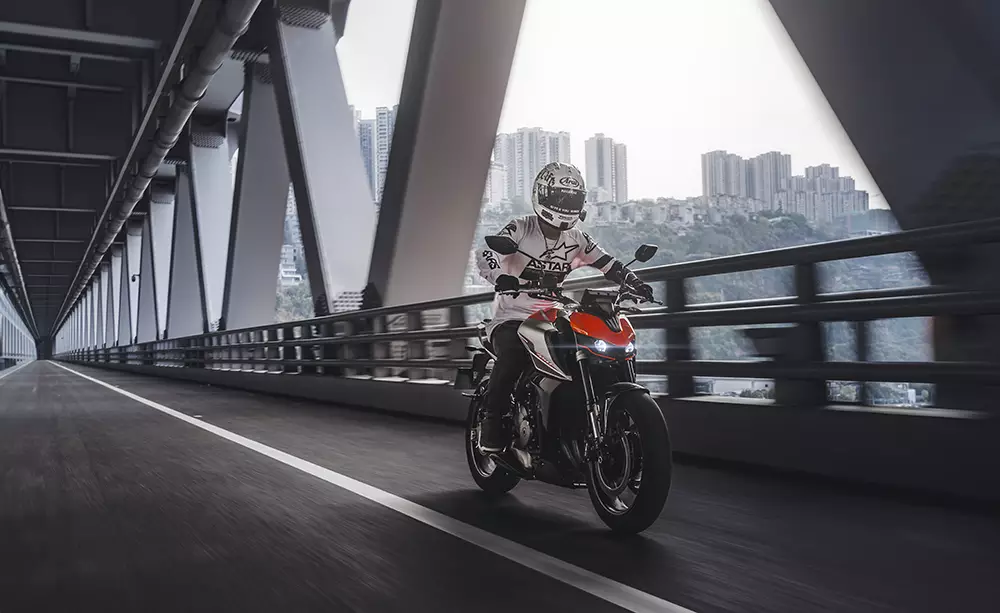
A 15-minute commute can hide a lot of problems with riding position. A 45-minute commute usually won’t. Wrist pressure, neck tension, and lower-back fatigue may not show up during a short test ride, but they can become very noticeable when you ride the same route five days a week.
For everyday commuting, an upright riding position is usually easier to live with than an aggressive sportbike posture. A more upright position keeps your upper body relaxed and puts less pressure on your wrists, which can make a difference when you’re sitting in traffic or riding for 30–60 minutes at a time. That doesn’t mean every commuter needs a completely upright bike. What matters is whether the handlebars, seat, and footpegs work together comfortably for your body.
Pay attention to how you feel after riding, not just how the bike feels during the first few minutes. Your knees shouldn’t feel cramped, your wrists shouldn’t carry most of your body weight, and you shouldn’t have to reach too far for the handlebars. If possible, spend enough time on the bike to get a realistic sense of your normal riding position.
Quick answer: For longer daily commutes, prioritize a riding position that keeps your wrists, shoulders, and lower back relaxed rather than choosing based on appearance or performance alone.
Body Size, Turning Radius, and Tight City Streets
Your body size and the physical size of the motorcycle both become important when space is limited. A bike may feel perfectly manageable on an open road but become much less convenient when you’re making a U-turn in a narrow street, backing into a parking space, or moving slowly through crowded traffic.
Overall width is worth paying attention to, especially if your route includes narrow lanes or tight parking areas. Wheelbase also affects how a motorcycle behaves at low speeds. A shorter wheelbase can make U-turns and tight turns easier, although steering geometry, handlebar position, and the rider’s own technique also make a difference.
Fit matters just as much as dimensions. Check whether you can reach the handlebars comfortably, operate the controls without stretching, and move the motorcycle around when you’re off the seat. A seat height that looks manageable on paper may still feel awkward if the bike is wide or the handlebars are difficult to reach.
During a test ride, don’t only ride in a straight line. Try a slow U-turn, make a few tight turns, stop and restart several times, and park the bike. These simple movements often reveal whether a motorcycle actually suits your daily route.
Quick answer: For tight city streets, look at overall width, wheelbase, steering feel, and rider fit—not just seat height.
Fuel Economy and Real-World Maintenance Costs
Fuel economy matters more when a motorcycle is part of your daily routine. Stop-and-go traffic, frequent acceleration, and long periods of idling can all push real-world fuel consumption above the figures you see in manufacturer specifications. Those numbers are still useful for comparing motorcycles, but they shouldn’t be treated as a guarantee of what you’ll get on your commute.
Where available, owner reports and independent road tests can give you a better idea of how a motorcycle performs in everyday traffic. Your own route matters too. A short trip through heavy congestion will produce very different fuel consumption from a longer commute on open roads.
Maintenance deserves the same attention. A motorcycle that is easy to service and has readily available parts can save more time than a small difference in purchase price. Check service intervals, chain maintenance requirements, common replacement items, and how easy it is to get parts or routine work done in your area.
This becomes especially important for a five-day-a-week commuter. Even a relatively minor maintenance issue can become a bigger inconvenience when the motorcycle is your main way of getting to work.
Quick answer: Don’t judge a commuter only by its fuel economy figure or purchase price. Look at real-world consumption, service intervals, routine maintenance, and parts availability as part of the total cost of ownership.
Quick Decision Checklist
| Your commute | What to prioritize |
| Mostly urban, under 10 km | Low weight, manageable seat height, easy low-speed control |
| 10–30 km, mixed roads | Moderate weight, smooth mid-range power, upright ergonomics |
| Frequent highway sections | Stable chassis, stronger acceleration, wind protection if needed |
| New rider | Predictable throttle, manageable weight, confidence at stops |
| Longer daily commute | Ergonomics, seat comfort, fuel range, maintenance access |
There isn’t a single “best” motorcycle for city commuting. The right choice depends on your route, riding experience, body size, and how much time you spend in slow traffic or on faster roads. Weight, seat height, engine response, and riding position all affect how comfortable a bike feels in everyday use. For riders considering a naked motorcycle, KOVE’s 250R, 350R, and 450R offer different levels of performance for different commuting needs. Instead of choosing by engine size alone, compare each model with your actual route and riding habits. Explore KOVE’s naked motorcycle lineup to see which option fits your daily commute.