
How to Ride a Motorcycle in Sand: 7 Practical Tips
SOURCE: KOVE
Mastering how to ride a motorcycle in sand. It is one of the most rewarding skills for adventure riders. Deep dunes. Shifting terrain. A high-performance rally machine underneath you. The terrain is not only soft. The front and rear wheels can continually shift direction. Tire grip changes with sand depth and looseness. If you’re unfamiliar with this surface, a slight front-end wobbling can produce anxiety, followed by abrupt off-throttle, sharp steering or quick stopping.
The trick to riding more steadily on the sand is not just accelerating harder. It’s holding smooth, holding enough drive to drive forward and give the bike room to move organically. The following seven tips can help riders gradually develop this control.
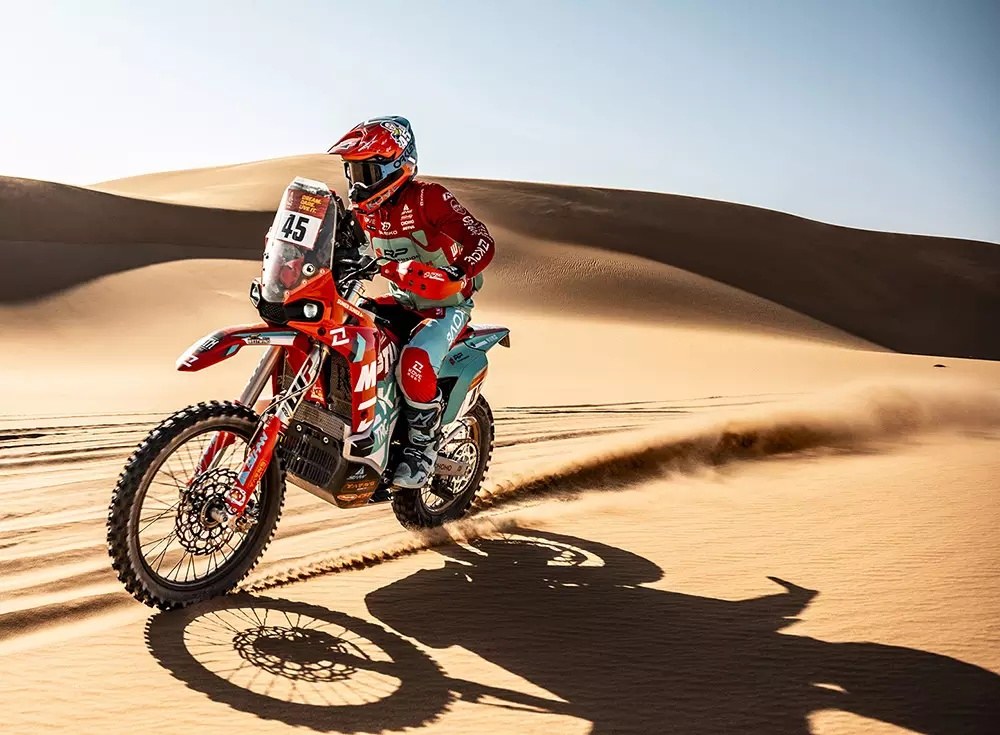
How to Ride a Motorcycle in Sand
1. Look Ahead and Choose Your Line
Before entering sand, scan the terrain ahead. Try to gauge the depth of the sand, the flatness of the surface, and the existence of ruts, rocks, holes or sudden changes in slope.
Don’t look at the front wheel. The sand at the front tire may make you want to adjust instantly, but focusing too close can cause you to overlook the main obstacles ahead of you.
If there is more than 1 potential line choose the one you can see clearly, with less slope changes and no evident impediments. Existing ruts are not always the safest choice: deep ruts might restrict steering and may suddenly reverse direction at the exit.
Before approaching deeper sand, complete unnecessary steering changes early. Once in soft sand, make small, continuous corrections instead of waiting until the front end has already drifted and then turning sharply.
2. Keep the Throttle Smooth and Maintain Momentum
Forward drive is very helpful in deep sand or across mild undulations, as the motorcycle will keep moving forward in soft sand. Slamming on the throttle suddenly can lower your speed quickly.
Therefore, the throttle control should be smooth. Choose the right speed and gear for the conditions before you go onto the sand, then apply steady and controllable power. Don’t wait until the bike has slowed down considerably or virtually stopped before you add a lot of throttle when you are in deeper sand.
Momentum is not at full pace. Speed is your friend, but if you go too fast you shorten your observation and reaction time and make holes, ruts and change of direction more difficult to handle. Safety speed is crucial in places of poor visibility, narrow lines or many obstacles.
When the rear wheel starts to spin considerably, don’t automatically open up the throttle more. First, see if the bike is still going forward. Then regain controllable propulsion with smooth throttle modulation. For novices a steady beat is usually better than abrupt acceleration.
3. Relax Your Arms and Let the Bike Move
In sand, the front wheel may wobble slightly. This does not necessarily mean the bike is about to crash. Loose ground influences the tire’s course. The motorbike needs some space to adjust itself to surface changes.
If the rider grabs the bars, stiffens the arms and fights every front-end movement right away, the bike can shake even more. A better way is to relax the arms and still be able to accurately control the handlebars.
Keep your upper body natural and don’t place all your weight on the bars by tension. Your legs may hold the bike gently to help with stability but do not lock your knees and arms tightly.
This is not to allow the bike to wander off line. The rider, of course, must continue to gaze ahead, and make little modifications as needed. The idea is not to overreact to every little movement.
Sand riding requires a relaxed body and arms that aren’t too tensed to help you stay stable. The little bike motions are surface input to adjust to, not errors to immediately eradicate.
4. Stand on the Footpegs and Adjust Your Weight
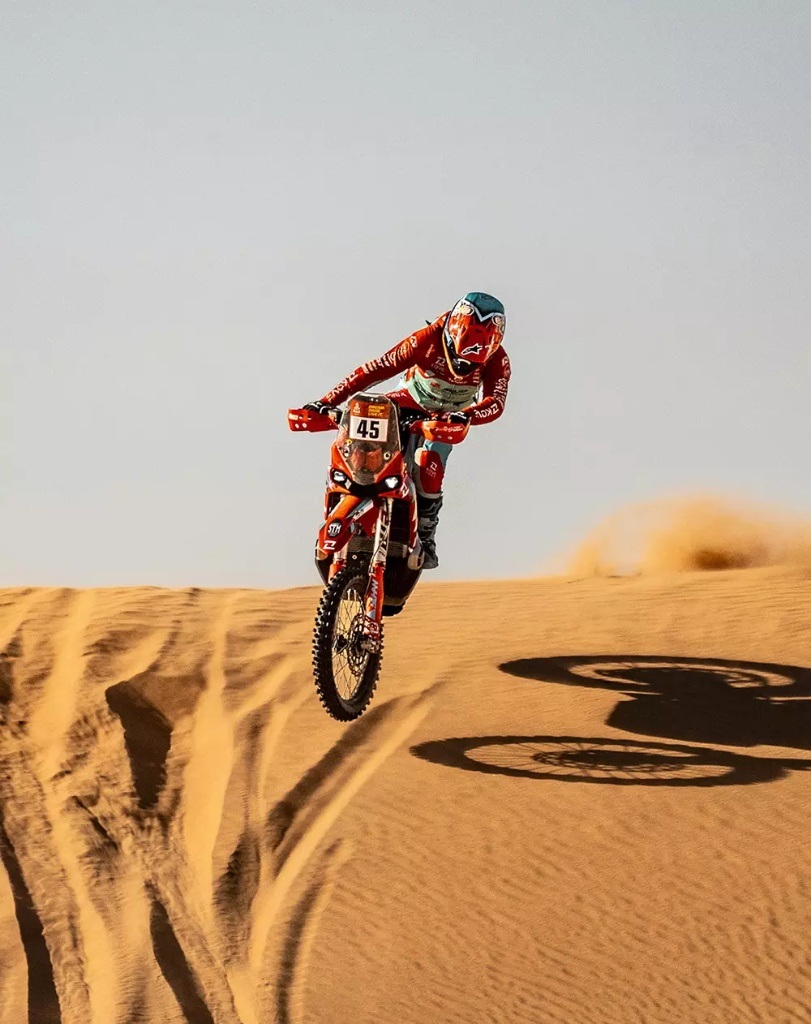
On off-road sections suitable for standing, standing on the footpegs gives the rider more flexibility to adjust body position and helps the knees and hips absorb bumps.
When standing, keep the knees naturally bent, feet firmly on the pegs, and the upper body not overly stiff. Your hands control the bike, while your legs and core help maintain balance. Do not put most of your weight on the handlebars, or front-wheel movements will transfer more directly into your upper body.
Your center of gravity does not need to stay in one position. When sand changes, on gentle slopes, or when changing direction, adjust your posture based on the bike’s feedback. Leaning too far back can reduce front-wheel steering control. Leaning too far forward can make the rider more tense and limit the body’s ability to absorb bumps.
Sitting is not always wrong. Sitting may be more practicable at low speeds, when stopped, or in some situations. It’s not about finding the one position that is always the appropriate answer for sand, it’s about finding the right position for speed, terrain and ability level.
No matter which model you choose with, vehicle positioning can’t replace basic sand riding skills. They still need to work on smooth throttle control, correct body position, steering inputs, and get a feel for how the bike handles on soft ground in a controlled setting.
5. Choose the Right Gear and Turn Smoothly
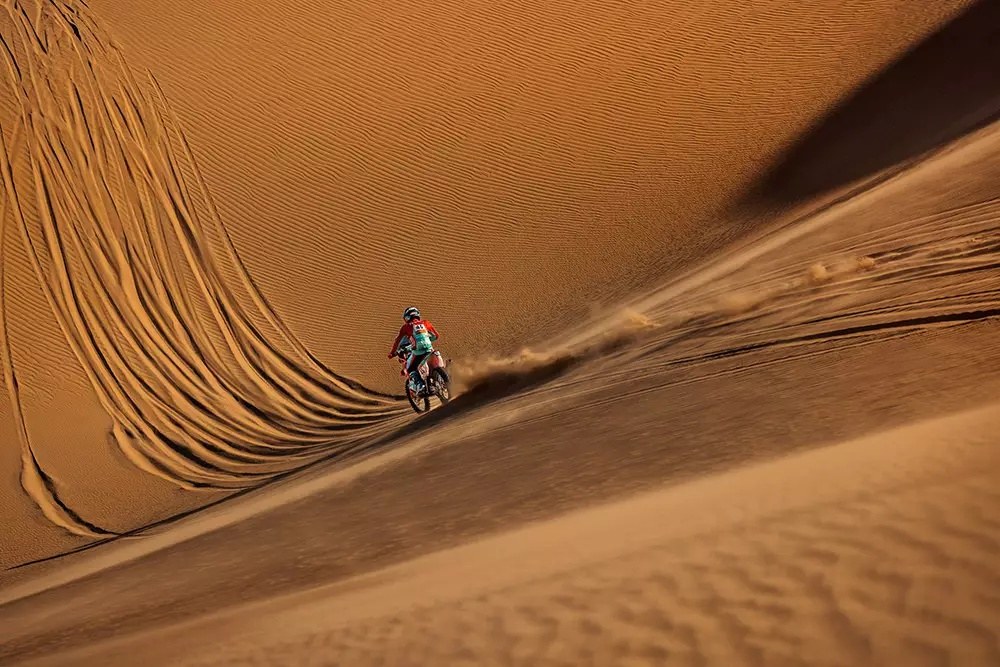
Gear choice affects power delivery and rear-wheel traction. If the gear is too high, the bike may feel underpowered in sand. If the gear is too low and the throttle is too aggressive, the rear wheel may spin more easily.
Select the appropriate gear before going into soft sand based on the bike, speed and terrain. Don’t change gears in haste while the bike is stuck and losing speed. During practice focus on the engine response, speed changes and if the rear wheel is driving forward hard and progressively find the optimal mix for the conditions.
Turning is the same. Traction in soft sand is already unstable. Sudden direction changes are dangerous. Yank the bars, or drop the bike into a big lean angle too fast, and you can lose balance. Read the corner early. Think ahead. Keep steering smooth. Don’t hard accelerate and hard brake at the same time in a corner.
If the turn is tight, the sand is deep, or the exit is not visible, do not force your way through just to maintain speed. Choosing a line and speed you can control safely is more important than trying to ride fast and continuously.
6. Set Up Your Tires for Loose Terrain
Tires directly affect traction and steering control in sand. Tread pattern, tire type, carcass construction, and tire pressure all influence performance on soft ground, but there is no single tire pressure that works for every motorcycle and every sand condition.
Consult the motorbike and tire manufacturer for tire pressure recommendations before making any adjustments. Take into account the vehicle load, tire specification, riding speed and existing terrain. Don’t simply replicate the numbers other riders are using, as various tires and different bikes can have very different appropriate ranges.
Tires also have to be matched to their function. Tread and grip may vary between off-road tires built for rough ground and tires primarily for pavement. But off-road tires won’t save you from the hazards of deep sand, quick turns, or rapid brakes.
Before you ride, besides the tires themselves, look for evident damage, excessive tread wear and whether the tire pressure is appropriate for present conditions. If the ride goes from pavement to sand to other terrain, think about the changes between surfaces ahead of time.
The general condition of the motorbike is also important. Everything has to function together, not simply the tire choice or riding posture or control settings.
For ADV motorcycles, suspension, load, tires and riding posture can all affect performance on varied surfaces therefore preparation should be based on real use. Model specific vehicle tests and configuration. Don’t use the same configuration on every motorcycle.
7. Slow Down Safely and Recover When You Get Stuck
Braking in sand requires advance planning. Braking hard can cause the tires to lose grip, particularly at speed, on soft terrain or when the bike is already off line.
If you notice a place where you want to slow down, instead of waiting until you are near something and then stomping on the brake or seizing the lever, change speed early and effortlessly. The use of front and rear brakes is still a function of speed, surface conditions and bike characteristics. Don’t just assume a wheel should never brake.
If the bike starts slowing down considerably, stay calm and don’t give repeated forceful throttle or big handlebar motions. If the motorcycle has already died, turning the back wheel often won’t fix the problem and may dig a deeper hole.
Back off the power at this moment, make sure the bike is stable and look at the ground and probable lines. If conditions allow, get out and determine if the wheel is buried, if there is room to move and if aid is needed. Make sure you have a secure footing while you push the bike so you will not be pinned if the bike suddenly jerks.
When recovering the motorcycle, first consider the weight of the motorcycle, the slope of the ground and the hazards around it. Don’t jerk, push or hit the throttle unexpectedly when you cannot control the bike. If the bike has fallen, is deeply stuck or other vehicles are passing nearby, secure your personal safety first, then decide how to shift the motorcycle.
It is also a skill in riding on sand to stop a wrong move in time. Sometimes the most essential thing is to know when to keep going, when to back off, and when to stop and reassess, than it is to just chase speed.
Common Motorcycle Sand Riding Mistakes
When starting sand riding practice, common problems do not always come from lack of power. They are often related to excessive tension and harsh control.
- Staring at the front wheel: looking too close makes it easy to miss deep sand, holes, and line changes ahead.
- Sudden throttle closing: The bike may slow quickly in deep sand, especially when there is strong forward resistance.
- If you give it too much throttle, the back wheel may spin , and no power will be converted into forward motion.
- Stiff arms and shoulders: overcorrecting on every front end movement might make the bike tougher to control.
- Sudden steering and braking: traction on soft terrain may not be able to handle big, hasty control inputs.
- Speed is the only solution. Momentum is beneficial but speed needs to be compatible with visibility, line and rider skill.
- Spinning the back wheel all the time after becoming stuck – the wheel could sink in deeper and make things worse.
If you notice these problems repeating, do not rush to challenge deeper sand. Return to flatter, more visible areas and practice vision, throttle, and body position one at a time. This usually makes it easier to find the issue.
How to Practice Sand Riding Safely
Learning sand riding is best started in low-risk, clearly visible environments. Choose areas where motorcycles are allowed, confirm there are no hidden obstacles, and practice with an experienced rider or qualified coach when possible. Wear an off-road helmet, goggles, gloves, boots, and protective gear, and check brakes, tires, and other key components according to the bike’s condition.
At first, do not chase high speed or deep sand. Start on flat, shallow sand and practice riding straight, accelerating smoothly, and slowing smoothly. Then gradually add slight turns and surface changes. Add only one difficulty at a time so you can judge whether you have truly mastered the previous action.
If you are always having to fight to keep control of direction due to a specific situation, or you are forced to use aggressive throttle simply to make it through, lower the difficulty instead of struggling. Sand depth, moisture, compaction and terrain vary all across the map and one set of tactics won’t match all situations.
Finally, sand riding skill is the result of consistent, repeatable control habits. First learn to read the line, next throttle control and body position and then practise steering, braking and recovering gradually. Rather than going fast once, try to comprehend what the bike is doing each time and what to do next.
Final Thoughts
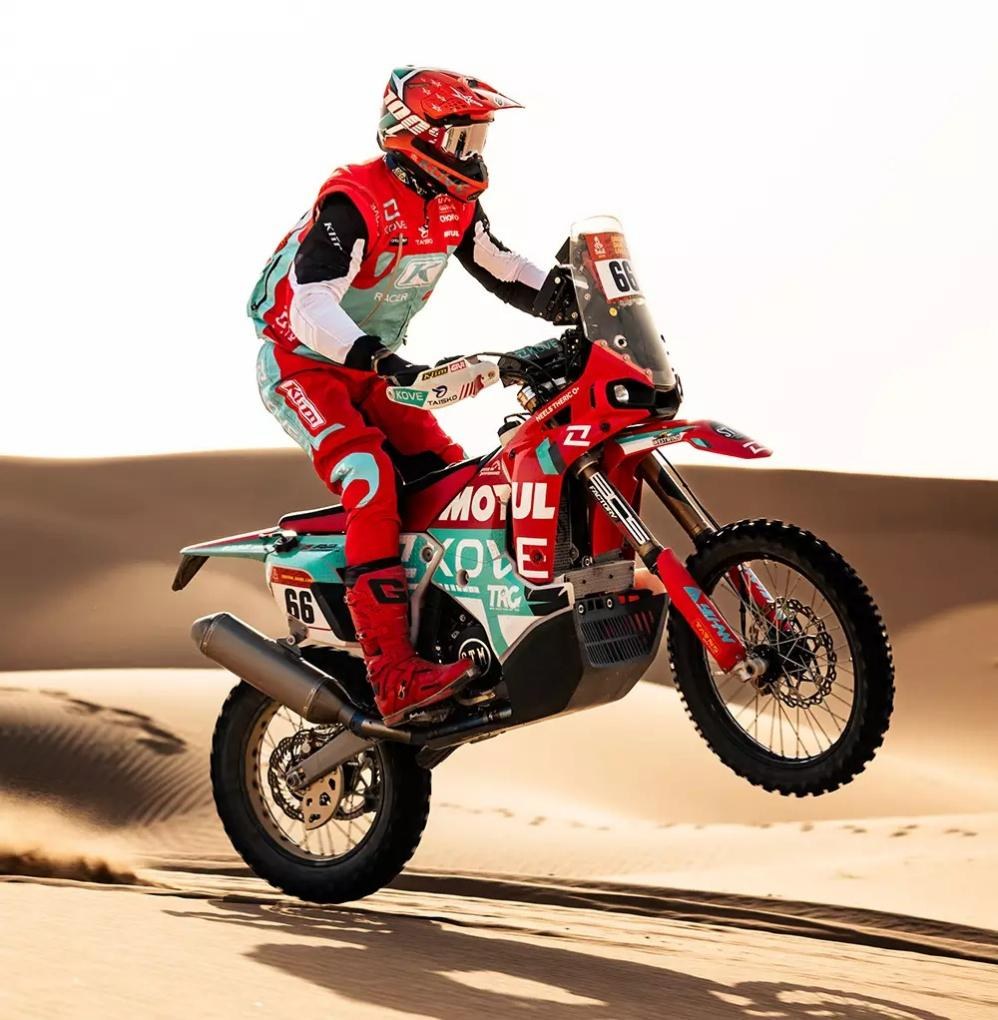
Learning to ride a motorbike on sand is more than simply going faster. It’s about learning to master, little by bit, throttle control, body position and braking timing. Start on surfaces that are easier to control and then work your way up to more difficult ones as your skill level increases, so you may get sand riding experience in a more reliable way.
As you accumulate more riding experience, you can also start wondering if the motorcycle itself is catering to your demands. For example, design placement, range, and overall configuration should be prioritised differently for riders who frequently ride technical off-road routes vs riders planning long-distance, multi-terrain travel.
KOVE has a wide range of motorcycle products, in Rally, ADV and Off-road categories, so that riders can evaluate different models according to their main purpose. First identify where you generally ride, what terrain you need to handle and whether road use is also required, then compare official specifications for individual models instead of deciding just on displacement or appearance.
No matter what category of motorbike you finally choose, sound fundamentals always matter. A bike can suit your riding needs, but smooth, controllable operation is what you need to develop for soft sand.