
Motorcycle Quickshifter: How It Works and Why It Matters
SOURCE: KOVE
With a traditional motorcycle, shifting usually means working the clutch, throttle, and shift lever together. A motorcycle quickshifter takes some of that work out of the process: when the system’s conditions are met, the rider can shift without using the clutch the usual way.
This article explains how motorcycle quickshift systems work, compares up-only and bi-directional systems, and analyzes how this technology affects the real-world sportbike riding experience.
What Is a Motorcycle Quickshifter?
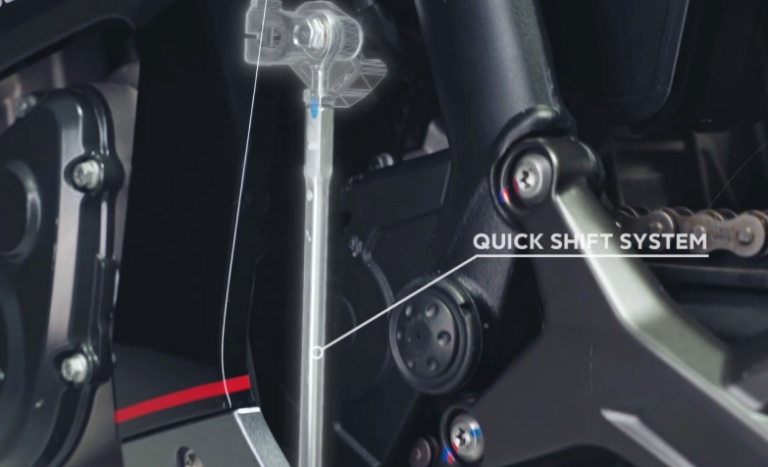
A motorcycle quickshifter is an electronic assist control system. During upshifts, it briefly reduces engine torque to relieve the load on the transmission’s internal drive components, allowing the shift mechanism to complete the gear change while reducing interruption to power delivery.
Traditional Motorcycle Shifting vs. Quickshifting
A quickshift system does not change the gear sequence or the motorcycle shift pattern. The rider still selects gears by operating the shift lever with the left foot, but under system-supported shift conditions, the electronic control system briefly adjusts engine torque to help the transmission complete the shift without the traditional clutch-lever operation.
What Does a Quickshifter Do?
Fewer Manual Inputs:Under the system’s normal operating conditions, a quickshifter reduces the mechanical steps required to shift, and the rider does not need to operate the clutch lever in the traditional way.
Less Interruption to Power Delivery:During upshifts, the system briefly cuts or reduces torque to release transmission load, making acceleration more continuous than with traditional shifting. This is especially noticeable under strong acceleration.
More Convenient Gear Changes:Less clutch work makes consecutive gear changes simpler—especially in sport riding or on track, where you’re upshifting often. But a quickshifter cannot completely replace the clutch. You’ll still need the clutch for pulling away, coming to a stop, low-speed maneuvering, or whenever the model’s instructions call for it.
How Does a Motorcycle Quickshifter Work?
A quickshifter works by briefly reducing transmission load at the moment of the shift. It uses electronic signals to detect the rider’s shift request and coordinates with the engine management system to enable shifting without traditional clutch operation.
Shift Detection
When the rider applies force to the shift lever, a sensor on the shift lever or shift linkage detects the shift action or force applied by the rider and converts the shift request into an electronic signal sent to the engine control unit (ECU).
Signal Processing
After receiving the signal, the ECU uses preset control logic to determine whether the current operating conditions meet the quickshifter activation requirements. The specific conditions vary by model and system design.
Temporary Torque Reduction
During an upshift, the system briefly reduces engine torque to relieve load inside the transmission. Depending on the motorcycle’s design, this may involve ignition control, fuel management, electronic throttle control, or a combination of methods.
Gear Engagement
After engine torque is briefly reduced and drivetrain load is relieved, the rider’s shift action moves the shift fork and shift drum through the shift mechanism, allowing the transmission to complete the gear change. Engine torque then returns to normal, and power continues through the new gear.
Up-Only vs. Bi-Directional Motorcycle Quickshifters
Quickshift systems are mainly divided into two types based on the supported shift direction:
Up-Only Quickshifters
An up-only quickshifter provides assistance only during upshifts. When the rider applies force to the shift lever, the system briefly reduces engine torque to help the transmission engage the next gear.
An up-only quickshifter does not handle downshifts, so riders usually still need traditional clutch and throttle coordination when downshifting, unless the motorcycle supports other downshift techniques.
Bi-Directional Quickshifters
A bi-directional quickshifter adds downshift assistance to upshift assistance, allowing the rider to perform clutchless upshifts and downshifts under system-supported conditions.
In some bi-directional quickshifter systems, an Auto-Blipper briefly raises engine speed during downshifts so that engine speed is closer to the speed required for the lower gear. This reduces driveline shock caused by the speed difference and makes downshifts smoother. How Auto-Blipper is implemented depends on the model’s engine management and electronic throttle control architecture; hardware configurations and control logic may differ among bi-directional quickshifter systems.
How the KOVE 650RR Uses a Bi-Directional Quickshifter
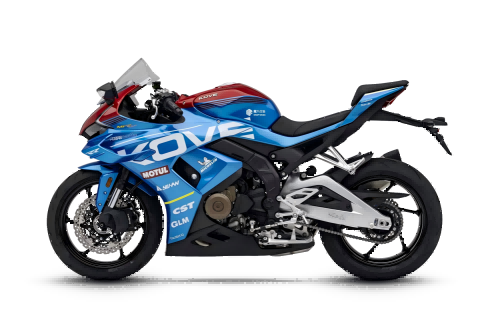
The KOVE 650RR provides an example of a sportbike equipped with a bi-directional quickshifter. Its specifications include a 645cc inline-four engine, Drive By Wire throttle control, and a bi-directional quickshift system.
The model also features a six-axis IMU and cornering ABS. These features serve different functions: the quickshifter assists with gear changes, while the IMU provides information about the motorcycle’s movement that can be used by electronic control systems. Cornering ABS supports braking control under different lean conditions.
The 650RR illustrates how a bi-directional quickshifter can be included alongside other electronic features on a modern sportbike.
Why Does a Motorcycle Quickshifter Matter for Sportbike Riders?
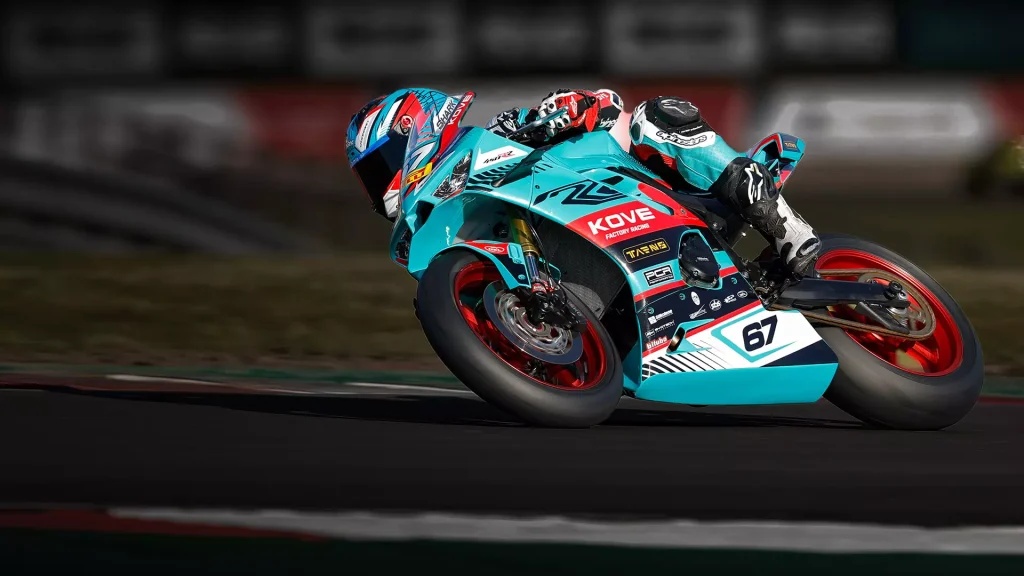
For sportbike riders, a quickshifter improves the real-world riding experience in the following ways:
More Continuous Acceleration
During continuous acceleration, a quickshifter can briefly adjust engine torque to reduce power interruption during shifts, making power delivery more continuous during consecutive upshifts. The specific effect depends on system design and rider operation.
Fewer Rider Inputs
When you don’t have to work the clutch the traditional way as often during shifts, some hand inputs are reduced, so you can focus more on the throttle, braking, and vehicle control. That difference is more noticeable in sport riding or track environments where consecutive gear changes are required.
A More Convenient Riding Experience
In everyday road riding, a quickshifter can also make some gear changes more convenient. However, its practical value depends on riding speed, road conditions, and system operating conditions, and it does not mean that it is always more suitable than traditional shifting in every road environment. Riders also need to understand the system’s operating conditions and follow the manufacturer’s instructions, especially when using a quickshifter during track-day riding or other demanding riding scenarios.
Final Thoughts
In summary, the core value of a motorcycle quickshifter lies in simplifying gear changes and reducing interruption to power delivery by reducing the need for traditional clutch operation. Whether it is an up-only system or a bi-directional up/down system, its main purpose is to improve the convenience and continuity of gear changes.
For riders, the practical value of a quickshift system depends on personal riding style, system technical design, and the specific vehicle use environment. Together with engine performance, braking performance, handling, and other electronic systems, it forms part of the overall riding experience of a modern motorcycle.
As a motorcycle manufacturer covering sport, rally, and adventure models, KOVE is continuously expanding its product line with different performance and technical configurations. Riders can explore the KOVE full lineup to compare models and feature configurations suitable for different riding needs.