
How Does Wheelbase Affect Motorcycle Handling?
SOURCE: KOVE
You swing a leg over a friend’s bike and it feels nothing like yours. It turns in faster, or maybe it just feels calmer on the highway. Size and power don’t always explain it. More often than not, it’s a single number on the spec sheet, the wheelbase.
The distance between the centers of the front and rear wheels is called the wheelbase, and it’s a key factor in how a bike steers, settles and reacts. In this guide, we’ll examine how wheelbase impacts motorcycle handling, compare long and short wheelbases, see how the difference plays out on real-world terrain, and look at what else to check before you pick a bike.
Why Wheelbase Matters When Riding a Motorcycle
Wheelbase is one of a number of variables that determine motorcycle handling, along with fork offset, trail and steering axis angle.
Wheelbase influences three aspects of how a bike feels on the road:
- Steering feel: How swiftly the bike responds to bar inputs or leaning.
- Stability: Stability while riding at speed, over bumps or in a crosswind.
- Weight transfer: How much the bike pitches under strong braking or acceleration.
Depending on the overall design, motorcycles with a short wheelbase and a high center of gravity may be more prone to pitching under hard braking or lifting the front wheel under hard acceleration.
Long vs. Short Wheelbase: How Do They Handle Differently
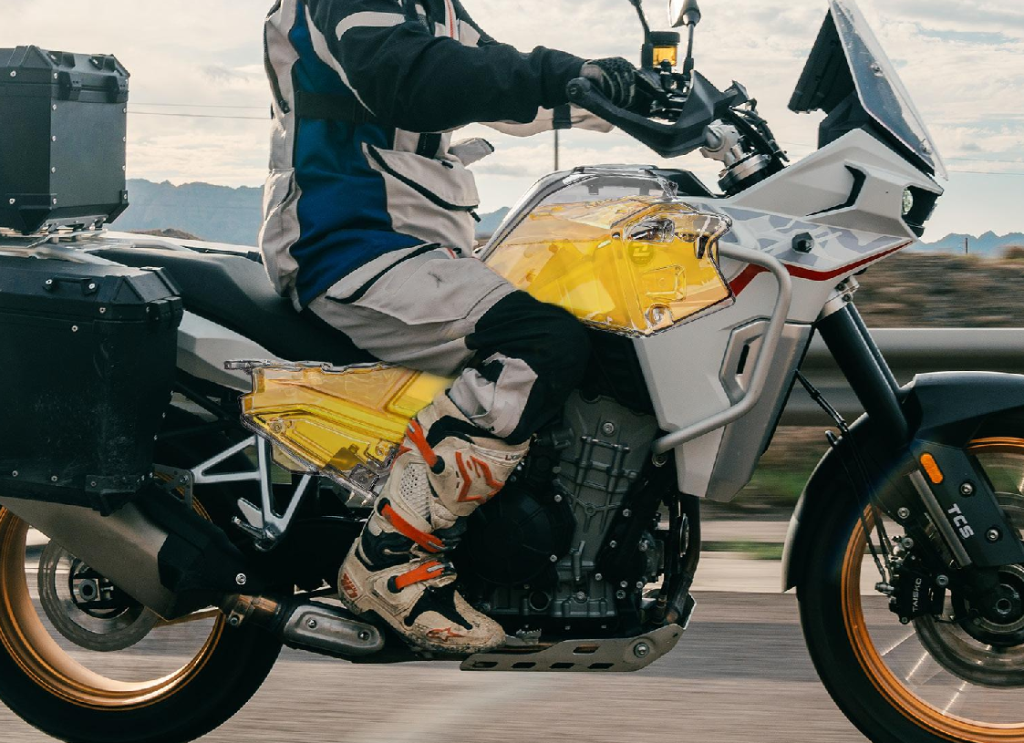
A longer wheelbase usually equates to a more stable and dependable feel. It takes a little more work to turn but the bike stays on its line on highways and long sweeping roads. That’s why touring and cruiser bikes often have longer wheelbases.
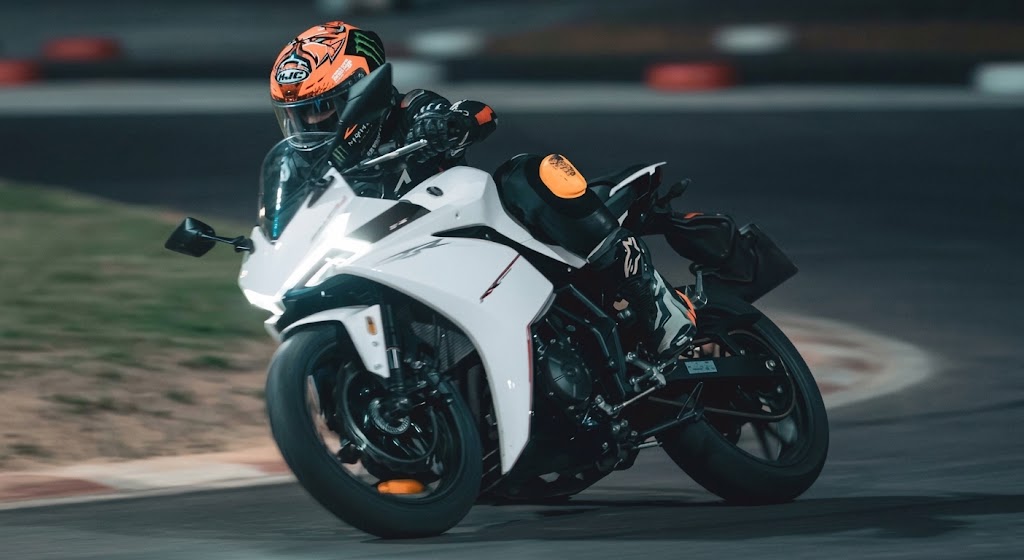
A shorter wheelbase tends to have the opposite effect. The bike may turn in more quickly and change direction more easily. The downside is a short bike can be twitchy over bumps and at high speed.
Braking and acceleration also affect how a bike feels. Wheelbase can influence weight transfer and how much the bike pitches under braking or acceleration. The overall effect depends on other factors, such as weight distribution, frame design and suspension setup. Neither setup is better in all cases. Each has its own strengths depending on the bike’s use.
Here is a quick side-by-side look at how the two compare:
| Handling factor | Longer wheelbase | Shorter wheelbase |
| Steering response | Generally more gradual | Generally quicker |
| Straight-line stability | Often feels more settled | Can feel more sensitive to disturbances |
| Tight turns | May require more effort | Often easier to maneuver |
| Acceleration and braking | May help moderate pitch changes, depending on geometry | May respond more noticeably to acceleration and braking inputs, depending on geometry |
| Typical design priority | Stability and composure | Agility and quick direction changes |
How Wheelbase Feels on Different Types of Terrain
Numbers on paper only tell part of the story. Here is how wheelbase tends to show up once you’re out riding:
- Paved roads: A longer wheelbase can make a motorcycle feel more settled on the motorway, which may benefit long-distance riding. The weight, shape and other design factors of the bike also affect the crosswind stability.
- Back-to-back corners: With a shorter wheelbase, a bike may feel easier to flick from side to side, making it easier to change direction through a series of corners.
- Narrow forest trails: A smaller, more maneuverable bike can be easier to handle around trees, rocks and tight turns.
- Rough ground: A longer wheelbase may help a bike feel more settled on some rough surfaces, but it can make tight turns and low-speed maneuvering more difficult.
Most riders do a mix of different types of riding. A bike with a well-balanced design is often a better choice for mixed riding than one built for an extreme purpose.
What Else Affects Motorcycle Handling
The wheelbase is not an isolated factor. Other design elements also impact handling, so the same wheelbase doesn’t mean the same feel. For example, rake and trail both affect steering response and directional stability. Trail is influenced by the rake angle, fork offset and front wheel size.
Handling also depends on weight distribution, suspension and tires. In addition to the wheelbase, below are the primary elements worth checking:
| Factor | How it affects handling |
| Rake and trail | Influence steering response and directional stability |
| Weight distribution | Affects balance, traction, and weight transfer |
| Suspension setup | Influences control over bumps and uneven ground |
| Tires | Affect grip, steering feel, and stability |
Choosing a Wheelbase That Suits Your Riding Style
Generally speaking, a motorcycle with a longer wheelbase tends to feel more stable, while a shorter wheelbase often feels more agile. The right choice depends on where and how you ride. Consider your typical routes, height and experience, as well as whether you carry luggage or passengers. If possible, take a test ride, because no spec sheet can match the feel of a bike on the road.
At KOVE, we build bikes for different kinds of riding, from rally-focused bikes to sportbikes, each designed with a different riding style in mind. Explore the KOVE models to see which one fits you best.