
Braking, Cornering, and Control: What to Look for in a Sportbike
SOURCE: KOVE
A sportbike can look impressive on paper, but the real test comes when you brake into a corner, change direction, or pick up the throttle on the exit. Brake response, chassis balance, suspension behavior, and riding position all shape how the bike feels when the pace picks up.
If you’re comparing sportbikes for road riding or track days, here’s what to look for beyond engine size and peak power—and how to judge whether the features suit your riding style.
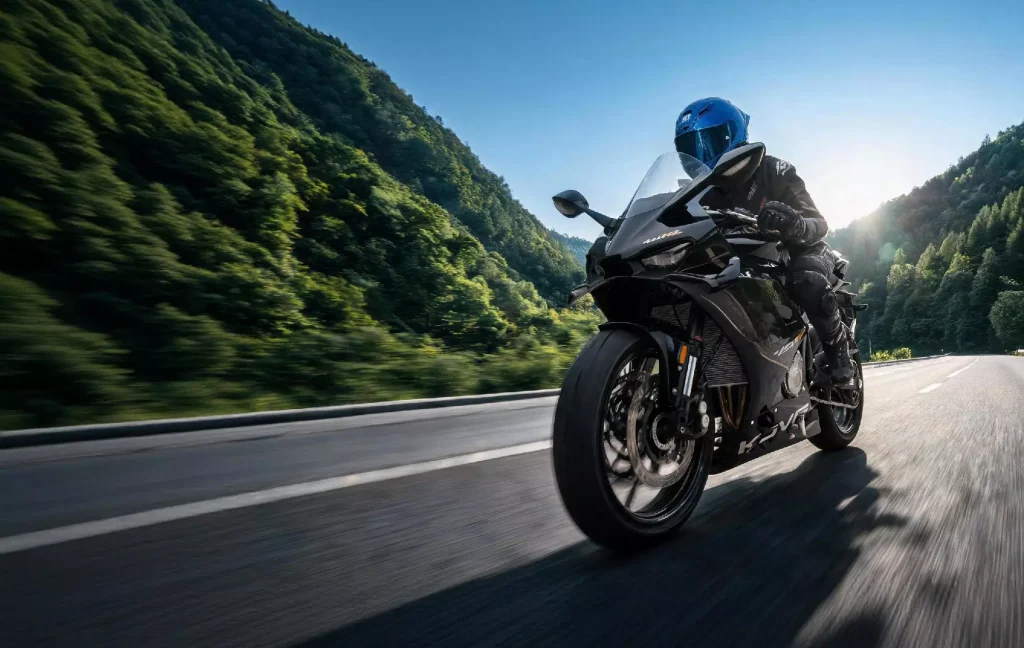
1. Braking Performance: What Should You Look For?
A good sportbike braking system should offer enough stopping power for the bike’s performance, but outright power is only part of the picture. Predictable response and consistent feel help riders manage speed as conditions change.
Brake Components and Feel: More Than Stopping Power
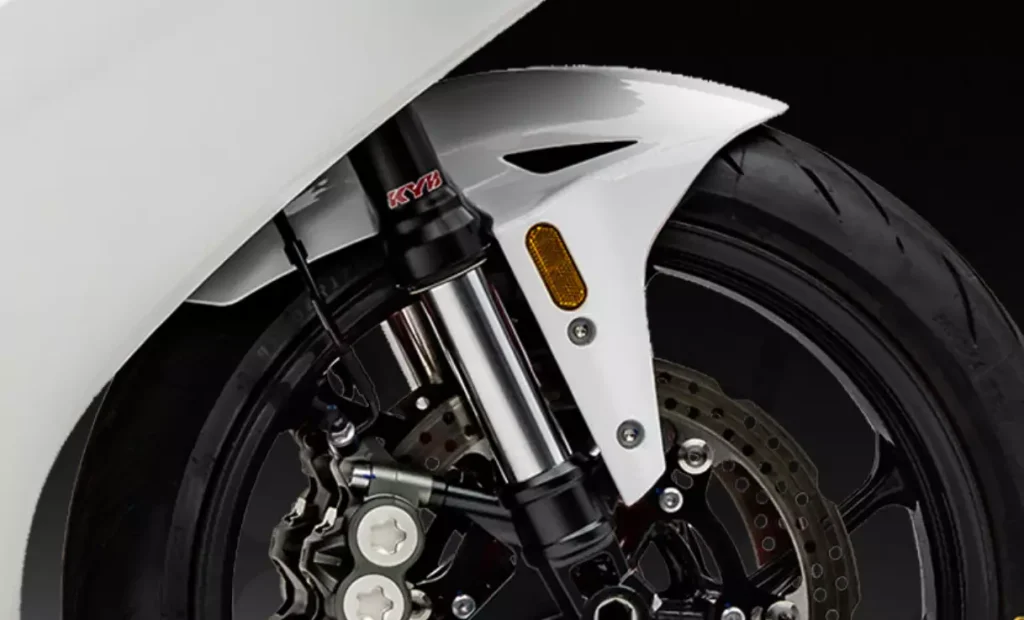
Start with the front brake, which handles much of the braking force during hard deceleration. Check the disc size, caliper design, and overall brake specification, but don’t judge the system by hardware alone. Brake feel also depends on pad material, hydraulic setup, tire grip, and suspension behavior.
When assessing a sportbike, pay attention to how progressively the brakes respond as you increase lever pressure. A system that is easy to modulate helps you adjust speed without making abrupt inputs, particularly when approaching a corner.
Brake performance also needs to remain consistent after repeated use. On track, repeated hard braking can build heat in the discs and pads, affecting feel and performance if the system is not suited to the demands. For road riders, dependable braking across normal riding conditions is usually more relevant than a race-focused setup.
How ABS Helps During Hard Braking
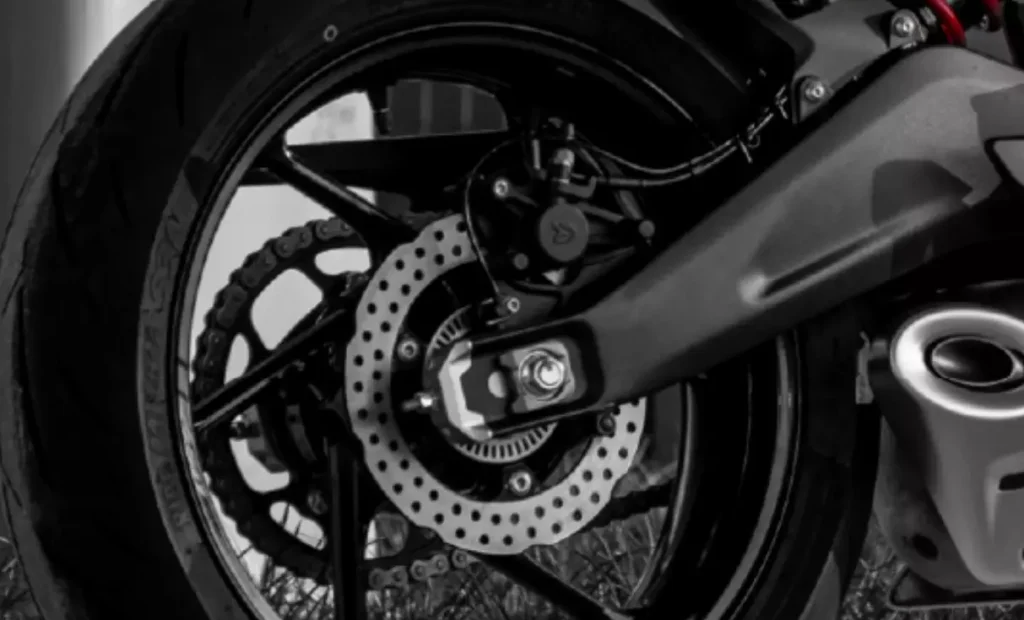
Anti-lock braking systems (ABS) help prevent the wheels from locking under heavy braking. By regulating brake pressure when a lock-up is detected, ABS can help the rider maintain control, particularly on surfaces with reduced grip.
Dual-channel ABS monitors and controls the front and rear brakes. However, the behavior of ABS varies by system, and standard ABS should not be confused with cornering ABS. Cornering ABS uses additional information—commonly from an inertial measurement unit (IMU)—to adapt braking intervention when the motorcycle is leaned over, if the system is designed to support that function.
ABS does not eliminate stopping distance or compensate for poor technique. Riders still need to choose an appropriate speed, maintain a safe following distance, and understand how their motorcycle responds under braking.
Why Consistent Braking Matters on the Track
During a track session, the braking system must cope with repeated deceleration from high speeds. A brake setup that feels strong for one stop may not deliver the same feel after several laps if heat management and component condition are inadequate.
When comparing sportbikes for track use, look at the brake hardware, ABS configuration, tire specification, and maintenance requirements together. If you plan to ride on track regularly, also check whether suitable brake pads, fluid, and replacement parts are readily available.
2. Cornering and Handling: How the Chassis and Suspension Make a Difference
Sportbike handling comes from the way the chassis geometry, suspension, tires, and overall weight work together. A bike that turns quickly may feel responsive in tight corners, while another with a different setup may feel calmer through faster bends. Neither characteristic is automatically better; the right balance depends on where and how you ride.
Chassis Geometry and Steering Response
Three specifications worth checking are rake, trail, and wheelbase.
Rake describes the steering head angle, while trail measures the distance between the steering axis and the tire’s contact point on the ground. Wheelbase is the distance between the front and rear axles. Together with factors such as weight distribution, these dimensions influence steering response and stability.
In general, a shorter wheelbase and geometry designed for quicker steering can help a motorcycle change direction readily. A longer wheelbase or geometry favoring stability may feel more settled in some situations. These are broad tendencies, not rules: tire profiles, suspension settings, and chassis design also affect the result.
Don’t choose a sportbike based on one geometry figure alone. If possible, test how naturally the bike responds to steering inputs and whether it holds a line without requiring constant corrections.
Suspension Setup and Adjustability
The suspension helps the tires maintain contact with the road while controlling how the chassis moves under braking, cornering, and acceleration.
When braking, the front suspension compresses as weight transfers forward. Through a corner, the suspension responds to bumps and changes in load. Under acceleration, the rear suspension reacts as weight shifts toward the back of the motorcycle. A well-matched setup helps the bike remain composed through these transitions.
Suspension adjustability gives riders more scope to tailor the setup. Depending on the design, adjustments may include preload, rebound damping, and compression damping. Preload affects the suspension’s initial operating position and available travel under load; damping adjustments control the speed of suspension movement.
Fully adjustable suspension can be useful for riders who regularly change riding conditions, carry different loads, or attend track days. It is not automatically better for every rider, though. A well-calibrated non-adjustable setup may be sufficient for everyday road use, and incorrect adjustments can make handling worse.
For example, the KOVE 450RR features fully adjustable KYB front forks and a fully adjustable rear shock. The KOVE 350RR has an upside-down front fork and a preload-adjustable rear shock. These different setups offer different levels of adjustment, so consider what you will actually use rather than simply counting adjustment points. Check the specifications for your market and model version before making a comparison.
Tire Grip and Stability Through Corners
Tires are the motorcycle’s only contact points with the road, so their condition and suitability directly affect cornering performance. Tire compound, profile, construction, pressure, temperature, and wear all influence grip and feedback.
A wider rear tire does not automatically provide better handling or more usable grip. The complete tire design must work with the motorcycle’s wheel dimensions, geometry, and intended use.
Before buying a sportbike, check the standard tire sizes and whether suitable replacement tires are available for your riding needs. After purchase, follow the manufacturer’s recommended pressures and inspect the tires regularly. Track use, cold weather, rain, and worn tread can all change how much grip is available.
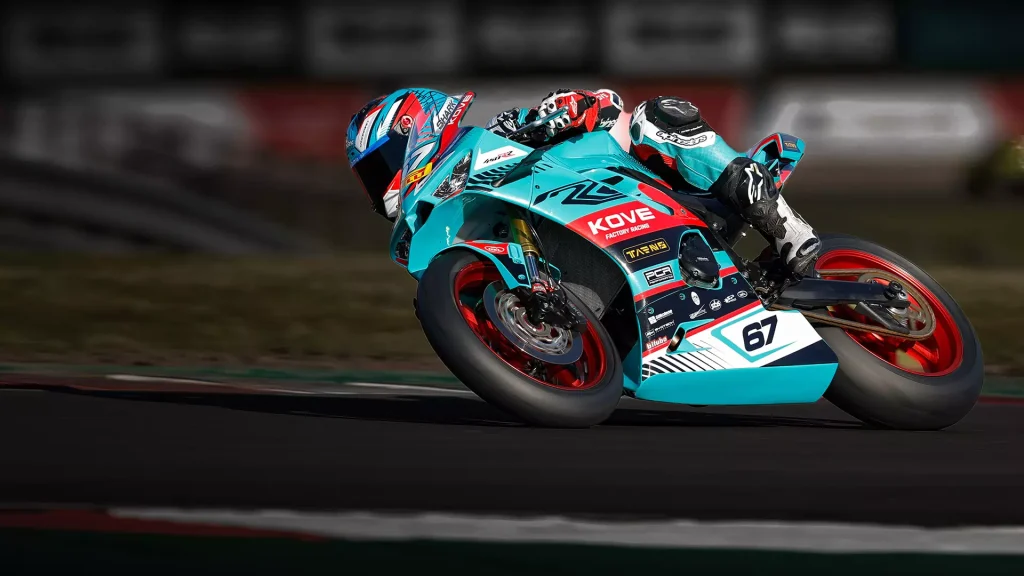
3. Electronic Rider Aids: Which Features Are Worth Having?
Electronic rider aids can help manage engine output and braking behavior, but the available features vary considerably between sportbikes. Focus on what each system does, when it intervenes, and whether its operation suits your experience level.
Traction Control and Riding Modes
Traction control (TCS) monitors wheel behavior and can reduce engine torque when it detects excessive rear-wheel slip. Depending on the system, it may adjust power delivery to help the rider maintain control when grip is limited or acceleration is aggressive.
Its usefulness depends on the conditions. On wet roads or uneven surfaces, traction control can help manage sudden changes in grip. On a dry track, experienced riders may prefer a different intervention level, where the motorcycle allows it to be adjusted. Traction control cannot create grip where none is available, and it should not encourage riders to accelerate beyond their ability or the available traction.
Riding modes typically change selected engine or electronic settings. For example, a mode may provide a softer throttle response for everyday riding and a sharper response for sportier conditions. The exact changes depend on the motorcycle; a riding mode does not necessarily alter suspension or ABS behavior.
When comparing sportbikes, look beyond the number of modes. Check what each mode actually changes, whether traction control can be adjusted, and how easily the rider can select a suitable setting.
What an IMU Adds to Electronic Rider Aids
An inertial measurement unit (IMU) can measure a motorcycle’s movement and orientation, typically using gyroscopes and accelerometers. When integrated with compatible control systems, this information can help the electronics respond to the bike’s lean angle and other dynamic conditions.
Depending on the system, IMU data may support features such as cornering ABS or lean-sensitive traction control. These functions are not universal, and having an IMU does not mean a motorcycle automatically includes every type of cornering assistance.
If a manufacturer lists advanced electronic rider aids, check the actual functions included in the model rather than relying on the term “IMU” alone. This is especially relevant when comparing motorcycles at different price points.
Do You Need Advanced Electronics for Track Riding?
Not necessarily. Rider skill, tires, suspension setup, braking performance, and regular maintenance all influence track performance. Advanced electronics can provide additional support, but they do not replace sound technique.
For a newer rider, predictable power delivery and a well-calibrated ABS system may be more useful than a long list of settings. Experienced track riders may value more adjustment options, especially when adapting the bike to different circuits or conditions.
Compare the available features with your actual riding plans. A system that is easy to understand and use may be more valuable than one with multiple settings you rarely need.
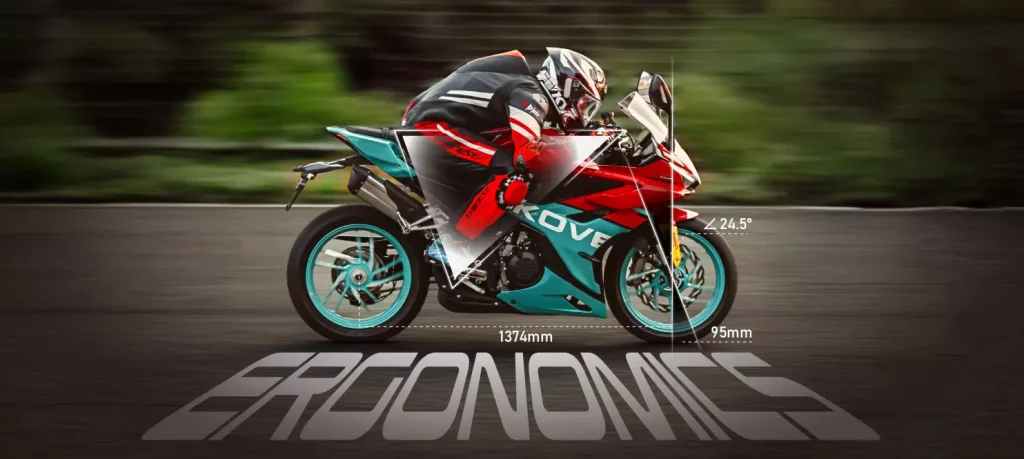
4. Riding Position and Ergonomics: Can You Control the Bike Comfortably?
A sportbike’s riding position affects more than comfort. It influences how easily you reach the controls, move your body, and support yourself during braking and cornering.
Handlebar Reach, Seat Height, and Footpeg Position
Sportbikes often use a more forward-leaning riding position than standard motorcycles, but the degree varies by model. Clip-on handlebars, seat shape, and footpeg position determine how much weight rests on your hands, how tightly your knees bend, and how easily you can move around the bike.
Seat height is worth checking, but it does not tell the whole story. The seat’s width and shape affect how easily you can reach the ground. A narrower seat near the front may make a motorcycle easier to straddle than a wider seat with the same listed height.
During a showroom visit, sit on the bike in your usual riding gear. Check whether you can reach the bars without stretching, operate the brake and clutch comfortably, and move your feet to the controls without awkward ankle angles. Also consider whether the position feels manageable at low speeds, not just when imagining a fast ride.
Body Position, Weight Transfer, and Rider Fatigue
On a sportbike, the rider’s position changes how the motorcycle feels through a corner. A relaxed grip and a stable lower-body position make it easier to provide smooth steering inputs. Bracing heavily through the arms can increase fatigue and interfere with control, particularly over a long session.
The riding position should allow you to move naturally while keeping access to the controls. If you have to fight the ergonomics to reach the bars or hold yourself in place, you may tire sooner on longer rides.
Think about your typical use. A track-focused position may suit short, intense sessions but feel demanding in traffic or on longer road trips. If you expect to use the bike for both, assess the compromise before buying.
5. How Braking, Handling, and Control Work Together
Braking, suspension, tires, and rider input do not work in isolation. Their interaction is easiest to understand by following a typical corner.
Braking and Corner Entry
As you approach a corner, braking reduces speed and shifts load toward the front wheel. The fork compresses, and the available front-tire grip must be shared between braking and cornering forces.
The rider then eases off the brakes as the bike leans and turns. Smooth transitions help maintain chassis balance. Abrupt braking or releasing the lever too suddenly can unsettle the motorcycle, while excessive entry speed leaves less room to adjust the line.
For everyday road riding, the practical lesson is simple: choose a speed that leaves enough room to turn safely, and avoid treating public roads like a circuit.
Maintaining Stability Through the Corner
Once the bike is leaned over, tire grip, suspension response, chassis balance, and steering inputs all affect how it holds its line. A well-matched setup should respond predictably to the rider rather than feeling nervous over small bumps or requiring constant corrections.
Road surfaces can change mid-corner, so feedback matters. Tires and suspension cannot eliminate every disturbance, but suitable components, correct tire pressures, and smooth inputs help the motorcycle deal with changing conditions.
Corner Exit and Acceleration
As the bike begins to stand up, the rider can progressively increase the throttle. Acceleration shifts load toward the rear tire, which must provide the traction needed to drive the motorcycle forward.
Opening the throttle too aggressively while the bike is still leaned over can exceed the available grip. Traction control may help manage rear-wheel slip on equipped models, but smooth throttle control remains essential.
This is why a sportbike should be assessed as a complete package. Strong brakes, predictable handling, suitable tires, and manageable power delivery all contribute to how confidently a rider can move from corner entry to exit.
6. Choosing the Right Sportbike for Your Riding Needs
The best sportbike for you is not necessarily the one with the highest power output or the most advanced equipment. Start with your experience, where you ride, and how much time you expect to spend on track.
Which Features Matter Most for Your Riding Experience?
| Riding priority | Features to compare | What to look for |
| Everyday road riding | Brake feel, ABS, ergonomics, engine response | Predictable controls and a position you can manage in traffic |
| Beginner sport riding | Manageable power delivery, ABS, weight, seat fit | Smooth response and confidence at low speeds |
| Weekend canyon or mountain roads | Steering response, tire grip, suspension balance | Predictable turn-in and stable behavior over changing surfaces |
| Regular track days | Brake consistency, suspension adjustability, tire options | Components and settings suited to repeated hard use |
| Mixed road and occasional track use | Overall balance, maintenance, available adjustments | A setup that works well without constant changes |
Use this table as a starting point, not a strict ranking. A motorcycle’s real-world behavior depends on its complete design and condition, as well as the rider’s technique.
For example, the KOVE 250RR is a 249cc twin-cylinder sportbike with a listed curb weight of 153 kg. The KOVE 350RR uses a 344cc twin-cylinder engine and lists dual-channel ABS and traction control. The KOVE 450RR has a 443cc inline-four engine, dual front brake discs, traction control, and fully adjustable KYB suspension. These models illustrate how engine configuration, weight, braking hardware, and suspension options differ across a sportbike range. Always confirm the specification for the market and version you are considering.
What to Check Before Buying a Sportbike
A specification sheet helps narrow your options, but it cannot tell you everything about fit and feel. If a test ride is available and appropriate for your licence and experience, use it to assess the controls and handling in a safe, legal setting.
Before making a decision, check:
- Brakes: Is the lever easy to modulate, and does the ABS specification meet your needs?
- Suspension: Which adjustments are available, and can you access them easily?
- Ergonomics: Can you reach the controls comfortably and manage the bike at low speed?
- Tires: Are the standard sizes suitable for your intended use, with replacement options available?
- Electronics: What do the riding modes and traction control actually change?
- Ownership: What are the maintenance intervals, parts availability, and likely costs of consumables such as tires, brake pads, and chain components?
These checks help you compare motorcycles on more than peak power, top speed, or appearance.
When Is a Suspension or Brake Upgrade Worth It?
An upgrade makes sense when you can identify a specific limitation. For example, a rider who regularly attends track days may benefit from suspension adjustments suited to their weight, pace, and circuit. A rider experiencing brake fade during repeated track sessions may need to review pad condition, fluid, cooling, and component suitability with a qualified technician.
However, upgrading parts before understanding the current setup can waste money or create new problems. Start with maintenance, correct adjustment, and suitable tires. Then consider changes based on the bike’s behavior and your riding needs.
Any modification should be compatible with the motorcycle and its braking, suspension, and electronic systems. For road use, also check local regulations and warranty conditions before changing components.
Conclusion: Focus on Control, Not Just Specifications
When comparing sportbikes, look beyond horsepower and top speed. Brake feel, chassis balance, suspension behavior, tire grip, electronic aids, and riding position all shape the experience.
Prioritize the features that match your riding conditions and skill level, then check how they work together. A sportbike that feels predictable, fits you well, and suits the way you ride is a more useful choice than one selected by specifications alone.