
21/18-Inch Wheels on Rally Bikes: What Do They Change?
SOURCE: KOVE
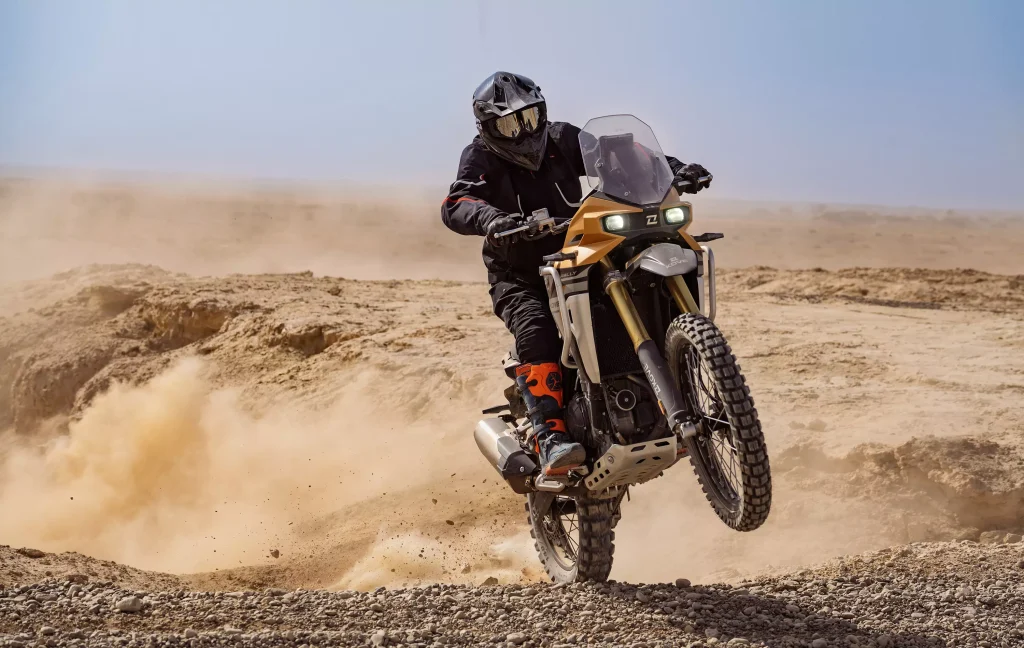
Look at just about any rally bike built for a long-distance off-road stage and you’ll see the same thing: a tall front wheel combined with a somewhat smaller rear. That 21/18-inch setup isn’t a style decision or a holdover from the past. It’s a setup that has been tested, refined and retained, because it works well for the kind of terrain rally riding involves.
This guide explains why the combination of a 21-inch front wheel and 18-inch rear wheel is so prevalent, what it feels like in real riding situations and what other factors operate in tandem with wheel size to define the handling of a rally bike.
Why Are 21/18-Inch Wheels Common on Rally Bikes?
In short, bigger wheels handle broken ground better than smaller wheels and the 21/18 setup has stood the test of time over decades of competition riding.
The larger rolling diameter of a 21-inch front wheel helps it roll over rocks, ruts and other obstacles more easily. For a given obstacle, the larger wheel creates a more favorable approach angle and is less likely to be deflected than a smaller wheel. This is especially useful at the speeds and across the terrain types seen in rally racing.
The 18-inch rear wheel provides a useful balance between wheel size, tire availability and overall chassis packaging, while leaving the bike with the ground clearance needed for off-road riding. This rear wheel size also works well with the multitude of off-road tires that the big manufacturers offer in this diameter.
This wheel setup has been a staple of competitive vehicles in rally racing, particularly in endurance events like the Dakar Rally. Those events with hundreds of kilometers of different terrain per stage have informed what works and what doesn’t. The 21/18 arrangement has, in part, remained a standard because it holds up under certain conditions.
How Does a 21/18 Setup Feel on the Trail?
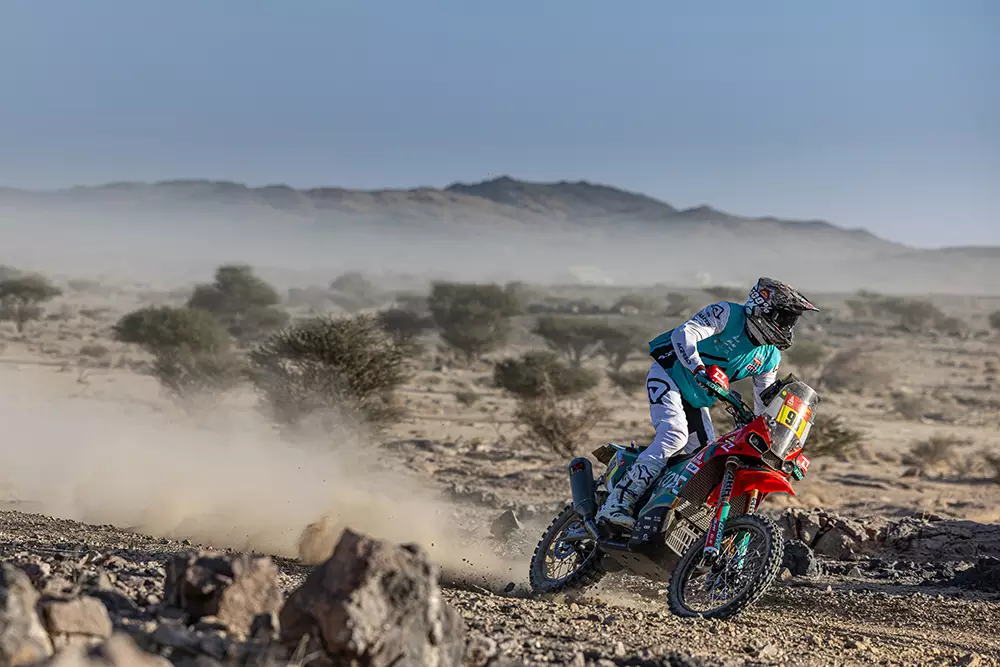
A 21-inch front wheel behaves differently from a 19- or 17-inch front wheel, particularly when the route turns gnarly. On loose and fractured surfaces, the front end tends to follow more reliably. Rocks and ruts that may throw a smaller wheel off line tend to be rolled over more smoothly, which means less unexpected steering input and less physical effort to retain a line.
The larger front wheel can also make steering feel less quick than a smaller wheel. Its larger diameter, combined with the tire and front-end geometry typically used with it, can give the bike a more stable but less immediate steering response. Most rally and off-road riders accept this trade-off because the benefits on open terrain outweigh the drawbacks in slow-speed situations.
To summarize, here’s how the 21/18 setup tends to manifest across the riding factors:
| Riding Factor | What the 21/18 Setup Changes | Where You Notice It Most |
| Obstacle rollover | Helps the front wheel roll over uneven terrain more smoothly | Rocks, ruts, broken trails |
| Stability | Can contribute to a more composed feel on rough surfaces | Gravel, dirt roads, desert tracks |
| Line choice | Can make it easier to maintain a chosen line over uneven ground | Loose or rutted terrain |
| Tight handling | Can feel less quick to turn than smaller front-wheel setups | Tight, technical sections |
Where Does a 21/18 Setup Work Best?
There are obvious strengths to this wheel layout, and knowing them will help you get the most out of it.
- Loose gravel and fast dirt roads: A 21-inch front wheel can make it easier to maintain a line at speed on loose gravel and other uneven surfaces. Smaller wheels may bounce or hop off loose surface material and require continual correction.
- Ruts, rocks and broken terrain: Here, the larger front wheel’s ability to roll over obstacles more easily is most noticeable. If you cross a rocky portion or a rutted route, the wheel will ride up and over the imperfections in the ground, rather than being bounced off course by them. That means less fatigue during a long day in the saddle.
- Mixed road and off-road routes: For rally routes that combine different surfaces, the 21/18 setup offers a useful balance between off-road capability and road manners. It’s not the quickest setup on flat tarmac, but it becomes more useful as the surface gets rougher or less predictable.
What Else Affects a Rally Bike’s Handling?
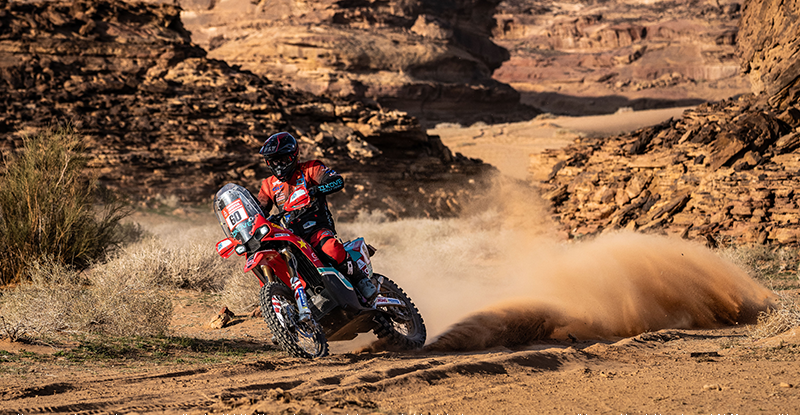
Wheel size has a real impact on off-road performance, but it’s one piece of a bigger puzzle. A 21/18 setup on a poorly set-up bike can still feel unpredictable and demanding. The following aspects combine with wheel choice to influence how a rally bike really handles on the trail.
| What to Check | Why It Matters |
| Tire type | Determines much of the available grip and terrain suitability |
| Suspension travel | Helps the bike deal with repeated impacts |
| Ground clearance | Helps reduce the risk of the chassis contacting obstacles |
| Weight | Influences control, especially at low speed and when recovering from a slide |
| Riding position | Affects control when standing for long off-road sections |
It’s the interplay of these things, and the choice of wheel, that distinguishes a bike that feels truly capable from one that just looks the part.
Understanding Where 21/18 Wheels Make a Difference
While 21/18 wheels may not be perfect for every riding situation, they’re an effective solution when used on terrain suitable for rally bikes such as gravel roads and rough ground surfaces. Knowing their capabilities and limitations allows riders to ride with greater confidence as well as choose an appropriate machine for themselves.
If you’re looking at rally motorcycles built around purposeful design decisions like this, explore KOVE’s rally lineup to see how each model is put together.