
Why Are Rally Bikes So Tall? How Seat Height Affects Riding
SOURCE: KOVE
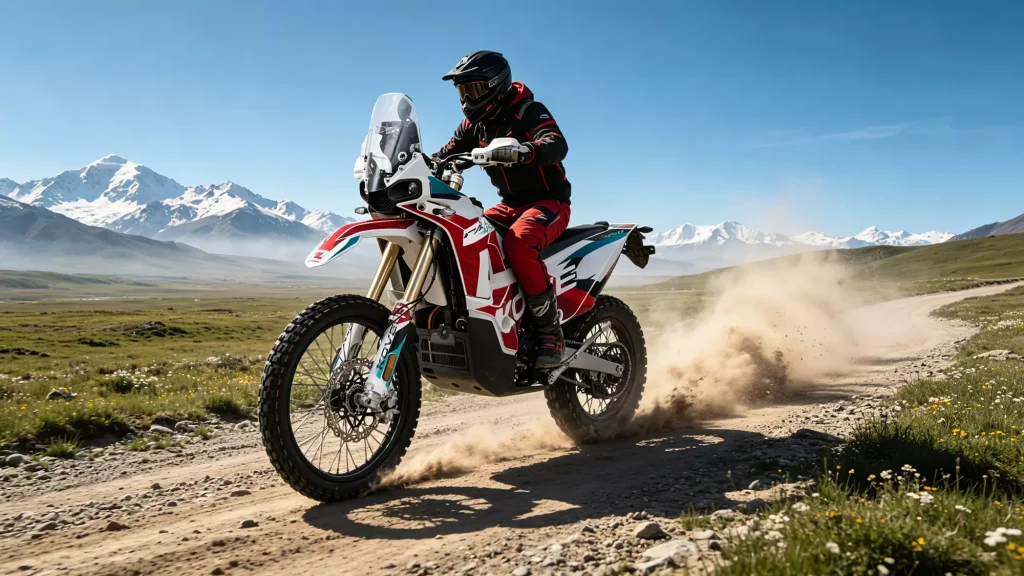
If you look at a rally bike and feel like you would need a step ladder to get on, you are not alone. Many riders spot the seat height right away. For some people, that is the first real worry when they start riding.
So why are rally bikes made like this? And does rally bike seat height really matter that much out on the trail? In this guide, we break down where seat height comes from, how it influences the riding experience, and how to think about rally motorbike seat height when you’re looking for something that genuinely fits.
Why Rally Bikes Need So Much Height
The point is that no one set out to manufacture rally bikes tall for the hell of it. The height is the result of several engineering choices that all add to the bike’s overall height.
A proper rally bike needs extensive suspension travel. This keeps the wheels in contact with the ground across difficult terrain and gives the suspension additional travel to deal with impacts. The bike must have enough ground clearance that it doesn’t touch rocks, ruts and other obstructions underneath. Larger wheels can roll over these obstacles more easily and are less likely to get stuck on them. This means the rider sits considerably higher than they would on a normal road bike.
Every design option adds to the total stack height of a rally bike in the following way:
| Design feature | Why it contributes to a tall rally bike |
| Long suspension travel | Keeps the wheels working over rough terrain |
| High ground clearance | Helps clear rocks, ruts and other obstacles |
| 21/18-inch wheels | Rolls over larger obstacles more easily |
| Standing-focused layout | Allows more room for active body movement |
These are not looks-only choices. Each one serves an off-road job. The end result is a bike that sits much higher than most riders expect.
What Does a Tall Seat Height Change on the Trail
Extra height has real advantages, but also changes the way the bike behaves in certain situations. Here is where riders usually notice the biggest change:
- Low-speed balance and stopping: You may have to put a foot down when you stop. If you cannot get both feet flat on the ground, the seat can be too high. This can be a little tricky on soft ground or uneven sections especially for a beginner.
- Standing position: Many experienced rally riders spend a lot of time on the pegs rather than sitting. The bike has a tall frame and gear meant for standing. That setup helps you shift your body and move your weight while you ride off-road.
- Uneven terrain: More ground clearance can help prevent the bike’s underside from hitting rocks, ruts and other hazards as the surface gets rougher. The longer suspension travel also helps the bike soak off heavier impacts, deep ruts and abrupt changes in ground.
- Weight shifts and body movement: Off-road riding is a physical sport. Rally bikes are designed to give riders room to move forward, back and from side to side, making it easier to stay in control through technical areas.
The truth is that a higher bike is tougher to control when you’re hardly moving or putting your feet down, but it tends to feel more natural once you’re actually riding and interacting with the terrain.
The KOVE 450 Rally RE: A Real-World Example
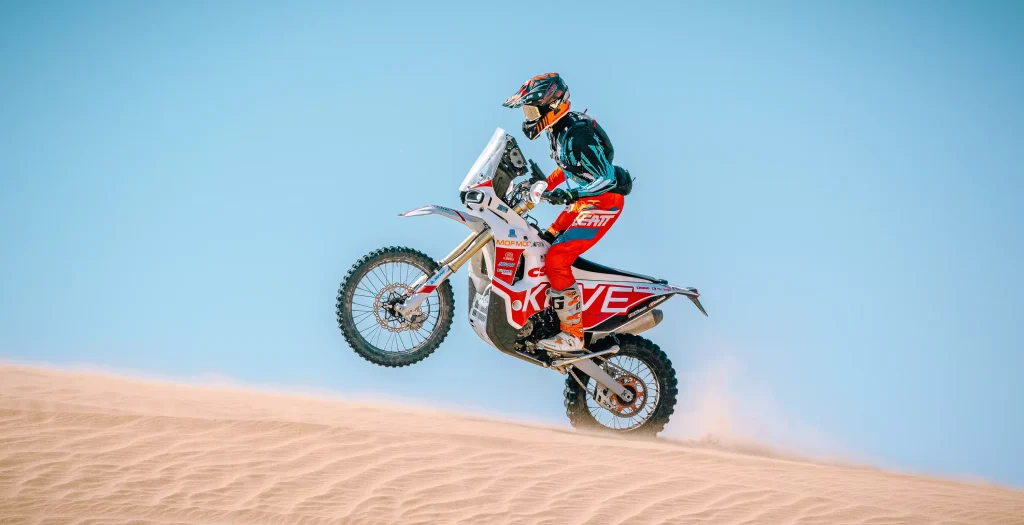
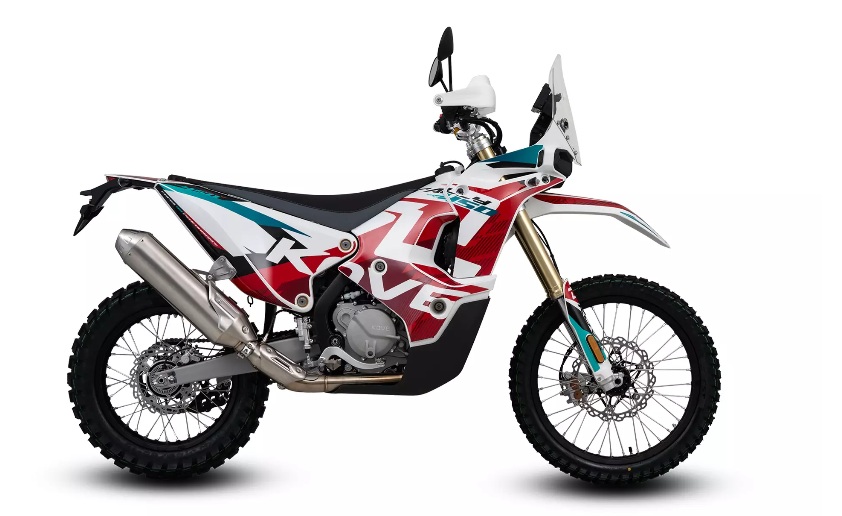
A good reference point to illustrate how this works in practice is the KOVE 450 Rally RE. It’s available in two chassis configurations, High and Low. The Low configuration does more than lower the seat; it also reduces ground clearance and suspension travel.
| Specification | Low | High |
| Seat height | 910 mm | 960 mm |
| Ground clearance | 255 mm | 295 mm |
| Front suspension travel | 255 mm | 305 mm |
| Rear suspension travel | 270 mm | 300 mm |
The 50 mm difference in seat height comes with 40 mm more ground clearance and 50 mm more front suspension travel in the High configuration. Choosing the Low option reduces ground clearance and suspension travel, as well as lowering the seat a bit. That’s something to bear in mind when you’re looking at the seat height of rally motorcycles and comparing across models or set-ups, because the numbers convey part of the story.
Finding a Seat Height You Can Actually Manage
There is no one seat height that fits all riders. Your build, how often you ride, and the type of terrain you ride on all matter. In practice, there are three things that will give you good idea of whether the fit works:
1. Can you reach the ground confidently? Not necessarily flat-footing, but enough to feel stable when you slow down or stop.
2. Can you stand naturally on the pegs? Your standing position should feel natural rather than forced. If it doesn’t, it’s worth taking another look at the fit before heading out.
3. Can you control the bike when the ground is uneven? Seat height becomes especially noticeable at low speeds, particularly on loose, sloped, or uneven surfaces.
If all three feel good, you are probably dealing with the seat height. If anything doesn’t seem right, choose a lower seat or make a tiny adjustment before setting off on a long ride.
Making the Height Work
Rally bike seat height is less about a specific number and more about how the whole bike is built around it. The height exists because of engineering priorities that make the bike genuinely capable off-road, and the best approach is to match the configuration to what you’re actually going to do with it.
If you’re trying to find out whether a rally motorbike suits your riding, the KOVE 450 Rally RE is a good place to start. The High and Low configurations give riders a choice between different seat heights, ground clearance and suspension travel. Check out the specs on KOVE and figure out which setup makes sense for where you’re heading.