
What Size Motorcycle Is Good For a Beginner? 250cc, 350cc, 450cc or Larger?
SOURCE: KOVE
When riders talk about motorcycle “size,” they often mean engine displacement. Scroll through any rider forum and you’ll find the same debate: should a beginner start on a 250cc, jump to 350cc, or go straight for 450cc? The honest answer isn’t a single number — it’s a match between your body, your confidence, and how you plan to ride. Let’s break down what actually determines the right size, compare the most common displacement brackets, and look at specific bikes that fit different riding needs.
Why “Size” Matters More Than Power for New Riders
New riders often assume more displacement automatically means a “better” bike, but for a first motorcycle, manageability matters far more than output. A machine’s power figure, measured in kW, tells you almost nothing about whether you’ll feel in control at a stoplight or in a parking lot — that comes down to weight, seat height, and how predictably the throttle responds at low RPM.
Confidence at Low Speed and Stops
Most beginner mishaps happen under 15 km/h — at stop signs, U-turns, or slow maneuvering in traffic — not at highway speed. A bike with a lower curb weight and a seat height that lets your feet plant firmly on the ground builds confidence exactly where new riders need it most. This is also why organizations like the Motorcycle Safety Foundation emphasize fit and control over horsepower when guiding new riders toward a first bike.
The Real Risk of Buying Too Big Too Soon
It’s tempting to buy a bike you “won’t outgrow,” but oversized, overpowered first motorcycles are a common reason new riders lose confidence or quit altogether. A heavier machine with an abrupt power delivery punishes small mistakes — a snatched throttle or a stall at a light becomes harder to recover from. Starting appropriately sized doesn’t mean settling; it means giving yourself room to build real skill before scaling up.
Key Factors to Consider Before Choosing a Motorcycle Size
Height, Inseam, and Seat Height
Being able to place at least the balls of both feet on the ground — ideally flat-footed on one side — makes stopping and balancing far less stressful. Seat height, not just displacement, should be one of the first specs you check.
Curb Weight vs. Rider Strength
A bike that’s difficult to pick up if it tips over, or hard to muscle backward out of a parking spot, will erode confidence quickly. Match curb weight to your physical strength, not just your ambition.
Riding Purpose: Commuting, Touring, or Off-Road
A short commute calls for different priorities than weekend touring or occasional gravel exploration. Define your primary use case before comparing engines.
Licensing and Insurance Considerations
Many regions tier motorcycle licenses or insurance premiums by displacement or power output. Check local requirements before finalizing a purchase, since this can rule out certain sizes entirely for new license holders.
Breaking Down the Options: 250cc vs 350cc vs 450cc vs Larger
250cc — A Lightweight Starting Point
Light, low, and forgiving, 250cc bikes are the classic starting point for riders with no prior experience or smaller frames. They’re easiest to pick up after a drop and least intimidating at low speed, though highway merging and sustained speed require more throttle work than larger-displacement bikes.
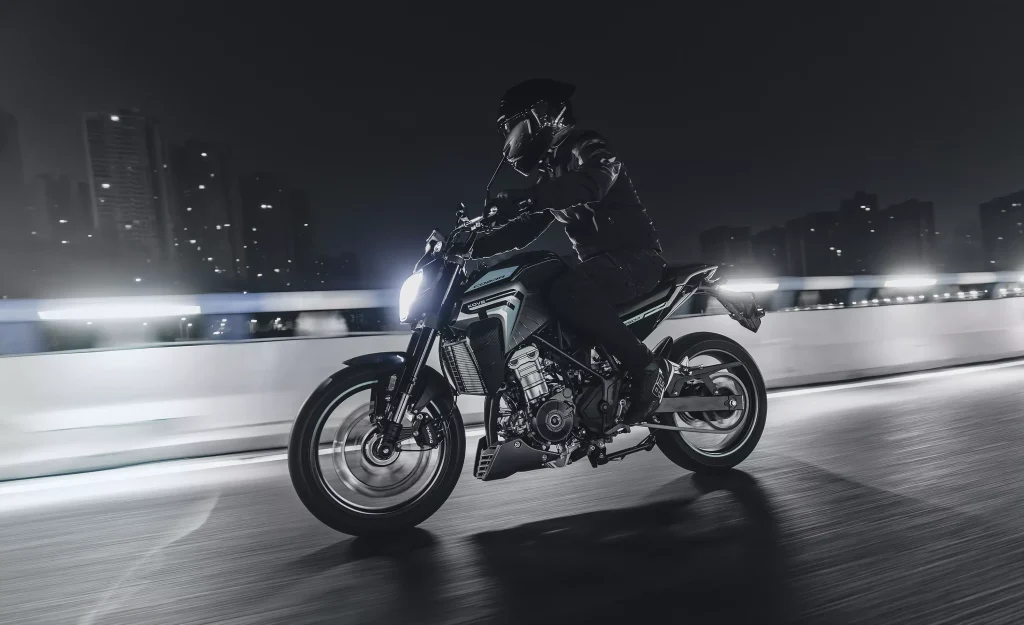
350cc — A Middle-Ground Option
Stepping up to 350cc adds noticeably more usable mid-range power for highway on-ramps and overtaking, while typically keeping weight and seat height close to the 250cc class. This makes it a strong choice for riders who want more confidence at speed without a major jump in physical bulk.
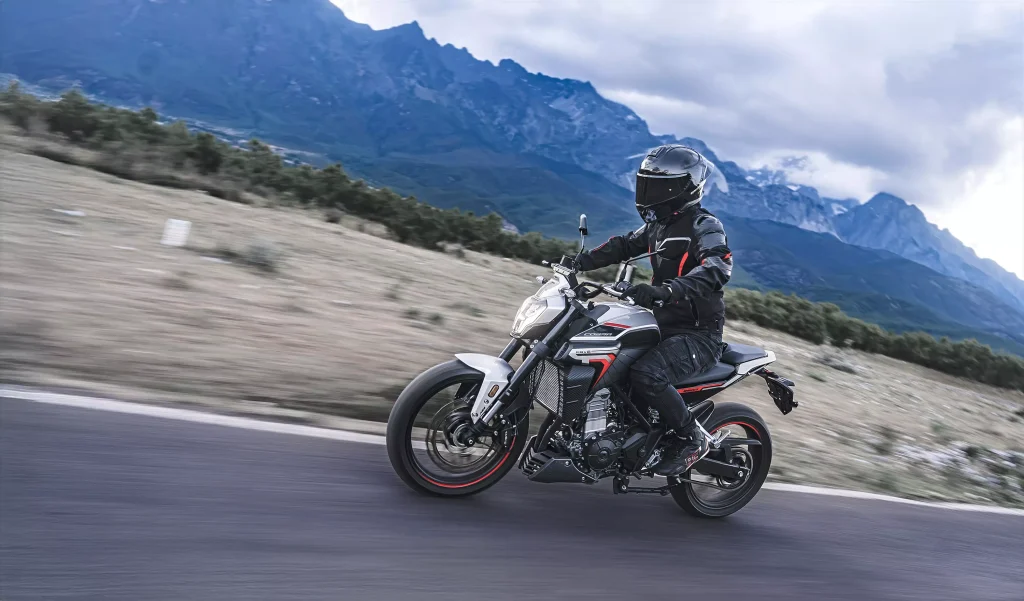
450cc — More Capable, Still Manageable
A 450cc motorcycle offers a meaningful jump in output and top speed, making it suitable for riders who’ve built some basic confidence and want a bike that keeps pace comfortably in mixed city and highway riding — or one they won’t need to replace after a season.
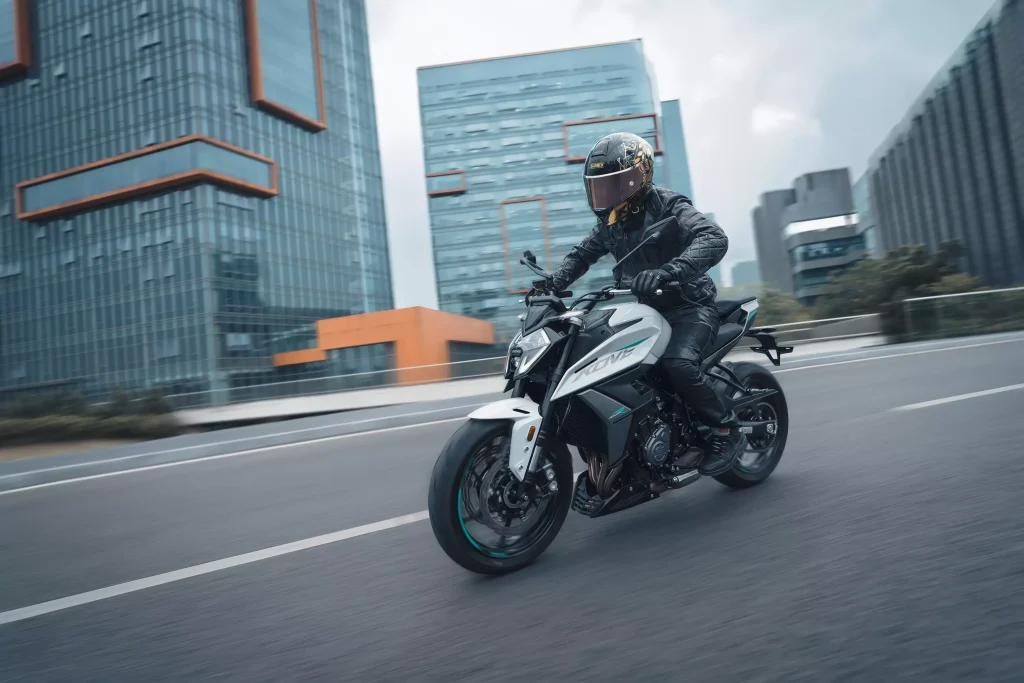
500cc and Larger — When It Makes Sense
Larger-displacement bikes, especially in the ADV or touring categories, bring more weight, more power, and generally taller seat heights. These suit riders with a bigger frame, some riding background from other vehicles, or a specific long-distance or off-road goal in mind from day one.
Matching Motorcycle Size to Your Riding Goals
- City Commuting: A 250cc or 350cc naked bike is usually light enough for tight traffic and easy parking.
- Weekend Touring: 350cc to 450cc gives more comfortable highway cruising without excessive weight.
- Light Off-Road Exploration: Larger ADV-style machines add ground clearance and range, but expect more weight to manage off pavement.
KOVE Models Worth Considering for New Riders
KOVE’s naked-bike lineup maps closely onto these size brackets. The KOVE 250R pairs a 249cc dual -cylinder engine producing 24KW with a 790mm seat height and 153kg curb weight — an accessible entry point for new riders. The KOVE 350R shares the same 790mm seat height and 153kg curb weight but steps up to a 344cc engine making 35KW, giving noticeably stronger highway response without added bulk. For riders ready for more performance, the KOVE 450R uses a 443cc inline-four producing 48KW, with a 795mm seat height and 165kg curb weight. Riders planning longer trips or light gravel exploration can also look at the KOVE 625X, an ADV model built around a 581cc producing 46KW.
Final Thoughts
There’s no universal “right” displacement for a first motorcycle — the right size is the one that matches your height, strength, and riding goals. Compare seat height and curb weight alongside displacement, and where possible, sit on or test ride a few options before deciding. If you’re weighing 250cc, 350cc, or 450cc, comparing specific models like the KOVE 250R, 350R, and 450R side by side is a practical next step toward finding your fit.