
What Makes a Sportbike Fast? Performance Beyond Aggressive Styling
SOURCE: KOVE
Most sportbikes look quick even when they are parked. The sharp fairings, low stance and tall tail make it easy to assume a bike is fast before the engine even starts. But looks only tell part of the story, and riders who judge a bike by its shape are often surprised once they get on the road.
So what makes a sportbike fast? Speed comes from several things working together, not one big number on a spec sheet. In this guide, we will look at engine power, weight, aerodynamics, handling and riding conditions, so you can read sport bike performance with a clearer eye.
Engine Power Is Only One Part of Performance
Engine output matters, but it is only one part of the picture. At higher speeds, engine power plays a major role in continued acceleration and top speed. When accelerating at lower speeds or coming out of a corner, gearing, torque delivery and tire grip all affect how effectively that power reaches the road. Of course, more power doesn’t make a bike faster if it spins its wheels.
For example, shorter gearing is more responsive. As expected, most riders care more about usable midrange power for everyday riding than about an all out peak speed number.
Shorter gearing can provide stronger acceleration by increasing torque at the rear wheel, although it may require more frequent gear changes. Traction control helps manage rear-wheel spin during hard acceleration, while ride modes may adjust throttle response and traction-control settings depending on the motorcycle.
Ultimately, different components all play their role in affecting acceleration.
Why Weight and Aerodynamics Matter at Higher Speeds
Reducing weight on a motorcycle will almost always result in an increase in performance. Motorcycles will accelerate and maneuver more easily with a reduced weight. Weight reduction is a huge priority for race motorcycles and track motorcycles because of the added benefits.
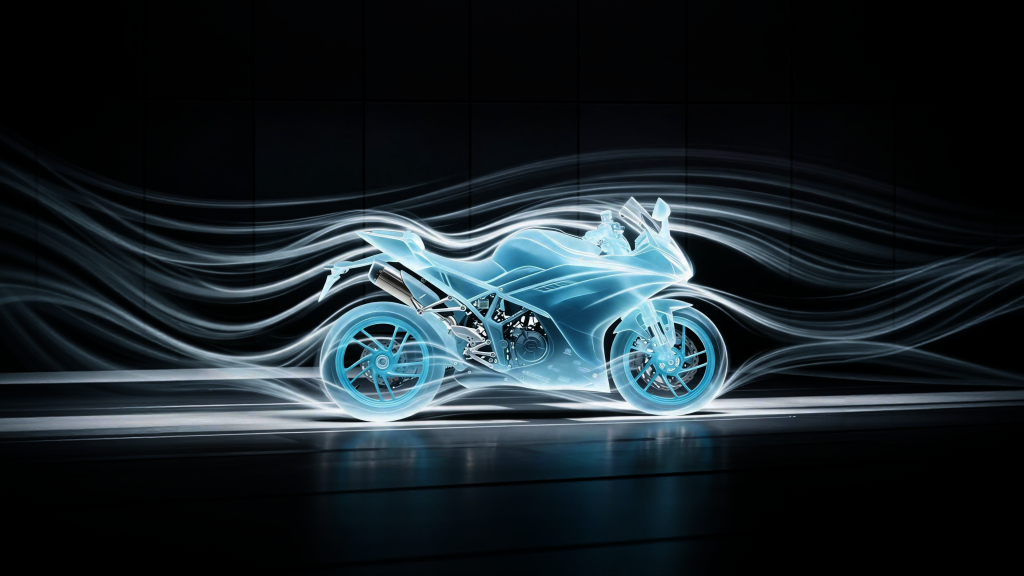
As the bike gains more speed, drag becomes a huge concern. This is why many sport motorcycles feature wind screens. A well-designed fairing and windscreen can help guide airflow around the motorcycle and rider, while a tucked riding position reduces the rider’s frontal area. Together, these factors can help reduce aerodynamic drag at higher speeds.

What Makes a Sportbike Handle Well
Speed only helps if the bike stays composed. Handling is where a good sportbike separates itself from one that is simply quick in a straight line. Four areas do most of the work:
- Chassis and geometry: The frame and steering angles decide how stable the bike feels and how willingly it turns in.
- Suspension: Good suspension helps keep the tires in contact with the road over bumps and manages how the bike responds to weight transfer under braking. Setup matters as much as quality.
- Tires and grip: Tires are your only contact with the road. Compound, size and pressure all change how much grip you get.
- Braking performance: Strong brakes help, but consistency and feel build more confidence than raw bite.
To see how these pieces fit together, here is a quick summary of how each area shows up while riding.
| Performance Area | Main Factors | What Riders Notice |
| Acceleration | Engine output, weight, gearing, traction | How quickly the bike gains speed |
| Top speed | Engine power, aerodynamics, gearing | The maximum speed the bike can reach under suitable conditions |
| Cornering | Chassis, suspension, tires | Stability and confidence through turns |
| Braking | Brake system, tires, suspension | How quickly and consistently the bike slows down |
The Same Sportbike Can Feel Different in Different Conditions
A bike that feels sharp on a track can feel twitchy in city traffic and relaxed on an open country road. Spec sheets cannot capture that, because every ride has different variables. Three things make the biggest difference:
- Riding technique: Smooth throttle, braking and body position often change your pace more than a small power gap.
- Road and weather conditions: Surface grip, temperature and bumps decide how much of the bike’s ability you can actually use.
- Bike condition: Tire pressure, tread depth and brake wear all affect performance. The U.S. NHTSA motorcycle safety page recommends checking tire pressure, tread depth, brakes and fluid levels before every ride.
What to Look for When Comparing Sportbikes
When you compare bikes, try not to lean on one number. Look at power-to-weight, how composed the chassis feels, how the brakes respond and whether the riding position suits you. If you can, take a test ride, because how a bike feels often says more than the figures.
In the end, sportbike speed comes from balance, not one standout figure. If you are exploring sport options, take a look at our sport range, or find a dealer near you to book a test ride.