
How to Choose a Track-Day Motorcycle with Strong Braking and Confidence-Inspiring Handling
SOURCE: KOVE
Engine displacement often gets the most attention when riders compare sport motorcycles, but it should not be the only factor when choosing a bike for track days. A larger engine does not automatically mean better track performance. Braking consistency and predictable handling are just as important, especially for riders developing their cornering and braking skills. Since braking and cornering rely on the same limited tyre grip, a motorcycle that provides stable braking, responsive steering and clear feedback can help riders build confidence on the track. The sections below explain what to look for in braking systems, handling and rider fit, compare these factors across KOVE’s Sport models, and finish with a practical track-day checklist.
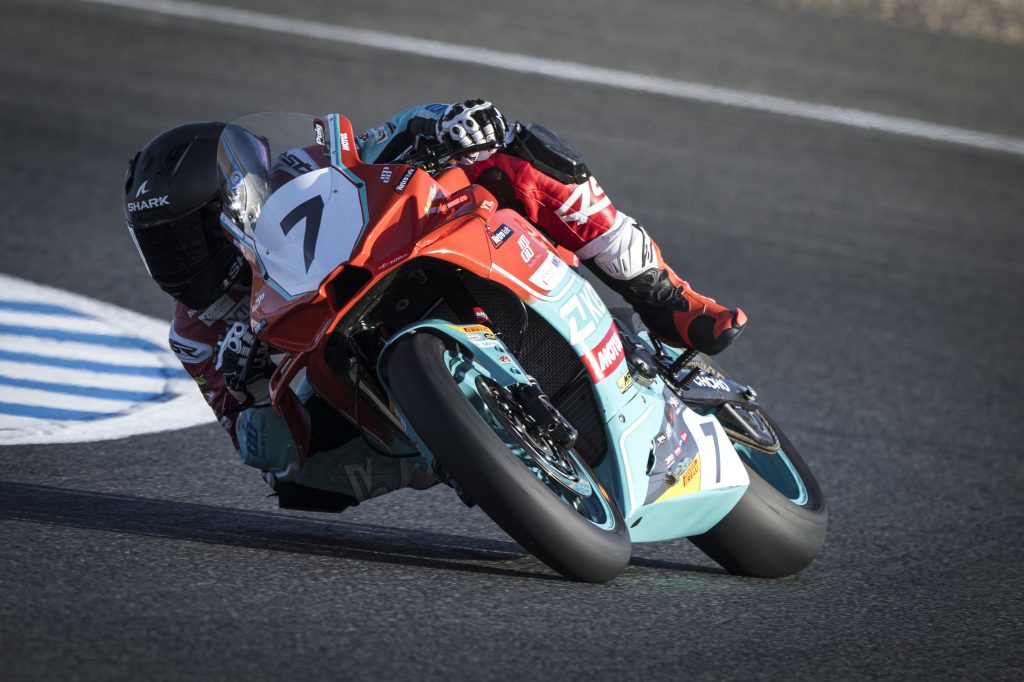
What Should a Track Day Motorcycle Do Well?
Most organisers group riders by experience level and require the bike to pass a technical inspection. So the useful question is not whether your bike is allowed. It is which bike helps you improve. A good track day motorcycle scores well on these six criteria, listed in order of importance.
| Criterion | What the spec sheet shows | What it cannot tell you |
| Brakes | Disc count, caliper type, ABS | Lever feel, fade after repeated hard stops |
| Chassis and geometry | Weight, wheelbase, rake, trail | Steering feedback mid-corner |
| Suspension | Adjustable or not | Whether it suits your weight and pace |
| Rider fit | Seat height, ground clearance | Comfort after several sessions |
| Power and electronics | kW, riding modes, quickshifter | How smooth the throttle feels |
| Running costs | Tyre sizes | Pads, tyres and fluid per day |
Power sits last for a reason. Visordown’s advice for new track riders calls braking too early, then having to accelerate again for the corner, a classic novice error, and suggests picking one consistent braking point each lap. That is a skill problem, and extra kilowatts do not fix it.
What Does “Strong Braking” Mean on a Sport Bike?
Strong braking is not peak stopping force. It is the lever feeling the same on lap twelve as on lap two. Three things decide that.
Hardware layout. Disc count and caliper type show how a system is built, not how it feels. KOVE lists a 320 mm front disc with a two-piston caliper on the 250RR and 350RR, and dual 300 mm discs with opposed four-piston calipers on the 450RR.
Heat. Repeated hard stops build heat in the fluid. Glycol-based brake fluid absorbs moisture over time, which lowers its wet boiling point and invites fade. Wet ratings are measured after the fluid has taken on about 3.7 percent water. The brake manufacturer specifies which fluid belongs in the system, so start with the owner’s manual.
Wear items. Pads, fluid and tyres wear fastest on track. One organiser’s tech form asks for at least 50 percent pad life, adequate fluid and a lever that stays clear of the handlebar when squeezed.
Ask your dealer: which fluid is fitted, which pads are standard, and what a replacement set costs.
What Makes Handling Feel Confidence-Inspiring?
Handling confidence comes down to predictability: the bike does what you expect, every time. Coaches at the California Superbike School stress smooth riding, moving the bike between corners off the throttle, and smooth, continuous acceleration. A bike with clear feedback makes that easier. Check these before you buy:
- Weight and geometry. KOVE lists 153 kg for the 250RR, 164 kg for the 350RR and 165 kg for the 450RR. The 350RR has a 1,374 mm wheelbase, 24.5° rake and 95 mm trail. The 450RR has 1,385 mm, 24.5° and 98 mm.
- Suspension adjustability. The 250RR and 350RR feature a 37mm front fork with no adjustability, while the rear shock offers preload adjustment only. The 450RR has fully adjustable KYB suspension at both ends.
- Fit. Seat height is 790 mm on the 250RR and 350RR, and 785 mm on the 450RR. KOVE says the 350RR’s narrow front seat lets riders around 170 cm put both feet down.
- Throttle and aids. The 250RR, 350RR and 450RR use a mechanical throttle with Sport and Eco modes. The 450RR adds an upshift quickshifter.
- Your own reach. Sit on the bike. Check the bars, the footpegs and how your wrists feel.
How KOVE SPORT Models Fit Different Riders
KOVE’s RR line spans from a 249 cc twin to a 443 cc inline-four, alongside the all-new 645 cc inline-four. This is how the numbers compare, with each model’s gaps left visible.
| 250RR | 350RR | 450RR | 650RR | |
| Engine | 249 cc inline-twin | 344 cc inline-twin | 443 cc inline-four | 645 cc inline-four |
| Max power | 24 kW | 35 kW | 49 kW | 80 kW |
| Curb weight | 153 kg | 164 kg | 165 kg | 195 kg |
| Seat height | 790 mm | 790 mm | 785 mm | 810 mm |
| Front brake | 320 mm disc, 2-piston | 320 mm disc, 2-piston | Dual 300 mm discs, 4-piston | Dual floating discs, 4-piston |
| ABS / TCS | ABS, channels not stated | Dual-channel ABS, TCS | Dual-channel ABS, TCS | Dual-channel ABS, TCS, cornering ABS |
| Front suspension | USD fork, adjustability not stated | 37 mm USD, not adjustable | KYB 41 mm USD, fully adjustable | Mechanically adjustable |
KOVE 250RR: The lightest way in
At 153 kg with a 790 mm seat and 24 kW, the 250RR is the lightest and lowest-powered Sport Bike. Its page lists ABS but not the channel count, and it does not say whether the fork adjusts. Ask before you rely on either.
KOVE 350RR: A step up with traction control
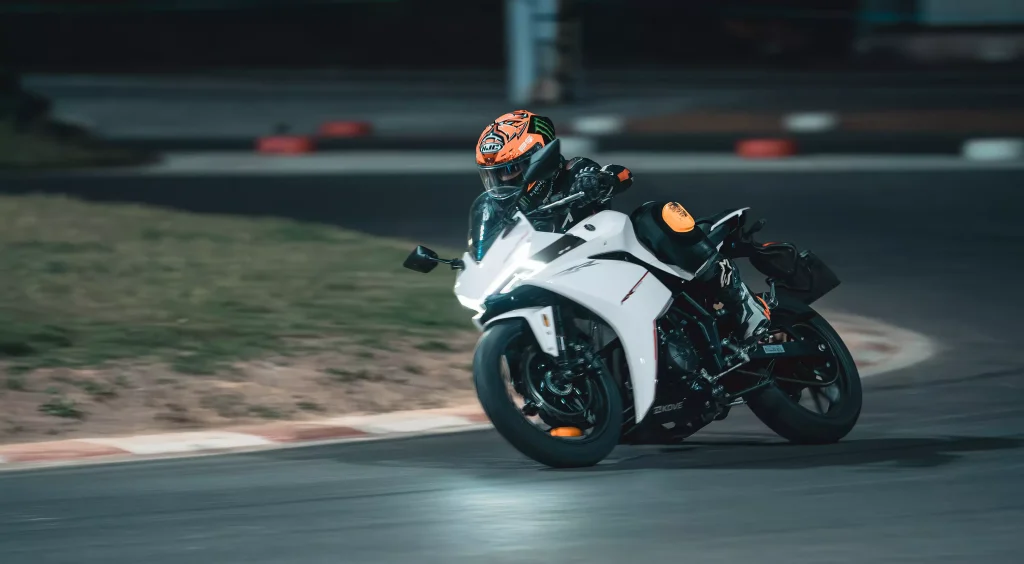
The 350RR adds dual-channel ABS and traction control, which KOVE says can be switched off for track use. KOVE also highlights its racing experience in the development and positioning of the 350RR. You can explore the brand’s racing background on racing page. The limit is suspension: no front adjustment, rear preload only.
KOVE 450RR: Adjustable hardware for riders who progress
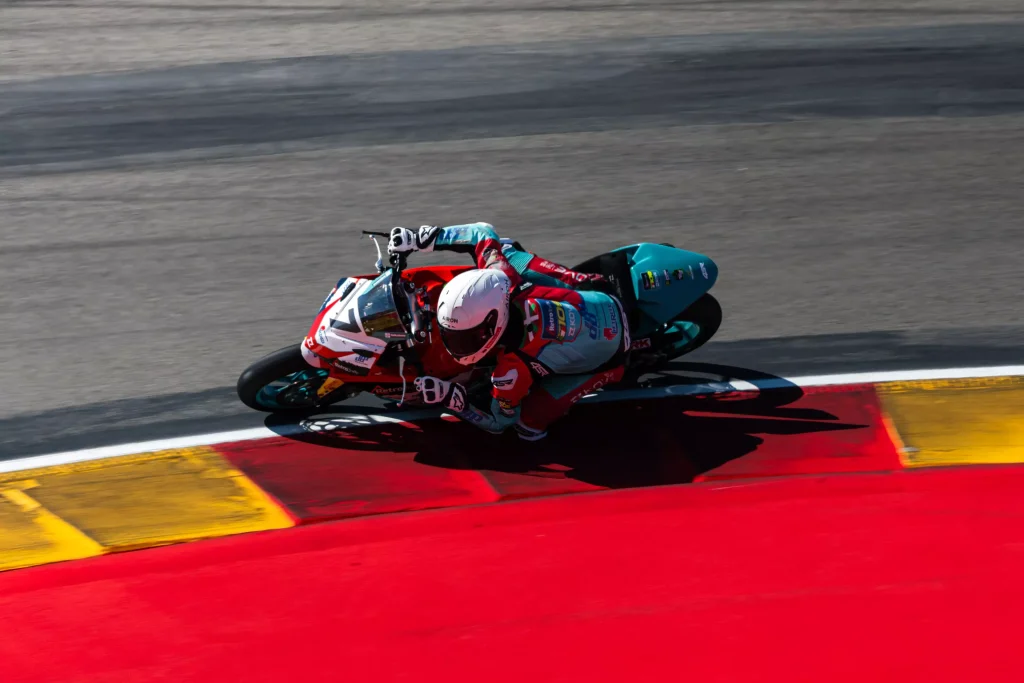
The 450RR brings a 49 kW inline-four, four-piston brakes and fully adjustable KYB suspension. It also ships in a Beginning Mode: KOVE says top speed is capped at 140 km/h, with per-gear rpm limits, until 500 km, and the rider cannot switch it off manually. KOVE also says the bike needs no extra modifications for track days. Your organiser’s inspection has the final word.
A Closer Look at the KOVE 650RR
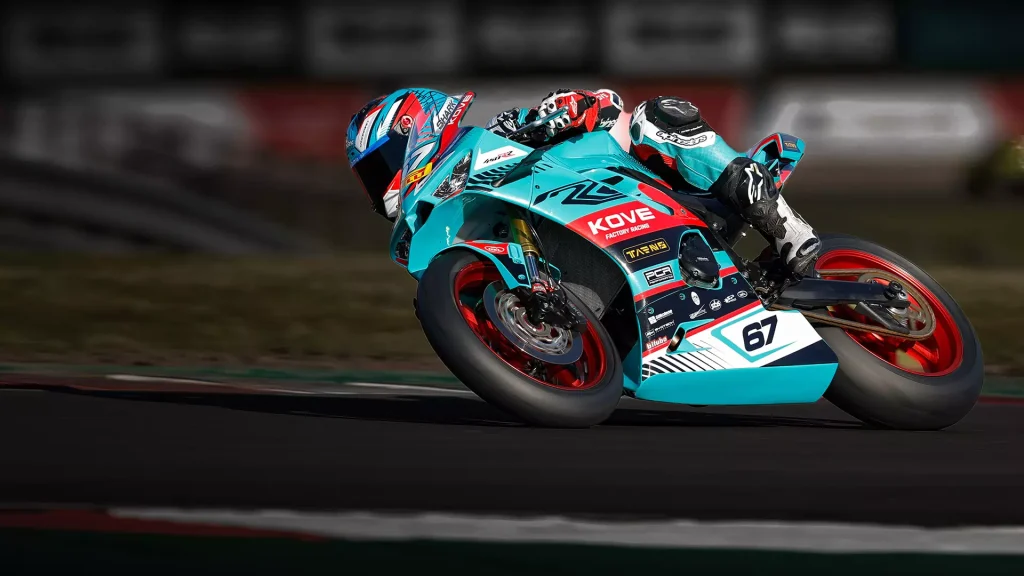
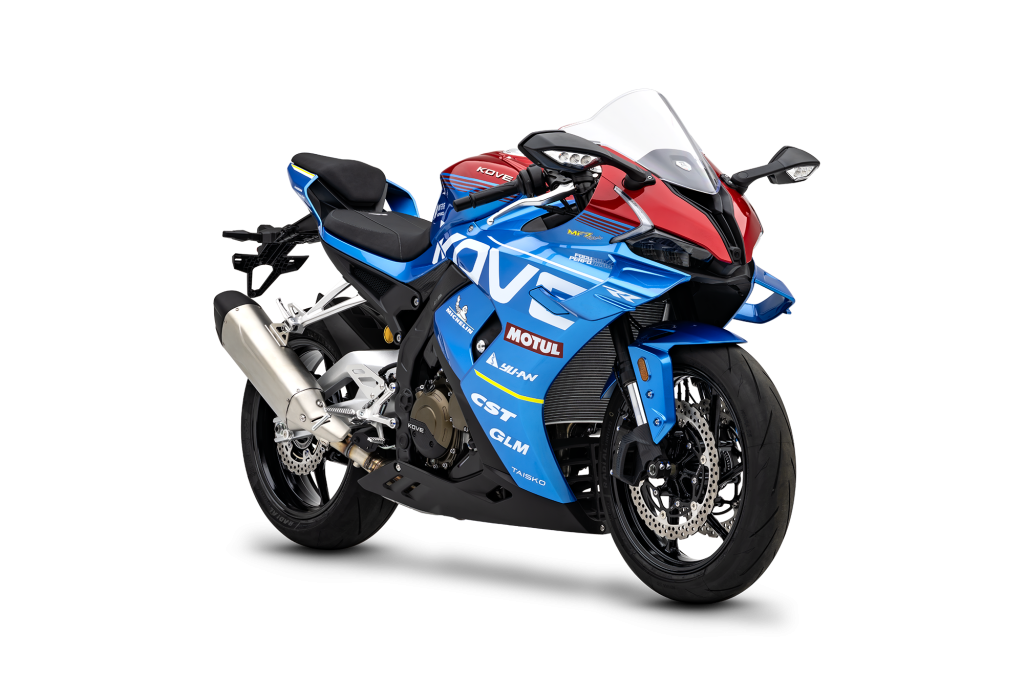
At EICMA, KOVE unveiled the 650RR, a new addition to its SPORT lineup. Its preliminary specifications include a twin-spar frame and adjustable suspension, with a mechanically adjustable front fork and rear hydraulic damping adjustment. The braking system features dual floating front discs with opposed four-piston calipers, supported by dual-channel ABS, traction control and cornering ABS. Riders can also expect Standard, Sport and Custom riding modes, ride-by-wire and a bi-directional quickshifter. The bike has a reported curb weight of 195 kg, an 810 mm seat height and a 1,408 mm wheelbase.
Before You Buy: A Track Day Checklist
Rules differ by organiser, so read yours first. One organiser gives no refund if your bike fails technical inspection. Another asks for at least 50 percent tyre tread and brake pad life remaining. A third rules out fluid leaks, brake lines and masters included.
- Read the technical rules and ask what the inspector checks.
- Check pads, fluid level and lever feel before you load the bike.
- Prepare the tyres. Track pressures differ from street settings.
- Wear full gear. Full riding gear and a valid licence are typical requirements.
- Budget for consumables: pads, tyres and fluid.
- Consider coaching. Schools like the California Superbike School teach the smooth inputs described earlier.
Final Thoughts
Choose a track day motorcycle by how it brakes, steers and fits you, then let power follow. Test each bike against the criteria above, read your organiser’s rules, and prepare brakes and tyres before the day. To compare the KOVE SPORT Models in person, explore the range or find a dealer.