
KOVE 125 Rally: Is This Lightweight Motorcycle Right for Beginners?
SOURCE: KOVE
If you want a first bike that looks like it belongs at the Dakar but won’t scare you in a parking lot, the KOVE 125 Rally deserves a look. It’s a genuine lightweight motorcycle: 122 kg dry, 11 kW of gentle power, and dual-channel ABS. The catch is an 860 mm seat and a 110 km/h top speed, which won’t suit everyone. Here’s how the specs translate into real riding, who will enjoy it, and who should look at something bigger.
Quick Verdict: Who the KOVE 125 Rally Suits
KOVE unveiled the 125 Rally at EICMA in Milan on 3 November 2026, alongside the 350 Rally and 650RR. It’s pitched as an entry point to adventure riding. For the right rider, it fits that job well.
| Good fit | Think twice |
| First-time buyers who want rally looks without a heavy bike | Shorter riders who can’t comfortably reach the ground at 860 mm |
| City commuters who also want to try gravel and dirt roads | Anyone planning regular highway or long-distance riding |
| Riders stepping up from a scooter or small commuter | Riders who want adjustable suspension and serious off-road capability |
In short, it’s a good first adventure bike for city riders who want occasional trail access. It’s not a touring machine.
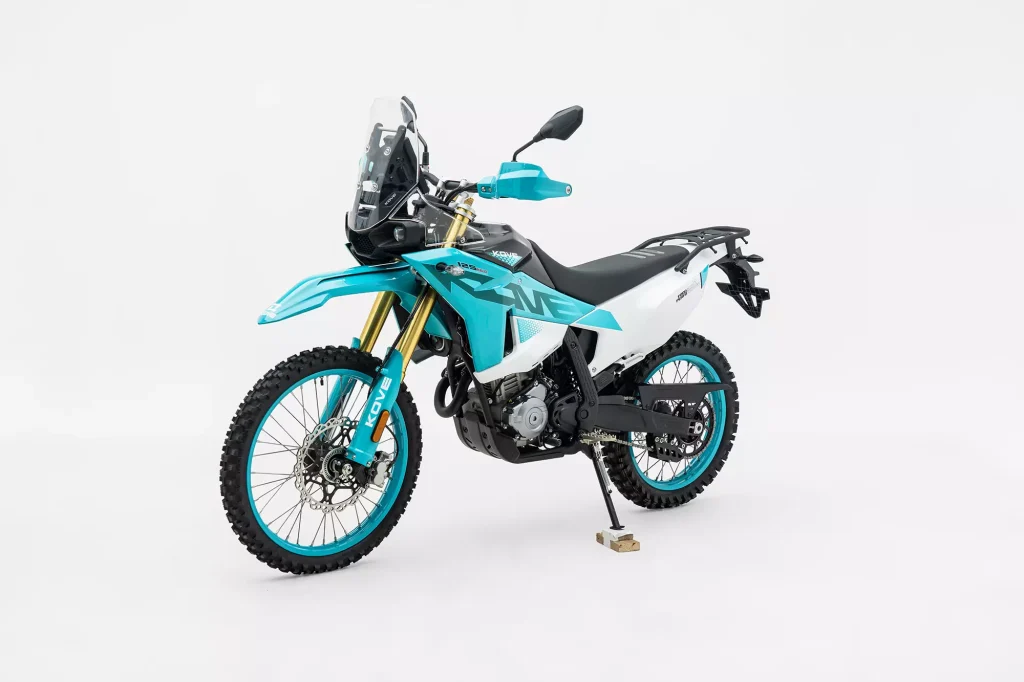
Why the KOVE 125 Rally Counts as a Lightweight Motorcycle
122 kg: what that number really tells you
Weight matters more for beginners than almost any other spec. Most early mistakes happen at low speed: a slow U-turn, a wobbly stop, a bike parked on a slope. A lighter bike forgives these mistakes. You can catch it, push it, and pick it up if it goes over.
The 125 Rally has a dry weight of 122 kg. Dry weight leaves out fuel, oil and coolant, so the bike you ride away on will be heavier. KOVE hasn’t published a wet or kerb weight, so ask your dealer before you buy. Even with that caveat, 122 kg puts it in genuinely light territory for a bike with 21-inch and 18-inch wheels.
A small engine you can actually learn on
Under the tank sits a 124.7 cc single-cylinder, liquid-cooled, four-stroke engine with fuel injection. It makes 11 kW at 9,000 rpm and 11 N·m of torque at 7,500 rpm. That’s roughly 15 horsepower, enough for city traffic but not enough to surprise a new rider. You can open the throttle without worrying that the bike will run away from you.
What the Specs Mean for a First-Time Rider
Spec sheets are easy to read and hard to interpret. Here are the numbers that matter most to a beginner.
| Spec | What it means for you |
| 860 mm seat height | Tall. Sit on one before you buy. |
| 240 mm ground clearance | Clears rocks, ruts and kerbs easily |
| 124.7 cc, 11 kW / 11 N·m | Easy, predictable power |
| 6-speed gearbox, wet clutch | Plenty of gears for city and trail |
| Dual-channel ABS | Helps prevent wheel lock-up when braking hard |
| 6.75-inch TFT display | Large and easy to read at a glance |
Seat height and ground clearance
With an 860mm seat height, this rally offers the elevated riding position that adventure enthusiasts appreciate. Combined with an impressive 240mm ground clearance, it provides greater freedom when navigating rocks, ruts, and other obstacles. But for the best riding experience, we recommend visiting your local dealer to experience the bike in person and find the riding position that suits you best.
Power and gearing
The 6-speed gearbox and wet multi-plate clutch keep things smooth. A small engine like this needs gears to stay in its sweet spot, and six of them give you room to do that on both city streets and dirt roads. The throttle is mechanical, so there’s a direct feel to it that many learners like.
Three riding modes
You get Off-Road, Sport and Eco modes. For a beginner, Eco is a sensible starting point on wet or unfamiliar roads, and Off-Road suits loose surfaces. Treat Sport as something you grow into.
Brakes and tech
Dual-channel ABS means the front and rear brakes both have anti-lock protection. If you grab a handful of brake in a panic, which every beginner eventually does, ABS gives you a better chance of staying upright. You also get full LED lighting and a 6.75-inch TFT display, which is a pleasant surprise at this level. The bike starts with a mechanical key rather than a smart key, so keep that in mind if you’re used to keyless scooters.
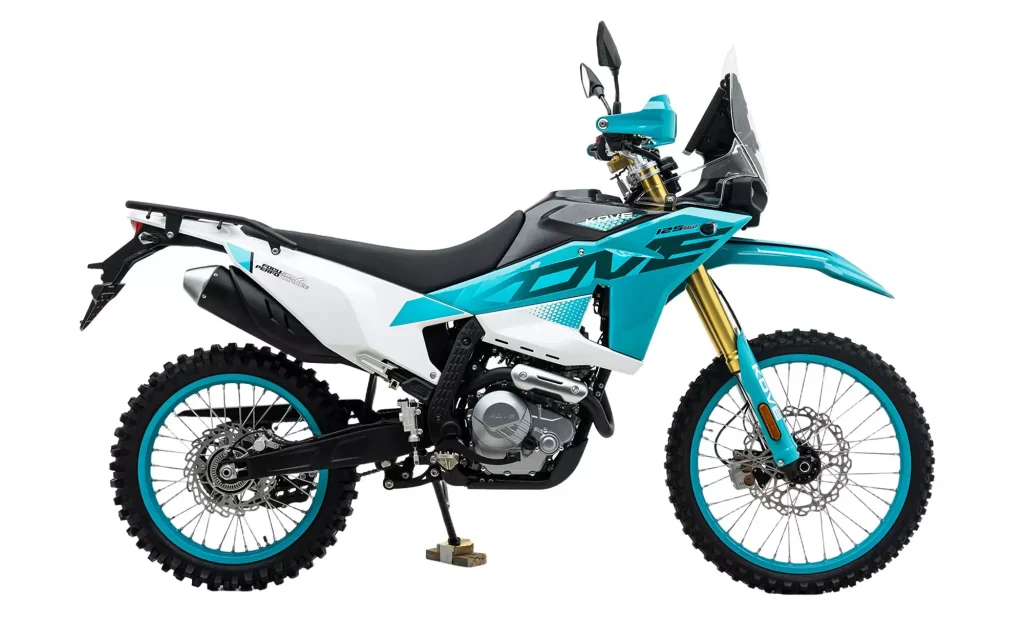
Where the 125 Rally Fits: City Commutes vs. Light Trail Riding
Daily commuting
This is where the bike makes the most sense. It’s narrow at 850 mm wide, light enough to maneuver in traffic, and the upright riding position gives you a good view over cars. The 12.5-litre tank is enough for daily use.
Weekend dirt roads and gravel
The wheel setup is where the 125 Rally gets its rally credentials: a 21-inch front and 18-inch rear spoked wheel, with 215 mm of front and 199 mm of rear suspension travel. Big front wheels roll over bumps and holes more easily than small ones, and long suspension travel soaks up rough surfaces. Together with 240 mm of ground clearance, that’s a proper setup for gravel roads, fire trails and farm tracks.
It isn’t a dedicated off-road machine. The front fork isn’t adjustable, and the rear shock only adjusts for preload. For easy trails, that’s fine. For aggressive off-roading, you’ll hit its limits.
What about highways?
With a top speed of 110 km/h (about 68 mph), the 125 Rally is happiest on city streets and suburban roads. It can technically handle faster roads, but you’d be running it near its limit, with little power in reserve for overtaking. If your commute includes a long stretch of highway, look at something larger.
KOVE 125 Rally vs. 350 Rally: Which One Should You Pick?
KOVE launched both bikes at EICMA, and they share the same wheel sizes: 21 inches at the front, 18 at the rear. After that, they head in different directions.
The 125 Rally is the lightweight entry. The 350 Rally steps up to a 349.9 cc engine, a 21-litre tank and longer-travel suspension. It also adds dual counter-balancers to reduce vibration and dry-sump lubrication for demanding off-road use. In other words, the 350 is built for longer rides and tougher terrain.
A simple way to choose:
- Pick the 125 Rally if you’re commuting, learning, riding mostly in town, or want a lighter and more approachable bike.
- Look at the 350 Rally if you expect long rides, highway stretches or regular off-road use, or you don’t want to outgrow your bike quickly.
Built by a Brand That RacesKOVE doesn’t make this bike in a vacuum. The company made its Dakar debut in 2023, and all three of its motorcycles finished the rally. In 2026, factory rider Neels Theric wins 3 stage champions in Dakar Rally 2 category. KOVE says it feeds data from events like these back into its production bikes. You don’t need to care about racing to ride the 125 Rally, but it’s reassuring that the brand tests its ideas in some of the toughest conditions there are.
How to Decide: A 4-Step Checklist Before You Buy
- Sit on it. Visit a dealer and check you can support the bike at a stop. This matters more than any spec.
- Be honest about how you’ll ride. Mostly commuting with the odd dirt road? The 125 Rally fits. Regular highways or long trips? Look bigger.
- Check your local licence rules. Rules for 125 cc motorcycles vary by country and region, so confirm what applies to you.
- Budget for gear and training. A good helmet, gloves, jacket and boots matter, and a beginner riding course is one of the best investments you can make.
Ready to try one? Find a KOVE dealer near you.