
How to Choose Your First Motorcycle Without Getting Lost in Model Names and Specs 2026
SOURCE: KOVE
When every model name looks like a code, it is easy to compare the wrong things. A first motorcycle guide 2026 should not begin with peak power, racing stories, or the biggest engine you think you can “grow into”. It should begin with where you will actually ride, how confident you feel at low speed, and what kind of mistakes your first bike will forgive.
That matters even more now because real-world riding is varied. In Great Britain, motorcycle and scooter traffic reached 3.0 billion vehicle miles in 2025, with 52% on minor roads and 42% on A roads, which shows how often riders spend time in everyday mixed conditions rather than ideal open-road scenarios. According to GOV.UK data, 52% of motorcycle and scooter miles in Great Britain in 2025 were travelled on minor roads, and 42% on A roads. When choosing your first motorcycle, start with the roads you expect to ride most often.
Map the motorcycle categories before comparing individual models
A lot of first-bike confusion disappears once you stop comparing badges and start comparing purposes. Before you choose a first motorcycle, decode four basics first: body style, engine size, weight feel, and seat height. These tell you much more than a dramatic model name ever will.
What a new rider actually needs to decode first
The useful terms are simpler than they sound. Displacement means engine size, usually shown in cc. More cc can bring more performance, but it does not automatically mean the bike is better for a beginner. Weight matters because you feel it when pushing the bike, stopping on uneven ground, or making a tight U-turn. Seat height matters because stable footing builds confidence when traffic, camber, or poor surfaces catch you out.
Keep these checks in mind:
– Riding posture: upright is usually easier to learn on than a committed race crouch
– Power delivery: smooth response is easier to manage than abrupt acceleration
– Intended terrain: road, mixed surface, or dirt changes the right category quickly
– Slow-speed balance: a bike can look manageable on paper and still feel top-heavy in person
How to frame KOVE’s range without getting overwhelmed
KOVE keeps its range organised by use case, which is helpful if you are trying to understand motorcycle model names explained in a practical way. Its current model line groups bikes into ADV, Rally, Sport, Naked, Off-road, and Classic categories, rather than forcing you to guess from a badge alone.
Here is the simplest way to read those families:
- ADV: Built around versatility, combining road riding, touring, and off-pavement capability.
- Rally: More specialised motorcycles focused on rally-style and off-road riding, with different models covering road-legal and competition-oriented use.
- Sport: Road-focused motorcycles designed around performance, handling, and sporty riding.
- Naked: Road-oriented motorcycles with an upright, more open riding format suited to everyday and spirited riding.
- Off-road: Dirt-focused motorcycles designed primarily for off-road terrain rather than everyday road use.
- Classic: Road-oriented motorcycles with a relaxed riding position and cruiser-inspired design
Which first-bike traits matter most once you know your riding style?
Once you know your likely category, the next job is filtering the traits that build confidence. New riders often give too much weight to impressive numbers and too little to day-one control. In practice, the bike that feels calm at walking pace usually teaches you more, faster.
Confidence-building factors to prioritise first
If you are working through how to choose a first motorcycle, prioritise these traits before almost anything else:
– Seat-height confidence: can you put at least the balls of both feet down with control?
– Weight feel: can you manoeuvre it into a parking bay without strain?
– Throttle response: does the engine pick up smoothly or sharply?
– Posture: does the riding position reduce wrist, hip, and neck fatigue?
– Use-case realism: will you mainly ride in town, on back roads, on motorways, or on rough surfaces?
Licence limits matter as well in the UK. GOV.UK states that A1 covers bikes up to 125cc and 11kW, while A2 covers standard motorcycles up to 35kW with a power-to-weight ratio not above 0.2kW/kg. If you are a beginner choosing for legal access as well as comfort, that rule can narrow the field quickly.
Specs that matter less than beginners assume
Some numbers are useful, but they are often overvalued by new riders. A top-speed claim says almost nothing about whether a bike helps you learn emergency stops, slow turns, or wet-roundabout control. Peak horsepower can sound exciting, yet a calmer torque curve is often more valuable in your first year.
Do not let these points dominate your shortlist:
– Top speed: not relevant to core learning
– Race narrative alone: inspiring, but not a fit test
– Peak horsepower only: delivery matters more than the headline number
– Large displacement alone: size does not equal suitability
– Prestige bias: a famous-looking category can still be the wrong tool
Why the easiest bike is often the smarter bike
A manageable bike gives you more room to practise starts, stops, U-turns, and braking with confidence. It should feel predictable during the ordinary rides you will make most often.int, offering comparable displacement and output at a lower entry cost — but that value only holds up if the first six factors check out too.
Build a short list by riding scenario, not by badge prestige
This is where a first motorcycle guide 2026 becomes practical. Rather than asking which model sounds coolest, ask which riding situation will fill most of your calendar. The right category usually becomes obvious once you describe an ordinary month honestly.
For city practice and daily road confidence
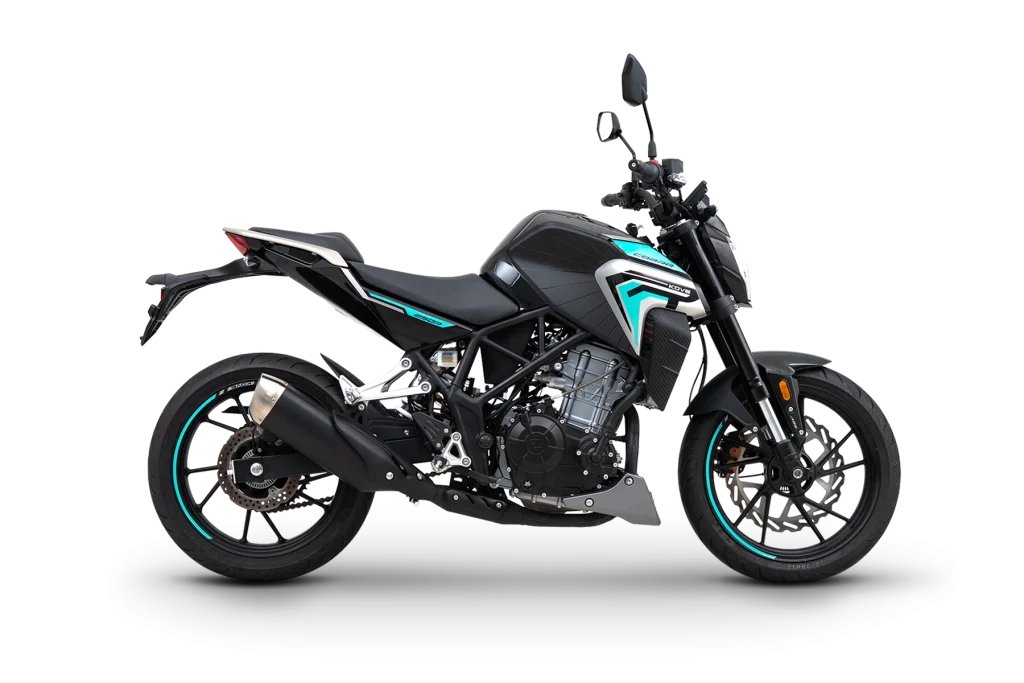
If most of your riding will be traffic, short errands, and steady skill-building, a naked bike or smaller sport model is usually the clearest answer. You want predictable controls, manageable weight feel, and an upright or only mildly forward posture.
Best fit here:
– Primary type: naked
– Secondary type: smaller sportbike
– What to verify: seat reach, clutch feel, throttle smoothness, local service support
Within KOVEMOTO’s range, the 250R or 350R direction makes the most sense for many new riders because the roadster format is easier to read in traffic than a more committed race posture. Sport-curious riders can also look at the 250RR without assuming they must jump straight to the biggest RR badge.
For a first track-curious road bike
Some riders know from day one that they want sharper road manners and the option of future track training. In that case, a smaller-displacement sportbike can be a sensible start, provided you accept a more focused riding position.
What to check before choosing a first sportbike:
– Brake confidence: can you modulate the front brake smoothly?
– Body position tolerance: are your wrists and hips comfortable after 45 to 60 minutes?
– Insurance and training costs: sport categories can carry higher ownership friction
– Growth plan: will you benefit more from skill now than power later?
For KOVEMOTO, the clean track-style learning path is 250RR to 350RR to 450RR. If your goal is your first sportbike rather than your last one, the smaller end of that ladder is usually the wiser year-one move. That gives you sharper handling without forcing you to manage a more demanding package too early.
For mixed-road exploration and weekend touring
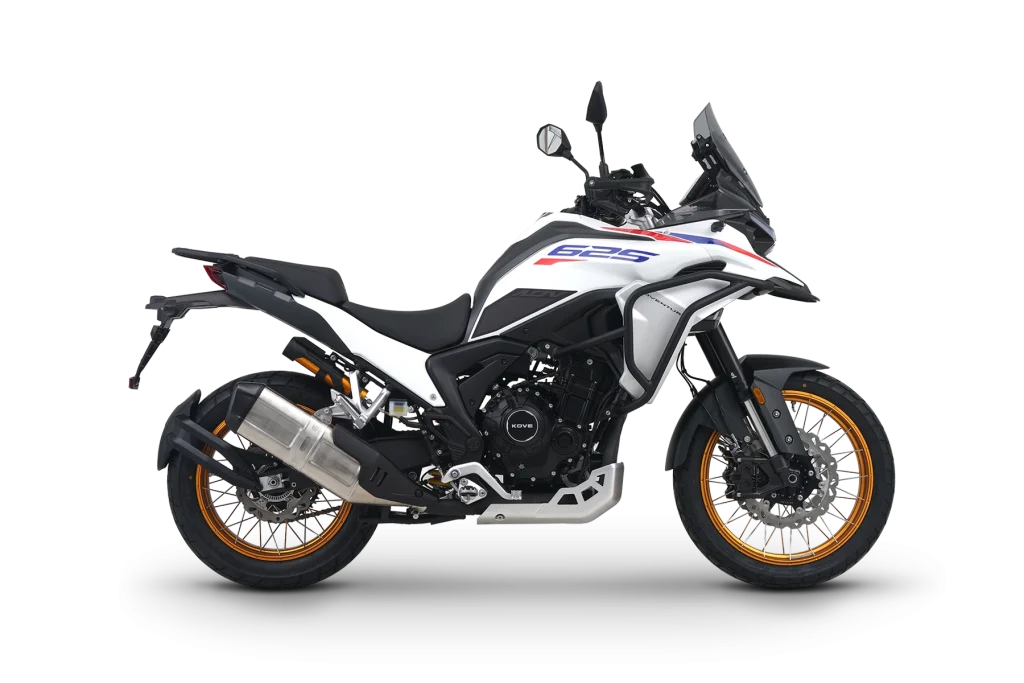
If your weekends will include back roads, rougher lanes, and longer distances, an adventure model is usually easier to live with than a more specialised rally machine. Upright ergonomics, broader comfort, and more tolerant mixed-surface manners matter a great deal when your route changes halfway through the day.
For this scenario, compare these directions:
- 525X: a mid-size ADV built for weekend escapes and confident riding beyond pavement
- 625X: a versatile middleweight ADV option for riders looking for a balance between everyday riding and adventure travel
- 800X PRO: a more powerful, lightweight-for-its-class ADV with greater capability for exploring a wider range of roads and terrain
- 800X TOURING: a more long-distance-oriented ADV choice for riders who put greater emphasis on extended touring and travel
A lightweight adventure bike often makes a better first step than a large, heroic-looking overland machine. Start by asking whether your riding is truly mixed-surface or simply mostly paved roads with occasional poor tarmac. If it is the latter, the simpler ADV path usually serves you better than a rally-led choice.
For early off-pavement ambition
If dirt is not just an occasional novelty, category discipline matters. Riders often confuse rally, adventure, and enduro bikes because all three can look rugged in photos. In reality, they solve different problems.
Use this filter:
– Adventure bike: road comfort first, rough surfaces second
– Rally bike: lighter mixed-terrain focus with more specialist intent
– Enduro or motocross: dirt-first priority, road practicality reduced or absent
Within KOVEMOTO’s current line-up, the 450 RALLY RE suits riders wanting road-legal mixed use, while the 450 ENDURO RE points more clearly toward dirt-first learning. The MX250 CROSS R and MX450 CROSS R are even more specialised off-road options. That is the real rally bike vs ADV split: one is still trying to be broadly useful on the road, the other is moving much closer to performance off pavement.
A practical way to choose the right first KOVEMOTO model
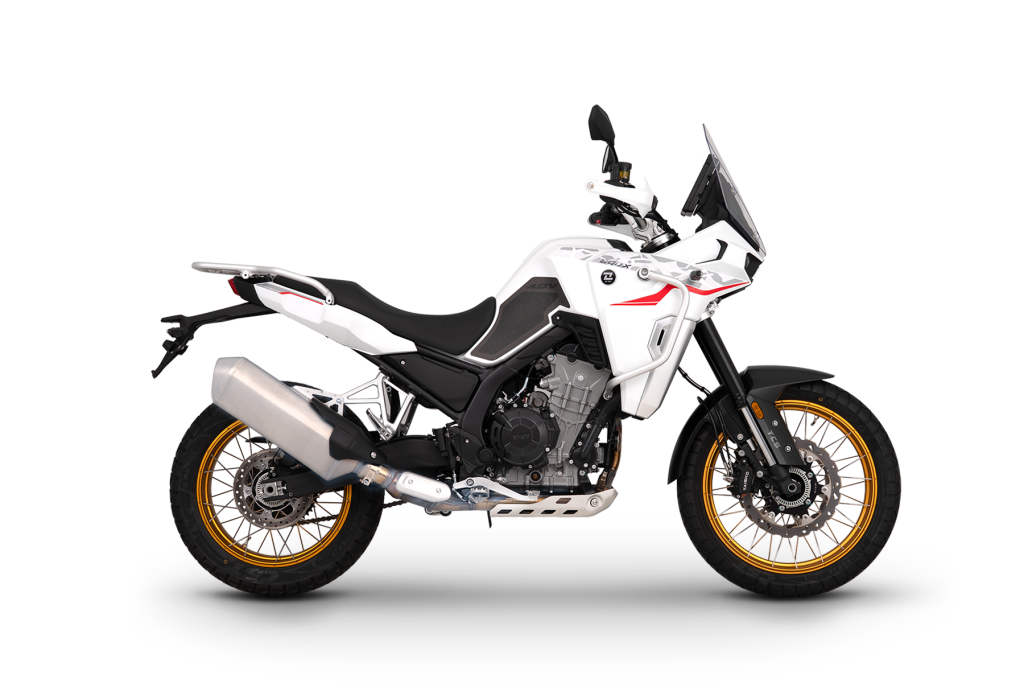
A good beginner motorcycle buying guide should leave you with a process, not just opinions. If you follow the next five steps honestly, you can cut through most first-bike confusion in one sitting.
Step 1: Define where 80% of rides will happen
Your main environment should decide the category first.
– City streets: favour lighter road-focused control
– Twisty tarmac: consider smaller sport formats
– Mixed surfaces: compare ADV and rally-light options
– Dirt-first riding: stay in off-road categories early
Step 2: Set your personal difficulty ceiling
Be honest about how much challenge you want in the first six to twelve months.
– Low-intimidation target: smooth, lighter, simpler layout
– Moderate challenge target: enough performance to grow into without feeling punished
– High-commitment target: only sensible if you already have solid riding experience
Step 3: Narrow to two category fits
Do not compare six bikes from six categories.
– Road-only shortlist: naked vs sport
– Mixed-use shortlist: adventure vs rally
– Dirt shortlist: enduro vs motocross-style machine
Step 4: Compare the ownership checks that affect real life
This is where many first-time buyers lose clarity. A bike may suit your fantasy rides and still fail your weekly routine.
Check these points carefully:
– Ergonomic fit: seat height, bar reach, and slow-speed balance
– Ride environment: traffic density, weather, speed limits, road surfaces
– Learning curve: forgiving versus demanding chassis feel
– Support: parts access, servicing, and official documentation
Step 5: Choose the bike with the fewest year-one compromises
The best first motorcycle is usually the one you ride often, not the one that looks most ambitious in a group photo. KOVEMOTO’s range gives you sensible category ladders, so take advantage of that structure. If your real use is commuting and back-road practice, do not buy for a hypothetical desert crossing. Buy for the next year, then upgrade after your skills catch up.
Mistakes that make first-bike decisions harder than they need to be
First-bike mistakes usually happen before you even ride away. Most come from buying the story of the bike rather than the job it needs to do. A simple checklist can stop that.
What to do
These habits keep your shortlist grounded:
– Choose category before displacement
– Prioritise confidence over ego
– Match seat fit to reality
– Test your likely riding posture for at least 20 minutes
– Think about support, not just performance
What to avoid
These patterns cause expensive second guesses:
– Buying for rare use cases such as once-a-year trail dreams
– Overvaluing peak spec numbers instead of smoothness and balance
– Skipping practical ownership checks such as parts and servicing
– Confusing rally style with beginner suitability
– Assuming a larger engine is automatically more future-proof
The best first motorcycle is the one that keeps you riding
A good choice feels almost boring on paper because it matches your actual life so well. That is not a weakness. It means the bike supports practice, builds confidence, and leaves enough headroom for your next step instead of overwhelming your first season.
If you still feel stuck, reduce the decision to two categories first. For many riders, that means naked versus sport for road use, or adventure versus rally for mixed terrain. Once the category is right, the model names stop looking like noise and start making sense.