
How to Choose an Adventure Bike for Short Riders: Seat Height vs. Seat Width
SOURCE: KOVE
Choosing an adventure bike as a shorter rider is not simply a matter of finding the lowest seat. How the motorcycle feels when you stop, turn, or move it on uneven ground can matter just as much as the number on the specification sheet.
Seat shape, suspension setup, weight, and riding position all influence how manageable a bike feels. Understanding these factors will help you choose an adventure motorcycle that fits your body and your riding plans, whether you spend most of your time on paved roads or regularly explore gravel tracks and trails.
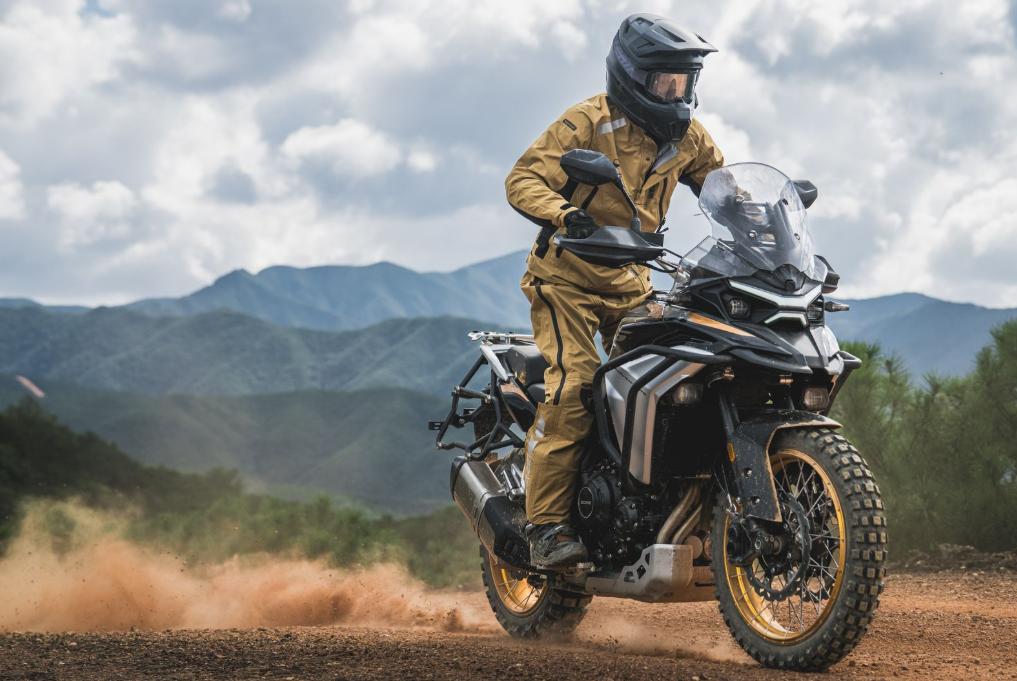
Why an ADV Decision Starts at the Stop, Not the Spec Sheet
An adventure motorcycle can feel comfortable while moving but become more challenging when you need to put a foot down. This is especially noticeable at traffic lights, on sloping roads, or when maneuvering in a tight parking space.
At these moments, you are no longer judging the motorcycle by its performance on the road. You are assessing how easily you can support its weight, maintain balance, and respond when the ground is not perfectly level.
Three factors make a practical difference:
- Ground reach: Can you place one or both feet securely on the ground without stretching uncomfortably?
- Low-speed balance: Can you control the motorcycle when making tight turns, walking it backward, or moving it into a parking space?
- Confidence on uneven surfaces: Can you find stable footing when the road slopes or the ground beneath your feet is loose?
These considerations do not mean that shorter riders must choose a low-seat motorcycle with limited suspension travel. They mean that seat height should be evaluated alongside the motorcycle’s overall geometry and how it fits your body.
You also do not necessarily need to place both feet flat on the ground. Being able to support the motorcycle confidently with one foot can be sufficient for many riders. The important point is to understand your own comfort level and the conditions in which you expect to ride.
Seat Height vs. Seat Width: What Actually Determines Ground Reach?
Seat height is the most obvious measurement when comparing adventure bikes, but it does not tell the whole story. Two motorcycles with similar seat heights can feel quite different when you try to reach the ground.
Seat Height: The Starting Point
Seat height measures the distance from the ground to the seat under the conditions specified by the manufacturer. A lower seat generally reduces the distance your legs need to cover, making it a useful starting point when choosing an adventure bike for shorter riders.
However, the published figure does not fully describe how the motorcycle will feel beneath you. Suspension compression, seat cushioning, riding gear, and your body proportions can all influence your actual ground reach.
A motorcycle with a relatively low seat may still feel difficult to support if its seat is wide or its overall weight is challenging to manage at a standstill.
Seat Width: How Your Legs Reach the Ground
Seat width affects the angle at which your thighs extend around the motorcycle. A wide seat can push your legs farther apart, increasing the distance your feet must travel to reach the ground. A narrower profile near the front of the seat allows your legs to descend more directly.
This is why the shape of the seat matters alongside its height. For some riders, a motorcycle with a slightly taller but narrower seat may feel easier to manage than one with a lower but wider seat.
When comparing adventure motorcycle seat heights, look beyond the highest point of the seat. Pay attention to the front section where your thighs meet the motorcycle, as this area directly affects how naturally your legs reach the ground.
Weight and Suspension Also Matter
Ground reach is only one part of low-speed control. The motorcycle’s weight influences how much effort is needed to stabilize it if it begins to lean, while suspension setup affects how the chassis responds to the rider and the terrain.
A taller motorcycle may settle under the rider’s weight, but the amount of movement depends on the suspension, preload setting, and load. It is therefore unwise to assume that a published seat-height figure will translate directly into a particular riding experience.
The best approach is to consider seat height, seat width, weight, and suspension together rather than treating any single specification as the deciding factor.
How the KOVE 625X Tackles Rider Accessibility
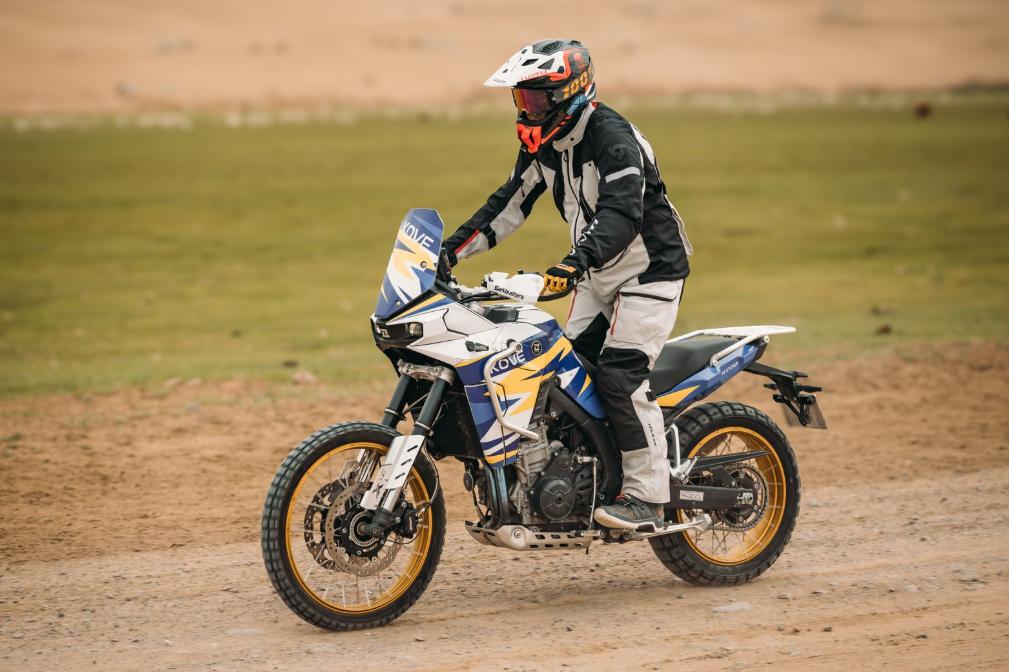
At KOVE, we consider everyday manageability an important part of adventure motorcycle design. The KOVE 625X combines a narrowed seat profile at the thighs with a chassis and suspension setup intended for mixed-road riding. The 625X range also offers different seat-height arrangements, giving riders more than one option to consider when choosing their motorcycle.
A Narrowed Seat Profile at the Thighs
The KOVE 625X features a seat profile that narrows around the thighs. This shape helps riders bring their legs down more naturally instead of having to spread them as far apart to reach the ground.
That design can be useful when stopping at traffic lights, making a tight U-turn, or maneuvering the motorcycle on uneven ground. It also highlights why seat shape deserves attention when comparing adventure bikes for shorter riders.
The actual benefit will vary with each rider’s inseam, body proportions, and riding position. When trying the 625X, pay attention not only to whether your feet touch the ground but also to how naturally your legs descend and how securely you can support the motorcycle.
Different Seat-Height Options in the 625X Range
The KOVE 625X PRO and KOVE 625X MAX offer different approaches to seat height.
The 625X PRO has listed seat heights of 820 mm and 850 mm. The 625X MAX features an electronically controlled adaptive chassis that adjusts ride height according to speed and riding conditions. Its listed seat-height ranges are 795–820 mm and 825–850 mm, depending on the configuration.
For riders who find conventional adventure bike seat heights challenging, the MAX’s speed-adaptive ride-height function is worth considering. At low speeds, the system lowers the motorcycle to help with footing during mounting, stopping, and maneuvering. As speed increases, the ride height rises to support riding stability and suspension performance.
This approach addresses a practical trade-off in adventure motorcycle design: the need for accessible footing at low speeds without giving up the ground clearance and suspension capability needed for rougher terrain.
Before choosing, check the exact configuration available in your market. The listed seat-height range, your inseam, and how the motorcycle feels when stationary should all be part of the decision.
Ground Clearance and Suspension for Mixed-Road Riding
A manageable seat height should not come at the expense of the capability you need beyond paved roads. The KOVE 625X combines a ground clearance of 205 mm with 180 mm of front suspension travel and 230 mm at the rear, giving it the clearance and suspension travel needed for gravel roads, uneven surfaces, and light off-road exploration.
These figures serve a different purpose from seat height. Ground clearance helps provide space beneath the motorcycle when riding over obstacles, while suspension travel allows the wheels to respond to changes in the terrain. When choosing an adventure bike, it is worth considering all three alongside seat shape and how comfortably you can support the motorcycle at a stop.
With its narrowed seat profile, practical seat-height options, and mixed-road capability, the KOVE 625X offers features worth considering for riders who want to balance everyday manageability with adventure riding.
Explore the KOVE 625X to compare the available versions and specifications.
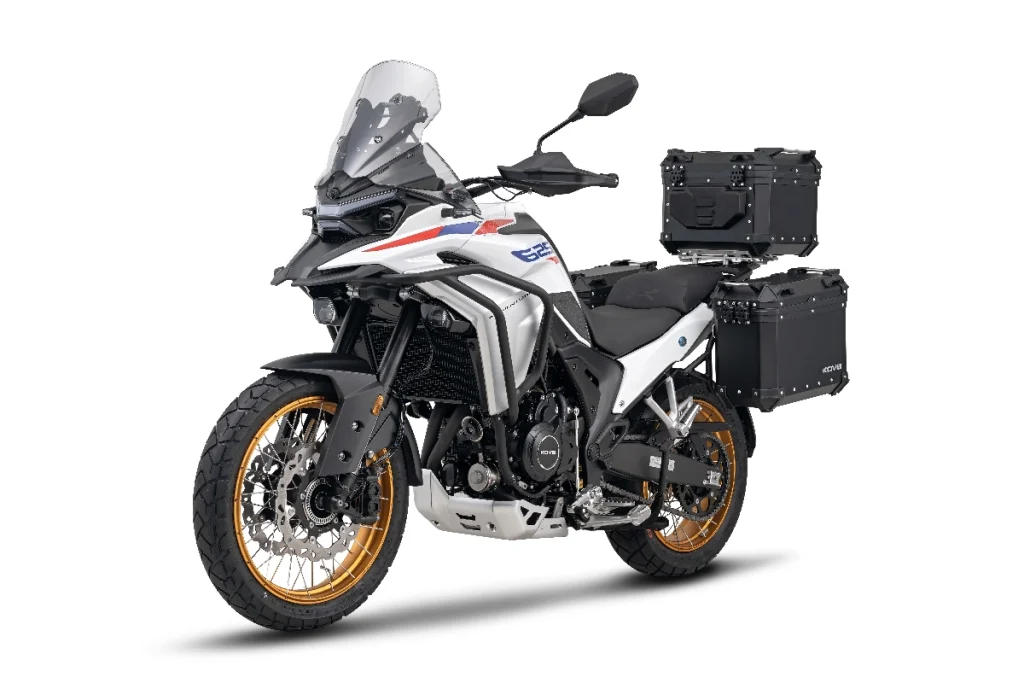
Choosing Your Balance: Middleweight All-Rounder vs. Tall Off-Road Bias
The right adventure motorcycle depends on where you ride most often and what you expect from the bike. Some riders need a versatile motorcycle for commuting, weekend touring, and occasional gravel roads. Others prioritize long-distance comfort or the suspension capability needed for more demanding off-road terrain. Within the KOVE range, these different priorities lead to different choices.
For Everyday Riding and Mixed-Road Adventures
If your riding combines daily journeys, weekend trips, and occasional light off-road exploration, the KOVE 625X and KOVE 525X are worth comparing.
The KOVE 625X brings together a narrowed seat profile at the thighs and a chassis designed for mixed-road use. With 205 mm of ground clearance, 180 mm of front suspension travel, and 230 mm at the rear, it offers a combination of everyday usability and capability for uneven roads. Riders who want to fine-tune their choice around seat height can also compare the 625X PRO and 625X MAX, which offer different seat-height arrangements.
The KOVE 525X is another option for riders looking for a middleweight adventure motorcycle. Its 820 mm seat height, 210 mm of ground clearance, and 195 mm of front and 200 mm of rear suspension travel provide a different combination of dimensions and suspension capability.
When comparing these two models, consider more than the seat-height figures. Think about how naturally your legs reach the ground, how the motorcycle feels when you support it at a stop, and how much off-road capability your regular routes require.
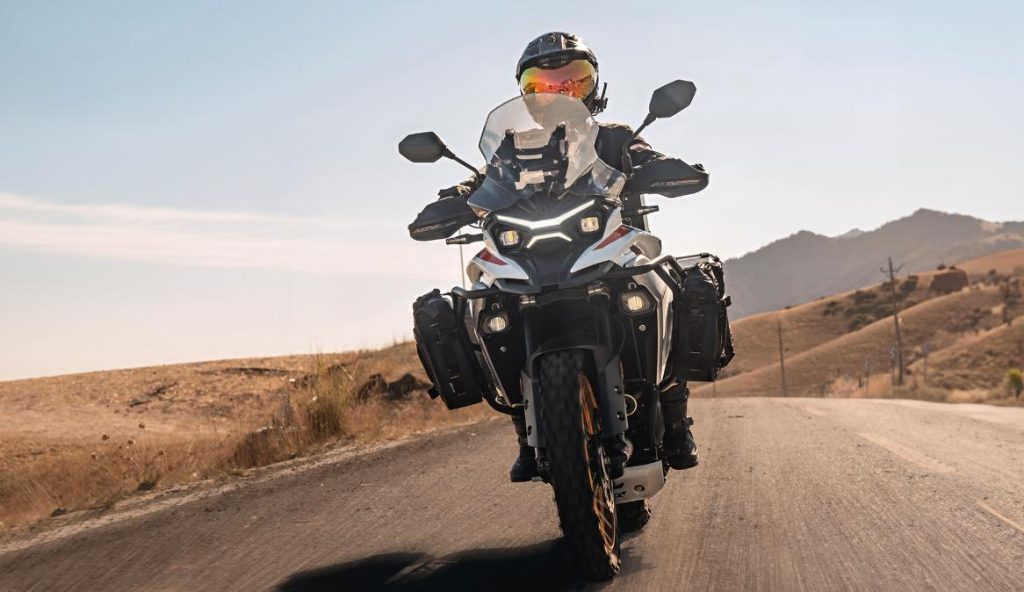
For Long-Distance Touring and Road Comfort
For riders who spend long hours on highways and paved roads, comfort over distance becomes a bigger part of the decision. Fuel capacity, wind protection, seating position, and stability on the road may matter more than the ability to tackle technical trails.
The KOVE 800X Touring is designed with long-distance adventure riding in mind. Its 22-liter fuel tank, 826 mm seat height, and 210 mm of front and rear suspension travel support its touring-focused role while retaining the ability to handle gravel roads and other mixed surfaces.
For shorter riders, the seat height still deserves careful consideration. A comfortable position while riding does not automatically mean easy footing when stopping, so check how the seat profile and overall riding position work for your body before making a decision.
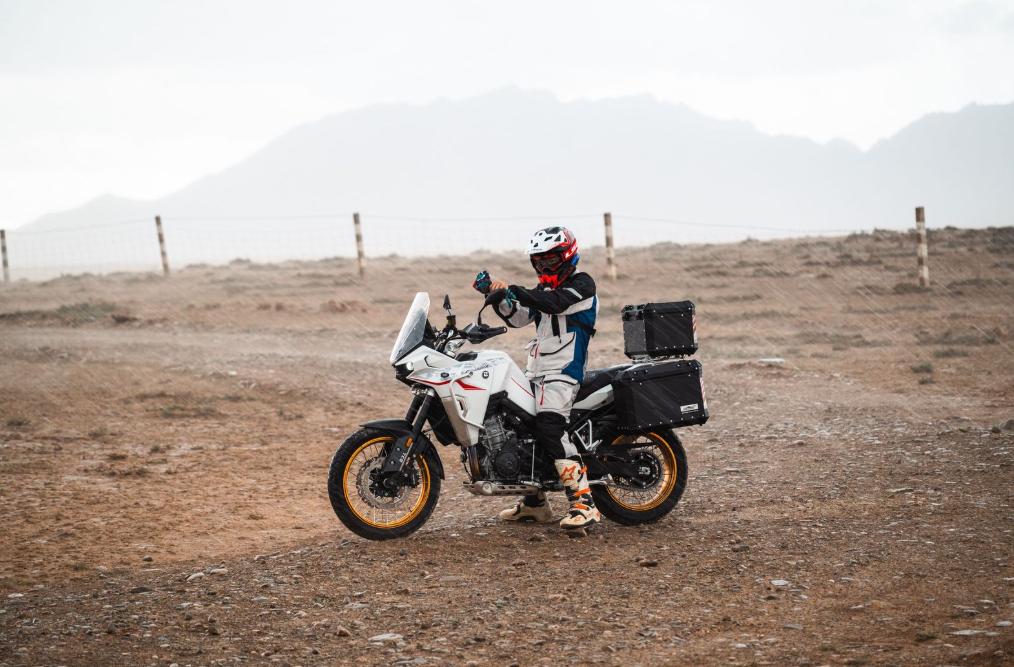
For More Demanding Off-Road Riding
If your plans include rough trails, larger obstacles, and more technical terrain, greater ground clearance and longer suspension travel may become higher priorities.
The KOVE 800X PRO is built around this more off-road-focused direction, with 275 mm of ground clearance and 240 mm of suspension travel at both ends. Its listed seat height is 875 mm, reflecting a taller setup suited to its design priorities.
That height may present a challenge for riders who have difficulty reaching the ground, even though the motorcycle has a listed weight of 190 kg. A lighter bike can be easier to reposition in some situations, but weight alone does not determine how confidently you can manage it at a standstill.
If demanding off-road riding is your main goal, consider whether the added clearance and suspension travel meet your needs and whether you can manage the motorcycle comfortably at low speeds. A test ride, where available, can help you assess that balance.
Ultimately, the best fit comes down to your usual terrain and the compromises you are comfortable making. Compare the KOVE models according to your riding priorities, then evaluate seat shape, ground reach, weight, and suspension as a complete package.
Practical Fit Checks Before You Buy
Specifications can narrow your options, but sitting on the motorcycle and testing its basic controls will tell you much more about how it fits.
Use the following checks when visiting a dealer or comparing available versions.
Check Your Footing
Sit on the motorcycle in your normal riding position, wearing the boots you expect to use. Notice whether you can place one foot securely on the ground and whether your hips remain balanced.
Do not focus exclusively on getting both feet flat. A stable, controlled position may be more useful than forcing both feet down while your legs and hips feel stretched.
Assess the Seat’s Front Profile
Pay attention to how your thighs wrap around the front of the seat. If the seat pushes your legs outward, reaching the ground may feel harder than the seat-height figure suggests.
Compare the seat shape across different models and versions rather than relying on the height measurement alone.
Test Low-Speed Maneuvers
If the dealer permits it and the environment is safe, try walking the motorcycle forward and backward, turning the handlebars, and making a slow, tight turn.
These actions can reveal whether the motorcycle’s weight, balance, and riding position suit you. Do not attempt unfamiliar maneuvers on uneven ground simply to test a bike’s limits.
Consider Your Typical Load
Luggage, a passenger, and accessories change the motorcycle’s overall load and can affect suspension behavior. If you regularly tour with panniers or camping gear, ask the dealer how the suspension should be set up for your expected load.
For models with adjustable or adaptive ride height, confirm how the system works in the version sold in your market. Do not assume that every version has the same adjustment range or features.
Check More Than the Seat
Before making a decision, review the following:
- Seat height and front seat width
- Motorcycle weight and balance at a standstill
- Handlebar reach and riding posture
- Suspension adjustment and intended load
- Ground clearance and suspension travel for your usual routes
- Availability of the exact version and specifications in your market
The right adventure motorcycle should fit the way you ride, not just meet a target seat-height number.
Final Take: What Shorter Riders Should Prioritize
The best adventure bike for a shorter rider is not necessarily the one with the lowest seat. It is the one that offers a practical balance between accessible footing, manageable handling, and the capability needed for your preferred type of riding.
At KOVE, we offer different approaches to adventure riding, from versatile middleweight models to motorcycles designed for longer journeys or more demanding off-road terrain. Start by identifying your riding priorities, then choose a model that fits both your body and your plans. A specification sheet can help you shortlist your options, but a hands-on fit check is what helps you make a more informed decision.