
Full-Size Wheels vs. Lower Seat Height: Which Motorcycle Setup Gives Beginners More Stability in Sand?
SOURCE: KOVE
Beginner sand riding stability usually comes from confidence first, then capability. If you tense up when the front starts to wander, a lower-feeling bike often helps more because you can dab a foot, stop cleanly, and reset without panic. However, full-size off-road wheels still matter because loose sand can make recovery harder and upset steering when the surface shifts unexpectedly. That is why this comparison is not really about one “best” specification in isolation. It is about which setup helps you stay calm when the bike moves underneath you.
| Dimension | KOVE 625X | KOVE 800X TOURING | KOVE 800X RALLY |
| Beginner confidence | Strong | Moderate | Moderate–Low |
| Ground reach feel | Friendlier | Easier than Rally | Tallest feel |
| Sand capability | Occasional sand | Light sand & gravel | Best for deep sand |
| Slow-speed recovery | Easiest | Stable, heavier | Most demanding |
| Curb weight | 221 kg (239 kg with 3 cases) | 195 kg | 176 kg |
| Seat height | 795–850 mm | 826 mm | 890 mm |
| Fuel capacity | 21 L | 22 L | 20 L |
| Primary riding terrain | Roads, gravel & hard-packed unpaved roads | Long-distance touring, pavement & gravel | Sand, dunes & technical off-road |
| Riding focus | Versatile all-round adventure | Long-distance travel & mixed surfaces | Rally-focused off-road performance |
| Best suited for | Everyday adventure & mixed-surface riding | Adventure touring & gravel exploration | Riders prioritizing sand and serious off-road performance |
Why This Choice Feels Difficult When You Are New To Sand
Loose sand punishes hesitation quickly, so small fit issues feel bigger than they do on gravel or tarmac. A bike can be technically capable yet still feel wrong for you if every stop seems rushed. That matters because beginner sand riding stability is not only about grip. It is also about whether you trust yourself to slow down, correct a wobble, and get moving again.
Moreover, low-speed control is a real skill test. Standard motorcycle licensing and rider training programs often include slow riding and U-turn exercises, highlighting how important balance, steering control, and low-speed handling are before speed enters the picture. In sand, those same low-speed moments become even more demanding, so a motorcycle that feels manageable at walking pace can make it easier for a beginner to build confidence and develop better control.
KOVE 625X Feels Easier To Trust In The Early Learning Stage
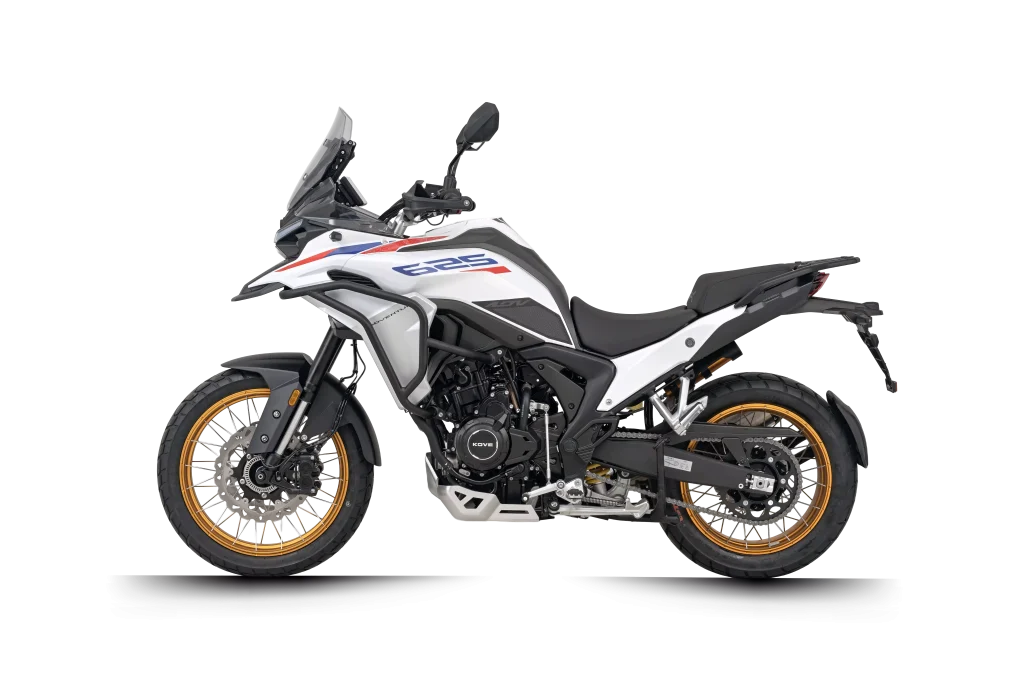
If your main problem is nervousness at stops or during sudden line changes, the KOVE 625X is the most approachable place to start in this line-up. The KOVE 625X is designed as a versatile adventure motorcycle for riders who spend most of their time on paved roads, gravel roads, and hard-packed unpaved terrain. Rather than focusing on extreme off-road riding, it balances everyday road comfort with confident handling on mixed surfaces, making it a more confidence-inspiring platform for riders who are still building their skills. You are not giving up adventure use; you are simply choosing a less intimidating platform first.
That matters because the first few sand sessions are rarely about speed. They are about recovering from poor throttle timing, awkward body position, and unexpected deflections from the front tire. In that context, the 625X’s more approachable seat height and balanced adventure geometry can help new riders feel more confident during slow-speed stops, gravel riding, and occasional loose-surface sections.
Does The 800X Touring Make Slow-Speed Recovery Easier?
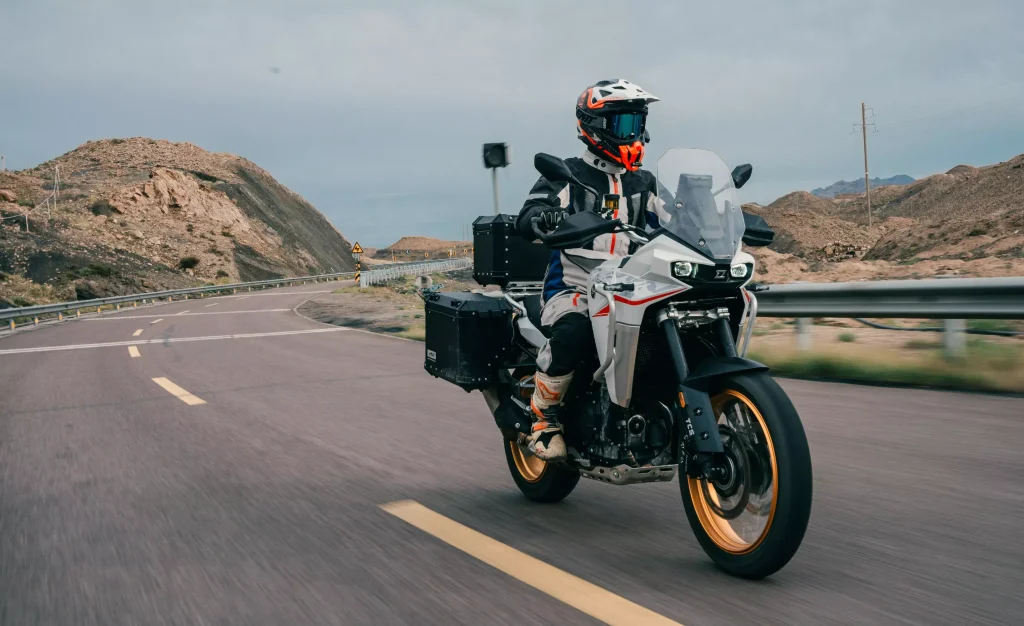
The KOVE 800X Touring is built primarily for long-distance adventure travel. Its chassis prioritizes highway comfort, cruising stability, and confident handling on gravel roads, making it a strong choice for riders who regularly combine paved touring with unpaved travel routes. The 800X Touring features a 799 cc parallel-twin engine producing 69.5 kW at 9,000 rpm and 79 N·m at 7,500 rpm, a 22 L fuel tank, 826 mm seat height, and 195 kg curb weight. These specifications are designed to provide a stable and comfortable riding experience during long highway days, mountain roads, and gravel touring. While it is fully capable of handling mixed surfaces, its core mission is long-distance travel rather than aggressive off-road riding.
In practice, the Touring makes the most sense if your riding is centered on long-distance touring, paved roads, and gravel exploration, while the Rally is the more specialized choice for frequent sand riding.
The 800X Rally Gives You The Most Sand-Focused Chassis
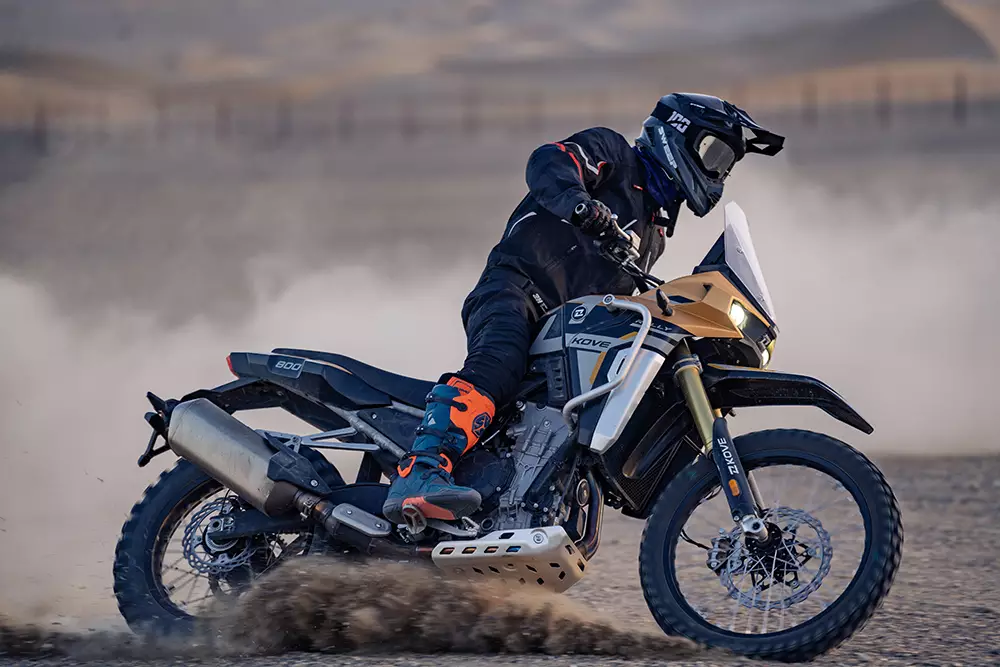
When the terrain becomes deep sand, dunes, or demanding off-road trails, the KOVE 800X Rally clearly becomes the standout. It is built as a lightweight rally adventure motorcycle with genuine sand-riding capability. Featuring a 21-inch front wheel, 18-inch rear wheel, 890 mm seat height, 176 kg curb weight, 293 mm ground clearance, a 20 L fuel tank, and 270 mm / 240 mm long-travel suspension, it is the most off-road-focused model in the KOVE adventure lineup.
These specifications are not simply larger numbers—they are exactly what help a motorcycle perform better in soft terrain. The 21/18-inch wheel combination rolls through deep sand more effectively, the long-travel suspension absorbs ruts and uneven surfaces while maintaining traction, and the higher ground clearance reduces the chance of the chassis digging into loose terrain. Combined with its lightweight rally chassis, the Rally delivers the strongest sand performance of the three models.
However, greater sand capability does not automatically make it the best choice for every beginner. Its 890 mm seat height demands more confidence during stops and slow-speed corrections, especially when momentum disappears in loose sand. For riders who regularly train in dunes or prioritize serious off-road riding, the Rally offers the highest performance ceiling. But for those whose adventures are primarily on pavement and gravel, a lower and more approachable adventure platform may inspire confidence more quickly.
Which Setup Helps More Once The Sand Gets Loose?
Low-speed dabs and foot confidence
The 625X is the best fit when your instinct is to save a wobble with a quick foot. That is not bad technique at the beginner stage; it is part of how many riders prevent a harmless moment from becoming a tip-over. By contrast, the 800X Rally asks for more commitment because its 890 mm seat height leaves less margin for uncertain footing.
Front-end tracking in soft sections
This is where the 800X Rally starts to show its advantage. Its 21/18-inch wheel setup and long-travel suspension are better suited to soft, uneven terrain than a more road-oriented adventure setup. The taller ground clearance and lightweight chassis also help when the sand gets deeper or more churned up. Therefore, if your routes regularly include dunes or loose sand, the Rally is the stronger choice once you are comfortable with its taller riding position.
U-turns, corrections, and early wobbles
The 625X remains the easiest recommendation for repeated beginner drills because its more approachable seat height can reduce the mental load at walking pace. The 800X Touring can also work well for low-speed practice, but its larger touring-oriented platform requires a little more effort when making tight turns or correcting a wobble. The 800X Rally, meanwhile, offers stronger capability once the terrain becomes soft and uneven, but its 890 mm seat height makes low-speed corrections more demanding for riders who are still building confidence.
Best Fit Depends On Your First Real Riding Problem
Choose lower seat confidence if you…
- freeze when the front tire washes slightly
- want cleaner stops on uneven ground
- are a smaller rider or still building confidence
- plan mixed-surface practice more than deep-sand sessions
Choose full-size wheel bias if you…
- expect regular soft-sand riding
- are comfortable with taller rally ergonomics
- want more off-road progression headroom
- can keep momentum without panicking at slow speed
Conclusion
For most true beginners, a more approachable seat height can make the early learning process easier because it lets you practice more and worry less about stops and low-speed corrections. In this comparison, the KOVE 625X is the more confidence-inspiring choice for riders who mainly ride roads, gravel, and hard-packed unpaved surfaces, while the KOVE 800X Rally is the clear choice for riders who want to develop their skills in deeper sand and more demanding off-road terrain. The KOVE 800X Touring is better suited to long-distance adventure travel, with a focus on pavement and gravel rather than regular deep-sand riding.
If you are choosing an adventure bike for sand, do not look at seat height or wheel size in isolation. Consider where you will actually ride, how comfortable you are with a taller motorcycle, and how much time you expect to spend in loose terrain. The best choice is the one that matches your riding environment and gives you enough confidence to keep building your skills.