
Best 7 Lightweight Off-Road Motorcycles for Beginners Learning Sand Riding
SOURCE: KOVE
Soft sand can make a new rider feel clumsy very quickly. A bike that is too heavy, too tall, or too abrupt on the throttle often turns simple drills into a fight for balance and energy. That matters because beginner sand riding is usually won by repeatable control, not heroic speed. If you are constantly correcting slides, picking the bike up, or dabbing in deep sand, your confidence can disappear before technique has time to improve.
That is why this shortlist focuses on lightweight off-road motorcycles that make beginner sand riding more manageable. Some are friendly dual-sport bikes, some are serious enduro bikes, and one is a rally bike for riders already thinking ahead. The order below follows real learning fit first: low-intimidation options, balanced dual-sports, sharper off-road machines, and finally specialist choices for riders who know they want to progress further.
The 7 lightweight off-road motorcycles worth shortlisting
| Motorcycle Model | Engine Capacity | Weight (Curb) | Seat Height | Primary Focus & Terrain Fit |
| KOVE 450 Enduro RE | 449.9 cc Single | 120 kg (265 lbs) | 960 mm | Pure Off-Road Agility & Sand Skill Growth |
| Yamaha XT250 | 249 cc Single | 132 kg (291 lbs) | 830 mm (32.7 in) | Low-Intimidation & Beginner Confidence |
| Honda CRF300L | 286 cc Single | 141 kg (311 lbs) | 880 mm | Balanced Dual-Sport & Everyday Commute |
| Kawasaki KLX300 | 292 cc Single | 137 kg (302 lbs) | 894 mm (35.2 in) | Trail-Oriented Dual-Sport Crossover |
| KOVE 450 Rally RE | 449 cc Single | 155 kg (342 lbs) | 910 / 960 mm | Rally Progression & Long-Range Desert Travel |
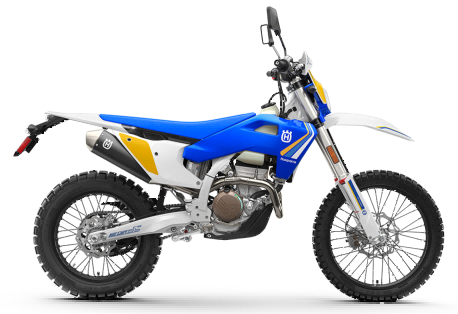
| Husqvarna FE 350S | 349.7 cc Single | ~121.5 kg (268 lbs) | 952 mm | Specialist Premium Enduro |
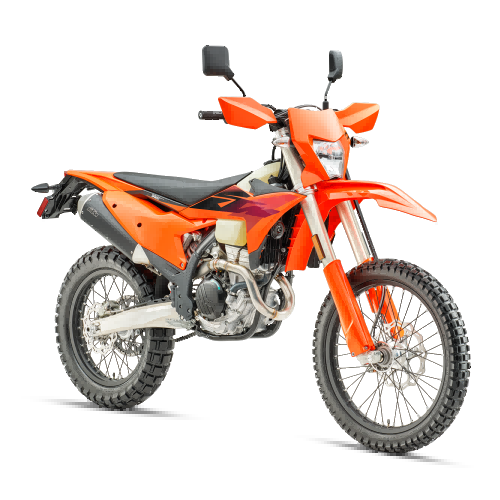
| KTM 350 EXC-F | 349.7 cc Single | ~119 kg (262 lbs) | 963 mm | Benchmark Competition Enduro |
Note: All motorcycle weights are standardized to estimated Curb Weight for direct comparison. Official specs for KTM (112.8 kg / 249 lbs) and Husqvarna (115.2 kg / 254 lbs) reflect weight without fuel; full-fuel values are calculated using their respective 8.5 L (2.25 gal) fuel tank capacities.
1. KOVE 450 Enduro RE
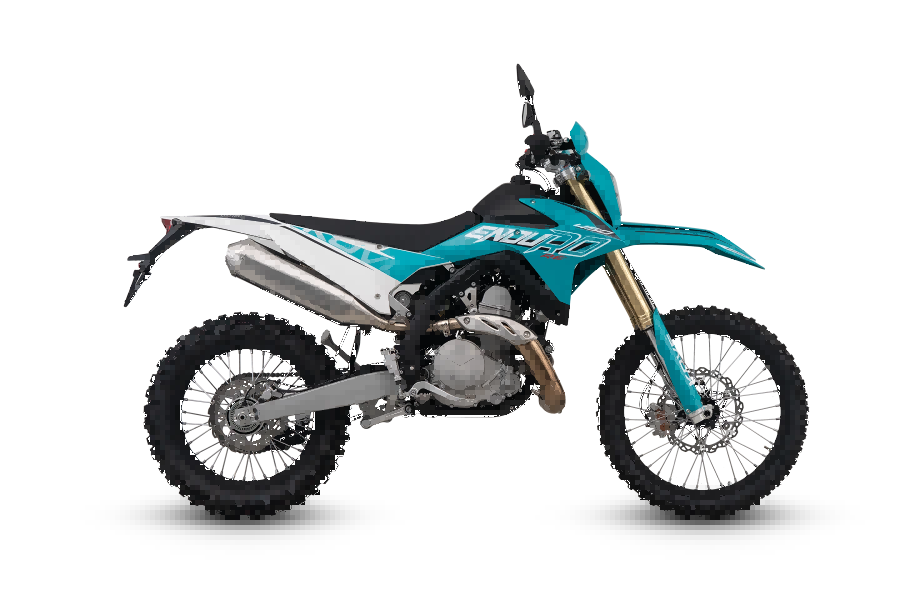
If your goal is to build real dirt skill rather than just survive occasional sandy patches, the KOVE 450 Enduro RE is one of the clearest own-brand fits in this list. Its appeal for beginner sand riding is not that it is easy in every respect, because it is not. The tall seat needs respect. However, the low curb weight and proper off-road chassis give you a lighter-feeling platform when you need to correct line choice, recover from a weave, or practise repeated standing drills in loose terrain.
Why it stands out
- KOVE lists a 120 kg curb weight, which is notably light for a road-legal off-road machine in this class.
- The 960 mm seat height and 285 mm ground clearance show clear dirt-first intent rather than low-slung dual-sport compromise.
- A 9.5 L fuel tank keeps the package compact, which helps the bike feel less bulky during repeated sand practice.
- The 449.9 cc single-cylinder layout gives enough performance to grow into without starting on a heavy adventure machine.
Best for
- Riders leaving easy trails and gravel for more serious sand practice
- Learners who value agility over long-distance range
- Taller or more confident beginners who want an enduro bike, not a soft dual-sport
What to watch
- The seat height will feel demanding if you rely heavily on dabbing.
- Ownership fit matters: a sharper enduro-style bike usually asks for more inspection and post-ride attention than an easy-going commuter-based dual-sport.
2. Yamaha XT250
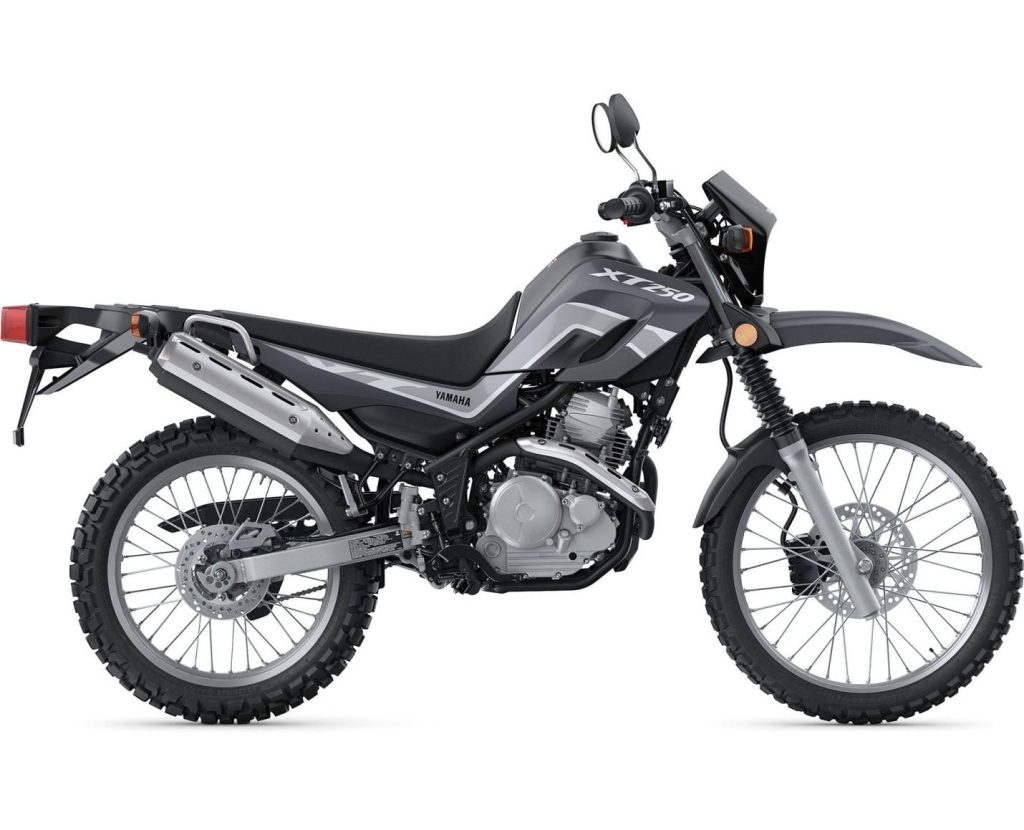
For many true beginners, confidence starts lower down. The Yamaha XT250 earns its place because it reduces fear before it promises performance. In soft terrain, that matters more than spec-sheet bravado. If you are nervous about low-speed balance, stopping in sand, or transitioning from seated to standing posture, this bike gives you a calmer first step than a tall enduro machine. Yamaha lists a 32.7 in seat height and a 291 lb wet weight, which helps explain why it remains approachable.
Why it stands out
- 32.7 in seat height gives shorter riders and cautious beginners more dab confidence in uneven ground.
- 291 lb wet weight is manageable enough for first drills without feeling like a full-sized ADV bike.
- The overall layout is simple and unintimidating, which suits mixed practice days on gravel, hardpack, and shallower sand.
Best for
- Shorter beginners
- Street riders moving into dirt for the first time
- Riders who want a training bike before stepping up to taller lightweight off-road motorcycles
What to watch
- This is not a rally bike or a desert-speed tool.
- If your sand riding setup quickly shifts into deeper, faster terrain, you may outgrow its suspension and off-road bias sooner than some other picks.
3. Honda CRF300L
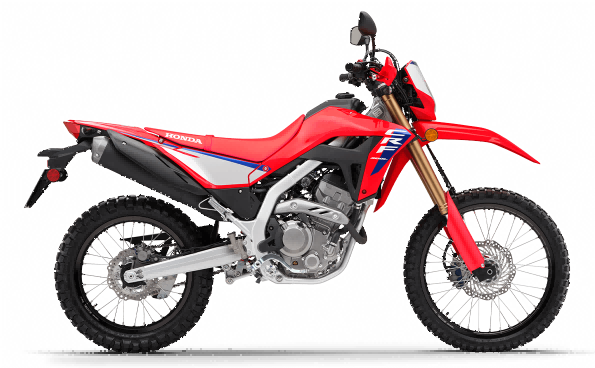
The Honda CRF300L sits in a very practical middle ground. It is the kind of motorcycle that makes sense if your weekends include commuting, back roads, gravel lanes, and beginner sand riding rather than pure off-road sessions. This category often works well because it gives you enough dirt ability to practise body position and throttle smoothness while still being easy to live with when the route includes tarmac. Reference guidance on lighter trail and travel bikes consistently favours manageable single-cylinder machines for newer off-road riders.
Why it stands out
- It has a strong reputation as a learner-friendly dual-sport with a broad skill ceiling.
- The power delivery and road-legal format make it easier to use regularly, which helps beginners improve faster through repetition.
- It bridges the gap between basic trail confidence and more committed sand riding better than many heavier multi-cylinder machines.
Best for
- Riders splitting time between road, gravel, and light sand work
- Beginners who want one bike for practice and everyday use
- Anyone who wants progression without moving straight into an enduro-focused package
What to watch
- It will not feel as light or as purpose-built off-road as the sharper enduro bikes here.
- If your real ambition is deep sand and technical terrain, you may eventually want a more dirt-focused chassis.
4. Kawasaki KLX300
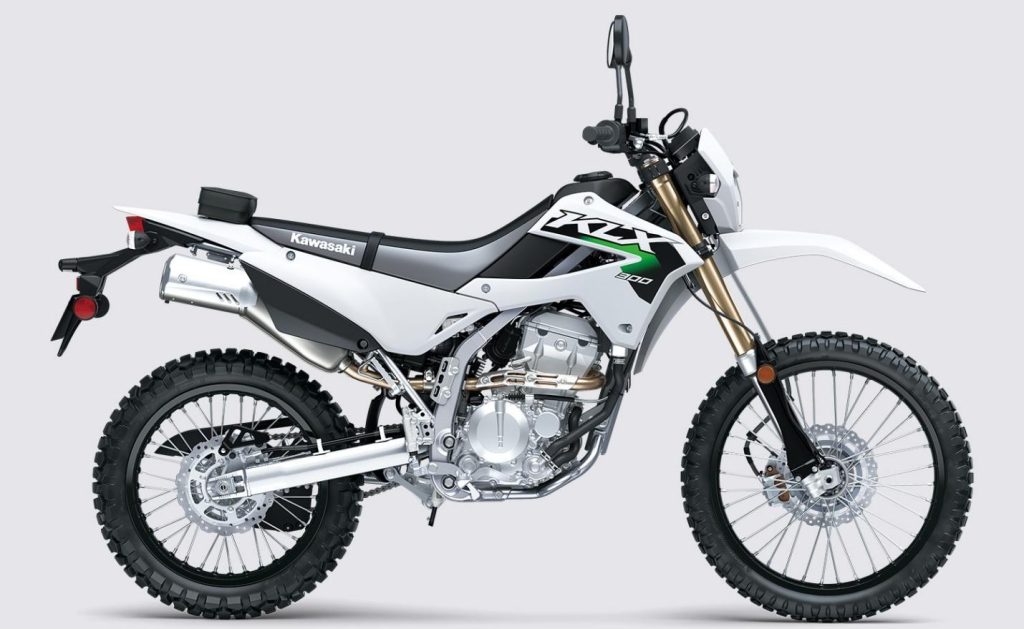
The Kawasaki KLX300 is a good answer for riders who want more trail bias than an entry-level dual-sport, but do not want the full jump to a competition-leaning enduro. It gives you enough chassis intent to make repeated practice days worthwhile, yet it still keeps one foot in the everyday dual-sport world. Kawasaki lists a 35.2 in seat height and 302.1 lb curb weight, which puts it in the manageable-but-not-low bracket.
Why it stands out
- 35.2 in seat height offers more ground clearance and trail stance than lower beginner bikes, without going full tall-race-bike.
- 302.1 lb curb weight is still reasonable for repeated sand and trail practice.
- 2.0 gal fuel capacity and a straightforward dual-sport layout make it practical for back-road links between off-road sections.
Best for
- Riders who want a nimbler feel than softer dual-sport bikes
- Learners progressing from gravel to looser surfaces
- Beginners who want a trail-leaning motorcycle without going all the way to specialist enduro ownership
What to watch
- It is still tall enough to unsettle brand-new riders in deep sand.
- If low seat confidence is your top priority, the XT250 remains the easier first step.
5. KOVE 450 Rally RE
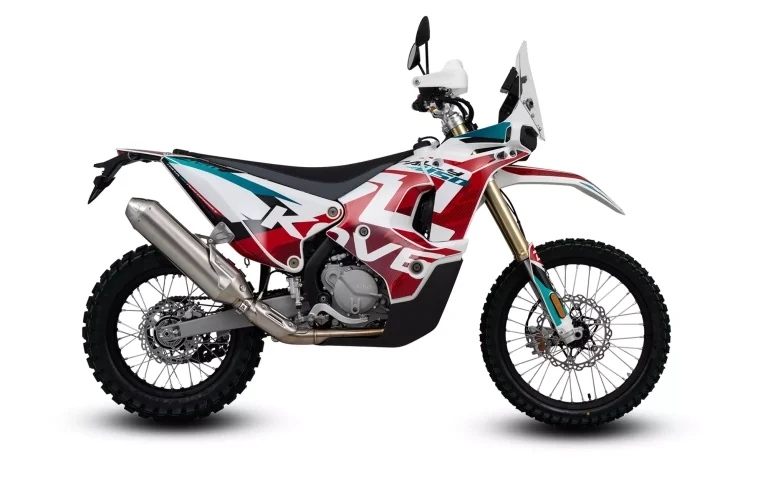
The KOVE 450 Rally RE is the aspirational pick for beginner sand riding, not the easiest first dirt bike. It belongs here because some riders already know they want rally structure, long-range desert style, and room to grow into faster open-terrain riding. KOVE lists a 155 kg curb weight, 910 mm or 960 mm seat height depending on setup, a 32 L tank, and 21/18 wheel sizing. That combination makes it more substantial than the Enduro RE, yet still far lighter and more off-road-focused than a big adventure motorcycle.
Why it stands out
- 155 kg curb weight is heavy next to a pure enduro, but still restrained for a road-legal rally-style machine.
- 910 mm or 960 mm seat height gives some flexibility, depending on setup and rider preference.
- A 32 L tank clearly supports longer open riding and remote-route ambition.
- KOVE frames the model as road-legal and rally-ready, which suits riders aiming beyond basic trail days.
Best for
- Advanced beginners already committed to rally-style progression
- Riders moving from gravel into open sand routes
- Learners who prioritise stability, range, and long-term growth over lowest possible mass
What to watch
- A bigger tank and rally layout add commitment as well as capability.
- If you mainly want slow-speed skill-building, the KOVE 450 Enduro RE is the sharper training tool within the same brand family.
6. Husqvarna FE 350S
The Husqvarna FE 350S is a strong option for committed learners who want a premium lightweight enduro route. Capability is not the issue here; suitability is. Husqvarna lists 115 kg without fuel and a 952 mm seat height, so the bike is clearly light and highly off-road focused. That can be excellent in sand once you have the basics, because a lighter machine asks less of you when the terrain starts moving around beneath the tyres. Still, the tall stance means it can feel serious from the first minute.
Why it stands out
- 115 kg without fuel puts it firmly in the proper lightweight enduro camp.
- 952 mm seat height reflects strong off-road capability and generous chassis clearance.
- 300 mm suspension travel front and rear supports rougher terrain and faster pace as skills improve.
Best for
- Riders who expect to spend most of their time off-road
- Learners with confidence, fitness, and genuine enduro ambition
- Buyers cross-shopping serious lightweight off-road motorcycles rather than casual dual-sports
What to watch
- It is more specialised than many mixed-use beginners need.
- Tall, focused bikes reward commitment; they do not automatically make a nervous rider feel relaxed.
7. KTM 350 EXC-F
The KTM 350 EXC-F closes the list because it is one of the benchmark-style lightweight off-road motorcycles in this conversation. KTM lists a 963 mm seat height and 112.8 kg weight without fuel, which shows just how focused this platform is. Like the Husqvarna, it can be brilliant for sand progression once you are committed, but that does not make it the most forgiving starting point. It suits riders who want a serious skill-development bike and already accept the compromises of a specialist enduro machine.
Why it stands out
- 112.8 kg without fuel is exceptionally light for a road-legal machine in this class.
- 963 mm seat height and 300/310 mm suspension travel underline its off-road focus.
- 349.7 cm³ displacement gives a usable middle-ground engine size for riders who want performance without moving straight to a bigger-capacity bike.
Best for
- Experienced novices with serious off-road intent
- Riders comparing specialist enduro bikes for long-term progression
- Buyers who value low mass and chassis precision above casual versatility
What to watch
- This is more specialised than a relaxed beginner needs for occasional sand drills.
- If you still spend plenty of time on the road, a dual-sport or rally-style bike may fit your routine better.
Why lighter bikes usually work better in sand
Sand punishes hesitation and magnifies mistakes. When the front wanders or speed drops, a lighter machine is usually easier to recover, easier to turn, and less exhausting to pick up after a stall or tip-over. Reference guidance for newer off-road riders repeatedly warns that heavy bikes can work against beginners and drain energy fast, especially once technique starts to break down. That is a major reason lightweight off-road motorcycles and manageable single-cylinder dual-sport bikes remain such sensible starting points for beginner sand riding.
Seat height still matters as much as weight
Low weight alone does not solve everything. A very light bike can still feel intimidating if you cannot dab with confidence in soft ground or if every stop feels awkward. That is why lower options such as the XT250 can make more sense for some riders than taller, more capable machines on paper. In practice, confidence at low speed often matters more at the start than ultimate suspension quality or race-style geometry.
Setup changes the result
Bike choice is only part of the picture. Suspension sag, tyre choice, and pressure all affect how stable the bike feels when the surface starts moving beneath you. Mad or Nomad notes that heavier bikes demand more technique off-road, and it also highlights the value of setting suspension to suit rider weight and riding style. Smaller and lighter dual-sport bikes can also benefit from softer off-road tyre setups, depending on terrain and pace.
How to choose the right bike for your learning curve
Choosing between these lightweight off-road motorcycles becomes easier when you stop chasing the most impressive machine and start with your actual riding split. If most of your time will be trail loops and sand drills, a sharper off-road option makes sense. If you need one bike for B-road links, commuting, gravel, and occasional sand, a dual-sport often fits better.
Match the bike to your current confidence
- Lowest intimidation: Yamaha XT250
- Balanced dual-sport step: Honda CRF300L, Kawasaki KLX300
- Serious off-road growth: KOVE 450 Enduro RE
- Rally progression path: KOVE 450 Rally RE
- Specialist lightweight enduro route: Husqvarna FE 350S, KTM 350 EXC-F
Decide whether agility or range matters more
This is where the KOVE pair makes the choice especially clear. The KOVE 450 Enduro RE is the lighter-feeling, dirt-first option with a compact 9.5 L tank and strong off-road focus. The KOVE 450 Rally RE trades some simplicity for a 32 L tank, road-legal rally structure, and a platform that better suits longer open riding. If your beginner sand riding sessions are local and skill-focused, agility usually wins. If you are building towards rally-style travel and open desert routes, range and stability start to matter more.
One common mistake after a sandy practice day
A nervous front end after a sand session often comes from a mix of tyre mismatch, poor setup, and rider tension rather than one dramatic fault. Start with the simple checks: inspect tyres for cuts or chunking, confirm pressures are appropriate for the terrain, clean and lubricate the chain, and make sure controls still move freely after dust exposure. Off-road guidance also stresses maintenance checks in line with the manufacturer’s schedule, especially because loose-surface riding is harsh on equipment. Local road rules require an approved helmet on the road, and standard safety guidance strongly recommends proper protective clothing for motorcycle use.