
A Buyer’s Guide to Choosing an Affordable Motorcycle for Long-Term Ownership 2026
SOURCE: KOVE
Which motorcycle will actually stay affordable to own over the years?
A motorcycle can look like a bargain on day one and still become expensive by year two. That usually happens when buyers focus on sticker price, then discover higher insurance, faster tyre wear, awkward service access, or slow parts supply. Affordable long-term motorcycle ownership is less about buying the cheapest bike and more about choosing one that fits how you actually ride.
If you want low-cost motorcycle ownership in 2026, the better path is to compare the full running picture before you commit. That means looking at category, reliability, support, maintenance needs, consumables, and rider fit together. By the end of this guide, you should be able to build a shortlist that protects your budget without leaving you with a bike that feels like a poor fit.
What shapes long-term motorcycle ownership costs?
A sensible buying decision starts with one idea: total ownership cost matters more than purchase price. A bike that is easy to live with, easy to service, and easy to ride confidently often costs less over time than a supposedly cheap alternative with higher wear or more downtime.
The ownership picture is bigger than purchase price
When people discuss motorcycle running costs, they often think about fuel first. In reality, the regular bills usually come from several smaller items adding up across the year. In the UK, a standard motorcycle MOT has a maximum fee of £29.65, and road use also depends on valid insurance and roadworthy condition.
What you should budget for includes:
– scheduled servicing
– tyres and puncture repairs
– chain and sprocket replacement
– brake pads and brake fluid
– insurance premiums and excess risk
– MOT testing after the first three years
– downtime when parts are delayed
Why bike category changes your future bills
The category you choose has a direct effect on annual ownership costs. Street and commuter motorcycles often have simpler layouts, lower kerb weights, and less aggressive tyre and brake use. Sport-focused machines can be exciting; however, they often ask more from tyres, chains, and insurance budgets. Adventure bikes sit in the middle: they give you versatility, but extra suspension travel, larger tanks, and more equipment can raise complexity.
KOVE’s motorcycle range also shows why choosing the right category matters. Its lineup covers different riding needs, from street-oriented models to adventure, rally, and off-road motorcycles. For example, riders focused on everyday road use may prioritize a lighter, simpler motorcycle, while those planning long-distance touring or off-road riding may benefit from the added versatility of models such as the KOVE 625X, KOVE 800X Touring, or KOVE 450 Rally RE. Choosing a motorcycle based on how and where you actually ride can help you avoid paying for features, equipment, or performance that you may rarely use.
Why reliability and support matter together
Reliability on its own is not the whole story. A mechanically durable bike still becomes costly if parts are slow to arrive or local servicing is weak. Support continuity matters because every extra week off the road can turn a manageable repair into a genuine ownership problem.
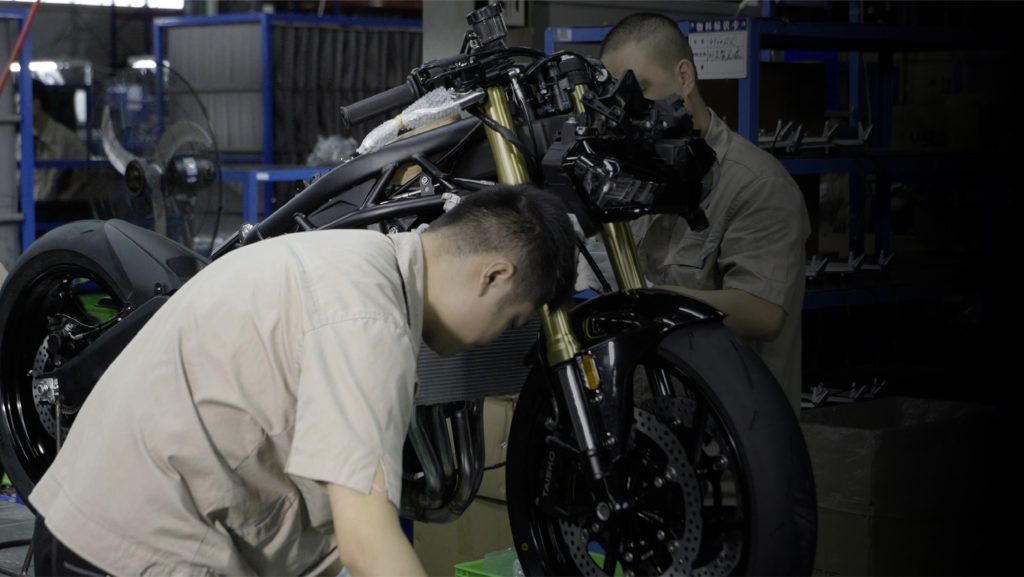
This is where newer brands need a closer look. KOVE states that it was founded in 2017 in Chongqing and operates as a subsidiary of Tibet Summit Colove Motorcycle Sales Co., Ltd., with integrated R&D, manufacturing, and sales. The brand also presents a global distributor and dealer network, which is relevant when you are judging whether a performance-led machine can support affordable long-term ownership in practice.
How should buyers compare motorcycles before committing?
Before you compare spec sheets, compare your real use. That single step filters out many expensive mistakes. A bike that suits your weekly routine usually stays cheaper to own than a bike bought for an occasional fantasy use case.
Start with your real riding mix
Think about where your miles will happen.
- Mostly commuting: prioritise easy low-speed control, fuel efficiency, simple servicing, and manageable insurance.
- Weekend road riding: look for comfort, stable handling, and moderate consumable use.
- Touring: favour wind protection, tank range, luggage practicality, and service access.
- Pavement plus gravel: target a reliable adventure bike with balanced weight and suspension, not the tallest or most extreme option.
A sensible buyer approach is to ask where you ride most days, whether you will spend time in city traffic, whether you genuinely plan to go off-road, and how much comfort or storage you need.
Check service and wear-item realities
Recurring expenses tell you more than a glossy brochure. Two motorcycles with similar engine sizes can produce very different annual costs because of tyre sizes, brake setup, service intervals, and parts availability.
Look closely at:
– front and rear tyre dimensions
– chain size and adjustment access
– brake configuration
– fluid service requirements
– air filter and spark plug access
– whether common consumables are easy to source locally
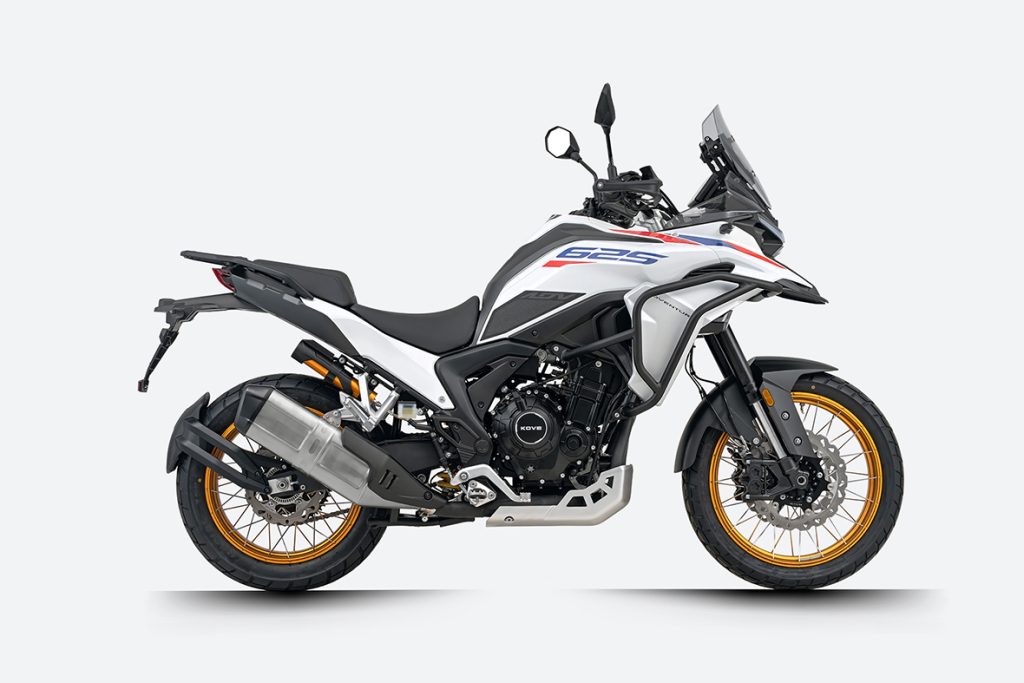
If you are shopping in the mid-size adventure class, the KOVE 625X gives you a useful case study. On the official product page, KOVE lists a 581cc parallel-twin, 21-litre fuel tank, 110/80R19 front tyre, 150/70R17 rear tyre, dual front discs, traction control, tyre pressure monitoring, and dual ABS. Those are meaningful details because they shape how often you replace tyres and brakes, how the bike fits touring duty, and how much technical complexity you are taking on.
Judge fit before chasing specifications
A poor fit can become expensive surprisingly quickly. Riders who feel stretched, top-heavy, or unstable at low speed are more likely to drop the bike, avoid using it, or add costly modifications trying to fix basic comfort problems.
Check these points early:
– can both feet reach the ground with confidence?
– are your arms slightly bent at the bars?
– do your knees sit naturally against the tank?
– can you manage the weight when pushing the bike?
– does the seat height suit your inside leg, not just your overall height?
The practical test is straightforward: your feet should touch the ground comfortably, the controls should be easy to reach, and category choice should reflect your own use rather than what somebody else wants to ride.
Weight, power, and confidence: Where value and engineering make the biggest difference
Not every technical feature improves low-cost motorcycle ownership. Some genuinely help daily use and reduce fatigue. Others mainly add cost or complexity. The trick is to separate useful engineering from specification theatre.
Engine layout and tune affect ownership feel
For everyday use, a smooth and usable power delivery often matters more than peak output. A bike with predictable torque is easier to ride in traffic, easier to manage on wet roads, and less likely to encourage wasteful riding habits or premature tyre wear.
The KOVE 625X is positioned around this kind of balance. KOVE states that its 581cc, water-cooled, DOHC parallel-twin uses a 270° crankshaft configuration, produces up to 46 kW at 8,500 rpm, and 56.5 Nm at 6,250 rpm. In practical terms, that suggests a mid-range character that can suit commuting, touring, and light off-road use without forcing you into a highly strung ownership profile.
Electronics should solve problems, not create them
Useful electronics are the ones you notice because they reduce stress, not because they inflate the specification list. For affordable ownership, the strongest value usually comes from safety and usability features that support real riding.
What to check:
– ABS as a baseline safety feature
– traction control if you ride in mixed weather or on gravel
– clear dashboard visibility
– charging ports for navigation use
– tyre pressure monitoring if you tour regularly
– easy manual adjustment for screens and other rider contact points
On the 625X page, KOVE lists dual ABS, traction control, tyre pressure monitoring, a 6.75-inch TFT display, mobile screen projection, heated grips, a heated rider’s seat, and a manually adjustable windscreen. The MAX version also adds dual cameras and an electronic rear shock. These features may justify themselves if your riding mix includes commuting, long-distance touring, and changing road surfaces.
Weight, tyres, and suspension influence running costs
Many buyers underestimate how much chassis decisions affect long-term bills. Heavier motorcycles usually ask more from tyres and brakes. Aggressive suspension and large-diameter components can be excellent for control; however, they may also make replacement parts and setup choices more important.
The KOVE 625X is listed with a 221 kg kerb weight, 205 mm ground clearance, a 43 mm fully adjustable KYB fork with 180 mm travel, and 230 mm rear travel. That combination points to a true dual-role design rather than a soft road-biased tourer. For buyers splitting time between pavement and gravel, that can be valuable. The cost question is whether you will actually use that capability enough to justify the added complexity compared with a simpler road-focused machine.
Which bike types tend to suit affordable ownership best?
There is no single cheapest category for everyone. The right answer depends on how much versatility you truly need. In most cases, the best value comes from buying one category below your fantasy bike and one category above your absolute minimum.
Everyday riders and new owners
If most of your riding is urban, suburban, or short-distance weekend use, lighter street motorcycles and approachable entry-to-mid-size machines usually make the most financial sense.
Best signals:
– manageable seat height
– moderate power delivery
– simple maintenance routine
– common tyre sizes
– low-risk ergonomics for new riders
Common mistake: overbuying performance early. Lower-displacement motorcycles are often a smart starting point, while used bikes can hide extra service costs if history is unclear.
Riders splitting time between pavement and gravel
This group often benefits most from a mid-size adventure platform. A reliable adventure bike can cover commuting, weekend rides, light touring, and gravel roads without requiring a second machine.
A fair comparison set here would include brands such as KTM, Honda, Yamaha, Suzuki, and KOVEMOTO. KTM often appeals to riders who want sharper off-road character, while Honda and Yamaha are frequently associated with broad support networks and friendly usability. Suzuki remains relevant for value-led practicality. KOVE enters this space with a specification-heavy, mid-size adventure proposition that deserves attention if your priority is versatility rather than badge familiarity alone.
Touring-minded buyers on controlled budgets
If you mainly want comfort and range, you do not always need a heavyweight touring bike. Mid-displacement platforms often give the better ownership equation because they reduce bulk, simplify storage, and lower wear without making long days impossible.
A bike such as the KOVE 625X fits this logic if your touring includes mixed roads and occasional rough surfaces. Its 21-litre tank, adjustable windscreen, heated contact points, and luggage-ready positioning make sense for riders who want one machine for both weekday use and longer trips. The important check is whether your local support access matches that ambition.
What should you do to avoid expensive ownership mistakes?
Most ownership regrets are predictable. They come from buying too much bike, buying the wrong category, or ignoring support realities. A disciplined shortlist will save more money than chasing the lowest headline deal.
Best practices
Use this checklist before you buy:
- budget for tyres, brakes, chain, insurance, and MOT from year three onward
- ask dealers about parts lead times for common service items
- compare tyre sizes and brake hardware across your shortlist
- sit on every serious candidate before you decide
- match the bike to at least 70 to 80 per cent of your real riding
- test whether you can manage the bike at walking pace and while pushing it
- check whether electronics improve your use case or simply add cost
According to GOV.UK, motorcycles generally need their first MOT by the third anniversary of registration, and the test checks road safety and environmental standards. That is a small annual cost compared with tyres or insurance; however, it is still part of the real ownership picture.
Common pitfalls to avoid
These mistakes tend to raise motorcycle maintenance costs and create avoidable frustration:
- buying on horsepower claims alone
- assuming a cheap purchase means economical ownership
- choosing an adventure bike when you rarely leave tarmac
- ignoring seat height and low-speed confidence
- underestimating parts supply and dealer access
- paying for complex features you will never use
Notably, rider confidence has a cost dimension too. Poor fit can lead to drops, damaged levers, scraped panels, and reduced use, all of which make a bike worse value over time.
The shortlist test that leads to better value
If you want affordable long-term motorcycle ownership, build your shortlist around four filters: riding mix, recurring costs, fit, and support. That approach is more reliable than chasing the lowest purchase price or the most dramatic specification sheet.
For many riders, the strongest value sits in balanced middle categories, especially mid-size road bikes and mid-size adventure machines. KOVEMOTO’s 625X is a credible example of that idea because it combines touring range, mixed-surface capability, and modern rider aids in one platform. Still, the final answer depends on whether your local parts, dealer access, and confidence on the bike support low-cost motorcycle ownership in the real world.