
From Dakar to Your Driveway: What Makes a Rally Motorcycle Ready for Real-World Riding?
SOURCE: KOVE
A rally motorcycle is built to handle changing terrain, long distances, and demanding riding conditions. But the qualities that matter in competition do not automatically make a bike suitable for everyday use. For riders who want to explore beyond paved roads, the real question is how rally-inspired engineering performs outside a race environment. Weight, suspension travel, fuel capacity, rider fit, and local road requirements all play a part. Understanding these factors helps riders decide whether a rally motorcycle fits their riding plans—and where a model like the KOVE 450 RALLY RE may fit into the picture.
What Does Rally Racing Demand from a Motorcycle?
Rally riding places different demands on a motorcycle than a typical commute or weekend road ride. Riders may encounter loose gravel, sand, uneven surfaces, long stretches between fuel stops, and changing weather. A capable rally motorcycle must balance several design priorities rather than focus on engine output alone.
Lightweight Design for Changing Terrain
Weight becomes particularly important when a rider needs to change direction quickly, navigate uneven ground, or recover from a low-speed mistake. A lighter motorcycle can be easier to manage when maneuvering through tight trails or moving around obstacles.
However, curb weight is only one part of the equation. Weight distribution, seat height, handlebar position, and the motorcycle’s balance also influence how manageable it feels. A bike that looks light on a specification sheet may still feel tall or difficult to control for a rider who cannot comfortably support it at a stop.
For real-world use, riders should consider both the published weight and how the motorcycle feels during low-speed maneuvers.
Suspension Travel and Ground Clearance
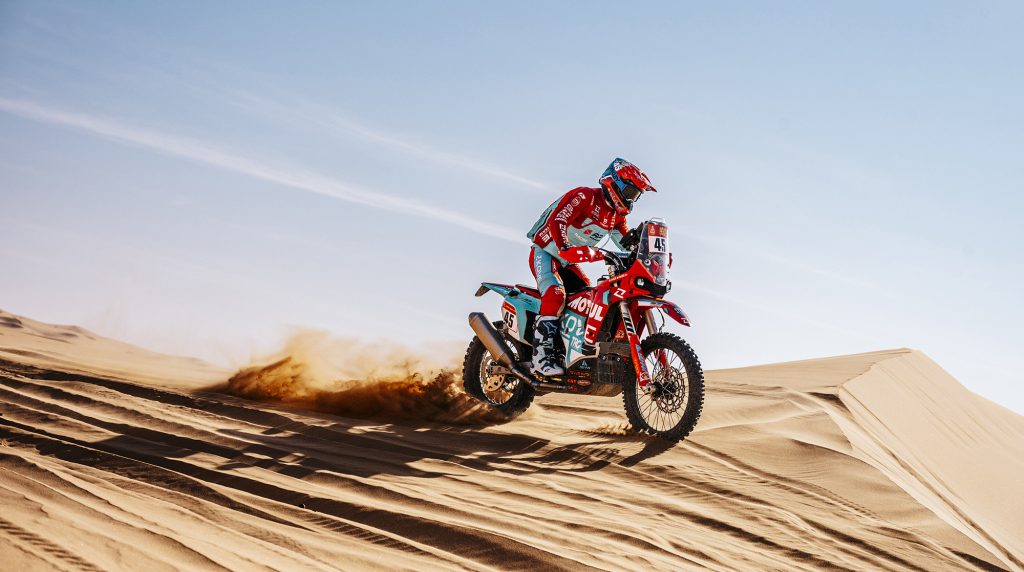
Rally motorcycles are designed to cope with uneven terrain. Longer suspension travel helps the wheels move over bumps and dips while maintaining contact with the ground, while adequate ground clearance reduces the risk of the chassis or other lower components striking obstacles.
These characteristics can be useful on gravel roads, rutted tracks, and rough access routes. They do not eliminate the need for careful line selection or appropriate speed, though. Suspension performance depends on the terrain, rider weight, setup, and riding technique.
Long-travel suspension also affects seat height and the way a motorcycle feels when stationary. Riders should therefore assess off-road capability alongside comfort and control, rather than treating greater suspension travel as an advantage in every situation.
Fuel Capacity for Longer Routes
Fuel range is a practical consideration in rally racing, where riders must complete long special stages while following designated refuelling procedures. For 2025 Dakar motorcycle competitors, teams typically target a minimum fuel autonomy of 250 km, plus an extra 10% safety buffer for variable off‑road consumption. Refuelling during special stages is only permitted at official marked zones, making tank capacity and fuel burn core parts of race prep.
For longer adventures, fuel capacity is most useful when considered together with navigation, luggage requirements, maintenance access, and the availability of fuel along the route.
Which Rally Motorcycle Features Matter in Real-World Riding?
A motorcycle designed for rally conditions may be used for several types of riding, but the benefits vary depending on where and how it is ridden.
On Paved Roads and Daily Routes
On paved roads, manageable weight, predictable handling, comfortable ergonomics, and smooth engine response can matter more than extreme off-road capability. A rally motorcycle may handle ordinary road journeys, but its tall seat, long-travel suspension, and off-road-oriented tires can require some adjustment for everyday traffic.
Frequent stops, narrow parking spaces, heavy congestion, and low-speed turns are worth considering before choosing a tall rally model as a daily commuter.
Riders should also check the specific motorcycle’s road-registration status, lighting and equipment requirements, and applicable emissions rules in their market. A model’s availability in one country does not automatically mean that every version can be registered for road use elsewhere.
On Gravel Roads and Moderate Off-Road Trails
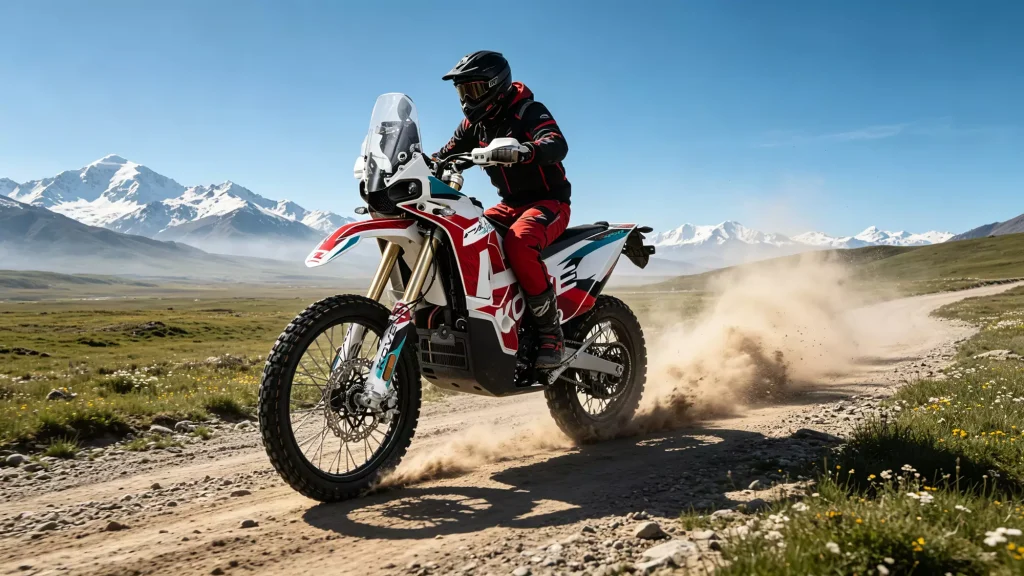
This is where rally-oriented design can offer more noticeable practical benefits. A suitable chassis, long-travel suspension, generous ground clearance, and off-road wheel configuration can help a rider deal with uneven surfaces that would be less comfortable on a road-focused motorcycle.
Nevertheless, capability depends on more than hardware. Tire selection, suspension setup, braking control, and rider experience all influence performance. Loose surfaces can reduce traction quickly, even on a purpose-built off-road machine.
Newer off-road riders should start with manageable routes and build skills progressively. A rally motorcycle can provide access to more varied terrain, but it does not replace training or sound judgment.
On Long-Distance Adventures
For long-distance riding, the best motorcycle is not necessarily the one with the most aggressive rally specifications. Riders also need to consider seat comfort, wind protection, luggage capacity, maintenance requirements, and how easily they can find parts or service support.
A rally motorcycle may suit riders whose routes combine paved connections with remote tracks. Someone planning mostly highway touring with a passenger and substantial luggage, however, may prefer an adventure motorcycle designed around those priorities.
The right choice depends on the balance between off-road riding and road-based travel—not simply the distance covered.
What Should You Consider Before Buying a Rally Motorcycle?
Rally-inspired design is only valuable when it matches the rider and the routes they actually use. Before choosing a model, consider these practical factors.
Rider Height, Experience, and Confidence
Seat height can affect confidence when stopping, turning, or maneuvering on uneven ground. The KOVE 450 RALLY RE’s listed seat heights of 910 mm and 960 mm are substantial, so riders should assess the exact configuration rather than relying on photographs.
If possible, sit on the motorcycle in riding boots and test how easily you can balance it, reach the controls, and move it at walking speed. Being able to place both feet flat on the ground is not a universal requirement, but the rider should feel in control during stops and low-speed maneuvers.
Experience matters as well. A tall, long-travel motorcycle may be rewarding for an experienced off-road rider but demanding for someone who is still developing basic balance and braking skills.
Road Legality and Local Support
Before purchasing, verify registration eligibility, emissions compliance, required road equipment, and any restrictions that apply to the specific version in your country.
Local dealer support is equally important. Ask about routine service requirements, replacement parts, warranty coverage, and the availability of technicians familiar with the model. These details are particularly relevant if you plan to ride far from major cities.
Maintenance, Tires, and Everyday Practicality
Riding conditions affect maintenance needs. Dust, mud, water crossings, and repeated impacts can place different demands on a motorcycle than ordinary paved-road use. Follow the manufacturer’s maintenance schedule and ask a dealer which inspection items require more frequent attention under severe off-road conditions.
Tires also influence how the bike behaves. More off-road-oriented tires may provide useful traction on loose terrain but can feel different on asphalt. Choose tires that suit your actual balance of road and trail riding, and confirm that the selected tires are appropriate for local requirements.
Finally, consider practical equipment such as luggage, protective accessories, and navigation solutions. These additions can improve a trip, but they may also add weight or affect handling.
How Does the KOVE 450 RALLY RE Translate Rally Design into Practical Use?
The KOVE 450 RALLY RE shows exactly how rally‑biased hardware works out for everyday adventure riding. Official data notes its 449cc liquid‑oil cooled single‑cylinder DOHC motor, 155 kg curb weight, 32‑litre fuel tank and adjustable front suspension. Multiple seat height and suspension variants are available.
The figures that follow come from KOVE’s CN4/E5+ official spec page for this model. Specifications and available trims differ by region, so confirm details with an authorised dealer before purchasing.
| Specification | Official listed figure |
| Engine | 449cc, single-cylinder, DOHC |
| Cooling | Water-cooled and oil-cooled |
| Maximum power | 38 kW at 9,500 rpm |
| Curb weight | 155 kg |
| Fuel tank capacity | 32 L |
| Seat height | 910 mm / 960 mm |
| Ground clearance | 255 mm / 295 mm |
| Front suspension | Fully adjustable, upside-down fork |
| Suspension travel | High configuration: 305 mm front / 300 mm rear; low configuration: 255 mm front / 270 mm rear |
| Front tire | 90/90-21 |
| Rear tire | 140/80-18 |
Source: KOVE official 450 RALLY RE CN4/E5+ model page. Confirm configuration labels and market-specific specifications with an authorized dealer before purchase.
Is the KOVE 450 RALLY RE the Right Choice for You?
The KOVE 450 RALLY RE is worth considering if your riding plans include gravel roads, challenging trails, and longer routes where fuel capacity and off-road-oriented design matter. Its listed 155 kg curb weight, 32-liter tank, and adjustable front suspension are relevant starting points for evaluating that use case.
It may be less suitable if your riding is almost entirely urban, if you regularly carry a passenger and substantial luggage, or if a tall seat would make routine stops uncomfortable. In those situations, a road-focused motorcycle or an adventure model with more touring-oriented ergonomics may be a better match.
The most useful approach is to start with your intended routes, then compare the motorcycle’s specifications, ergonomics, local road eligibility, and support network against those needs.