
Is a 450cc Motorcycle Enough for Long-Distance Adventure Riding?
SOURCE: KOVE
Every year, more riders ask the same question before booking their first big trip: can a 450cc motorcycle actually handle the miles? The short answer is yes — especially when the bike is purpose-built for distance, not just displacement. KOVE’s 450 Rally proves this point directly, pairing a genuine Dakar-bred chassis with a fuel system designed specifically to erase range anxiety. Following, we break down exactly what makes a rally-style 450cc bike capable of real long-distance adventure riding, and where riders need to plan ahead.
Why 450cc Is Becoming the Go-To Adventure Class
The 450cc class has been quietly becoming one of the most popular categories of the motorcycle industry. Many manufacturers have entered the space, from established brands to newer competitors, all striving to develop light, highway-capable bikes under a shared price ceiling. They are fully-sized with all the features and road-capable, while being affordable and accessible to more expensive adventure bikes. Market coverage indicates a clear shift in attitudes: customers are increasingly seeking out the performance that isn’t weighed down by the expense and intimidating factor of the liter-class bikes. The segment has gotten to the point that engine options are now ranging from single-cylinder bikes to V-twins, parallel twins and more capacities, ranging from budget-friendly 450cc bikes all the way to 1300cc top-of-the-line models. This isn’t a niche trend — it’s a full market correction toward practicality.
Range: The Feature That Actually Solves the “Is 450cc Enough” Question
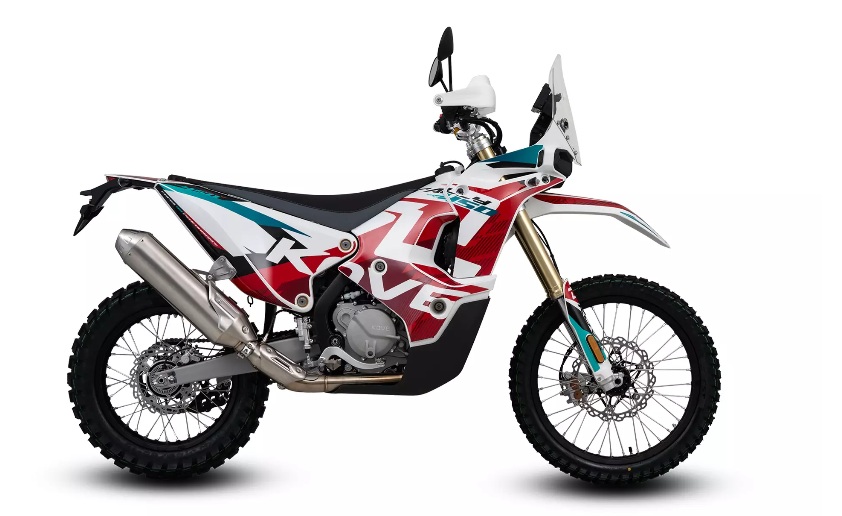
Fuel range is typically the main concern for smaller displacement adventure bikes, and that’s exactly where KOVE’s technology is distinct. This 450 Rally houses its 449cc DOHC single within the frame’s steel semi-perimeter that is constructed around three fuel tanks, two of them positioned along the frame’s backbone, and another one built in an underframe in the back. The three tanks hold around 32 liters (8.5 gallons) of fuel, which can support the estimated range of 300 miles (nearly 500+ km). The fuel capacity is designed to alleviate anxiety over range, which allows for more expansive, longer distances between stops that don’t require users to bring the heavy containers for jerry cans.
This range figure directly addresses the main concern long-distance riders feel about small-displacement machines that are running without water in remote areas, without the need for an auxiliary jerry-canister that many competitors with 450cc require on their longer legs.
Power and Chassis: Built for Sustained, Technical Distance
The engine is kind of water-cooled, oil-cooled, DOHC single-cylinder, with 449 cc displacement; it does about 51 hp (38 kW) and roughly 39 Nm of torque, through a six-speed arrangement. That’s then paired with an oil-bath multi-plate clutch as well, to operate pretty steadily. That output sits toward the upper end of the segment’s range — enough for sustained highway speeds and technical trail sections without the added weight and complexity of a twin-cylinder layout.
Suspension is where the rally pedigree really shows. Adjustable inverted front forks pair with an adjustable rear shock, with 305mm of front travel and 300mm at the rear on the High Seat configuration (270mm/255mm on the Low Seat setup). That’s long-travel, competition-grade hardware rather than a basic setup borrowed from a street bike — a meaningful difference for riders planning rough backcountry routes or unpaved connector roads between destinations.
Comfort: A Different Kind of Ergonomics
Unlike touring-focused 450cc ADV bikes, the 450 Rally doesn’t prioritize a low, accessible seat. Seat height depends on configuration, ranging from roughly 910mm on the low-seat setup to 960mm on the high-seat version — tall by ordinary road-bike standards, but standard for the long-travel rally category. Riders should treat this as part of the trade-off: taller suspension travel and technical capability come with a taller cockpit built around standing, rally-style riding rather than cruiser-style comfort.
On the plus side, KOVE addressed that accessibility gap straight on. There is a dedicated low-seat model which sort of sits about two inches lower than the high-seat version, so it ends up being way easier to touch down for shorter riders, or if you just really want that extra confidence when the terrain gets technical. This sort of flexibility is a real advantage, honestly; most rivals in this class don’t really give much of anything at all.
Where Riders Need to Plan Ahead
Honesty is a must in this case. A single-cylinder engine with 449cc capacity or a properly engineered one produces more noise over long highway stretches than a twin. People who are logging 300-mile days back-to-back are expected to handle fatigue accordingly. The tall seat height, while manageable with the low-seat option, still demands confidence at stops for shorter riders. And competition-oriented variants within KOVE’s Rally lineup are built and equipped specifically for closed-course events — riders should always confirm a given model’s road-legal status with their local dealer before planning a public-road trip, since specification and homologation can vary significantly between the standard road-going Rally and higher-spec race variants.
Getting the Most Out of a Rally-Style 450
A few adjustments help riders maximize what the platform already does well:
- Break longer days into manageable stages, leaning on the bike’s range advantage rather than pushing single marathon stintsst because recovery is easier, but because the bike doesn’t discourage the attempt in the first place.
- Choose the seat height that matches your inseam — the low-seat version trades some ground clearance for confidence at stops
- Plan fuel stops around the full 30+ liter range, not the smaller tanks typical of standard 450 adventure bikes
- Add a comfort seat pad for multi-day trips if stock cushioning falls short on long highway stretches
- Use the bike’s roadbook-style navigation mount (where equipped) to plan multi-day routes without relying on a phone mount
Who Should Choose a Rally-Bred 450cc Bike
This is an excellent option for riders looking for the true desert-touring capabilities that includes a longer fuel range as well as substantial suspension travel and tested rally engineering without having to buy larger, more expensive motorcycle. It is particularly suited to riders who are taller or planning routes that have significant areas that are not paved or have a lot of the distance and ground clearance are more important than a comfortable seat. People who value comfortable highway ergonomics over everything else, or require a comfortable and accommodating setup could still be better advised to use the street-oriented ADV bike.
A 450cc motorcycle can absolutely handle long-distance adventure riding — and KOVE’s Rally platform makes one of the strongest cases in the category, backed by genuine Dakar racing heritage rather than marketing claims alone. With a fuel system built specifically to eliminate range anxiety and suspension engineered for real off-road distance, the KOVE 450 Rally RE is worth serious consideration for riders ready to take their next adventure well beyond the pavement.