
How Fast Does a 250cc Motorcycle Go? Top Speed Guide
SOURCE: KOVE
How fast does a 250cc motorcycle go? Real speed moves though, and that comes down to model positioning, engine setup, transmission, weight, and aero. A sport 250 can get near 100 mph, while an off-road 250 often sits much lower. Displacement alone won’t tell you much.
How Fast Does a 250cc Motorcycle Go?
70–100 mph (113–161 km/h). That’s where most modern 250s sit. Top speed and daily cruising speed—not the same thing. A bike might hit 100 mph, but holding it there for a long stretch is a different job, which comes down to design goals—and so do engine power, transmission, body weight, and aero.
How Fast Are Different Types of 250cc Motorcycles?
| 250cc flavor | Where it tops out | What it’s built for |
| Sport | 90-105 mph (145-169 km/h) | Fast. Fairings earn their keep. |
| Naked | 85-100 mph (137-161 km/h) | Street bike. No fairing—you feel the wind. |
| Cruiser | 70-85 mph (113-137 km/h) | Relaxed. Torque down low, not up top. |
| Dual-Sport / Adventure | 75-90 mph (121-145 km/h) | Both. Pavement, then dirt. |
| Dirt Bike | 65-85 mph (105-137 km/h) | Off-road first. Light, quick, flickable. |
Sport Motorcycles: Around 90–105 mph
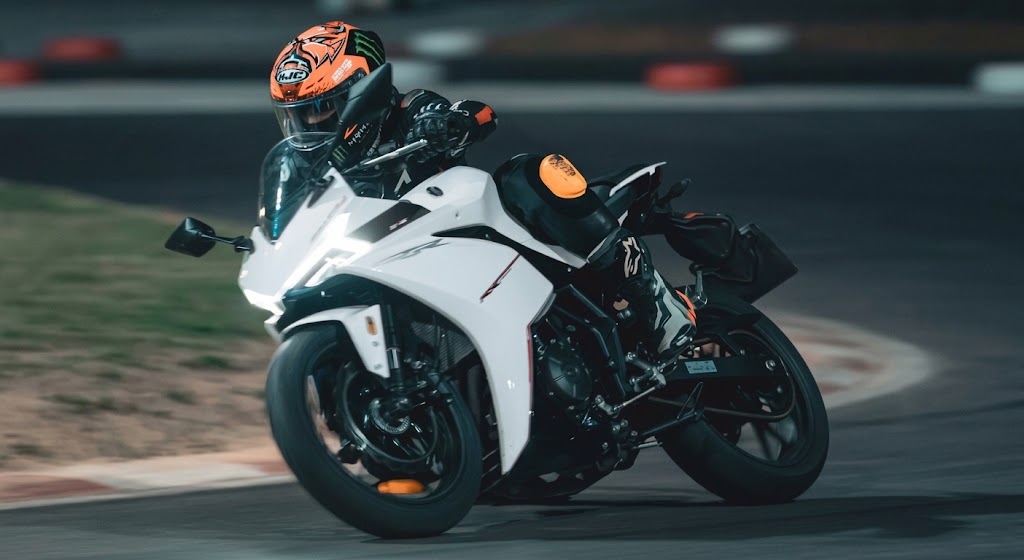
Sport 250s usually sit in the higher top speed group for this displacement. Common reference: 90-105 mph. Models like KOVE 250RR lean toward highway work. Fairings, high-revving engines, and road gearing all help up top, whereas no fairing means more wind on the body.
Naked Motorcycles: 85–100 mph (136–161 km/h)
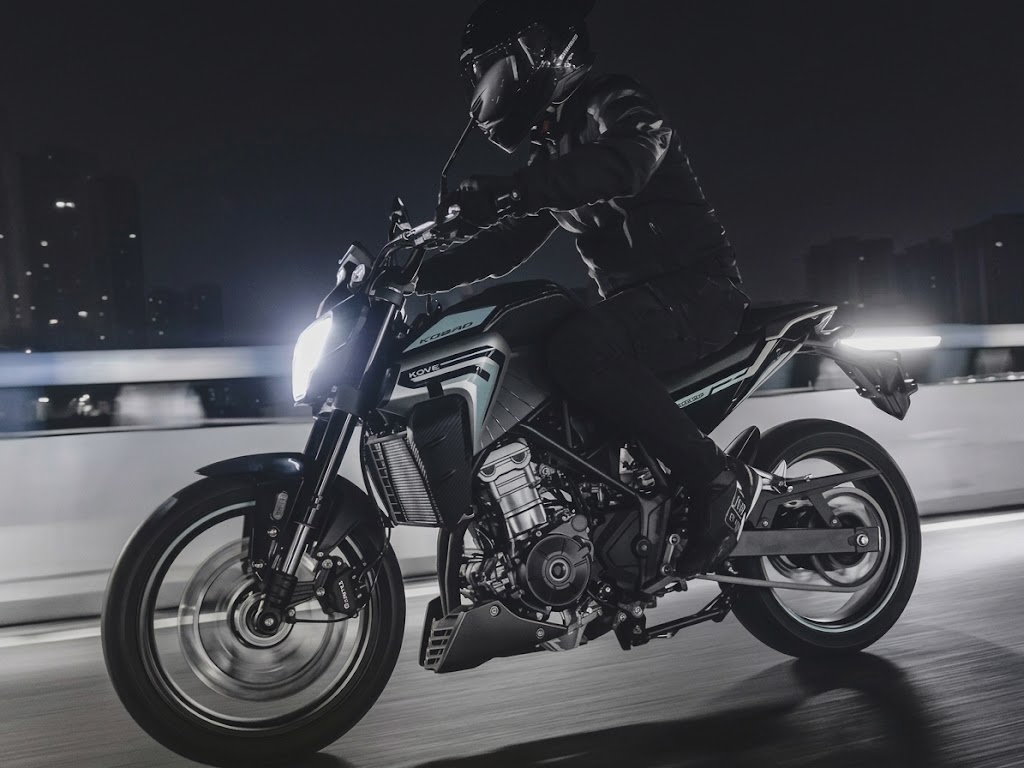
Naked 250s can hit 100 mph too. No fairing, though—more wind greets the rider at speed. KOVE 250R and the likes balance sport and road bike for regular use. But it’s not only about top speed.
Cruiser Motorcycles: 70–85 mph (112–137 km/h)
Cruiser 250s sit lower. 70–85 mph or so. The design leans toward comfortable posture, mid-to-low speed power, road feel—not maximum speed. Body position and aero can make wind resistance more obvious at high speed. Same 250cc displacement, yet a Cruiser still tops out below a Sport bike, which is normal given the different design goals.
Dual-Sport and Adventure Motorcycles: Around 75–90 mph
Dual-Sport and Adventure 250s often land around 75–90 mph. Specific models spread wide, though. Pavement and dirt both—so suspension travel, ground clearance, tires, and body structure all shape the build. Top speed isn’t the goal, and capability, stability, and getting through different surfaces matter just as much.
Dirt Bikes: Around 65–85 mph
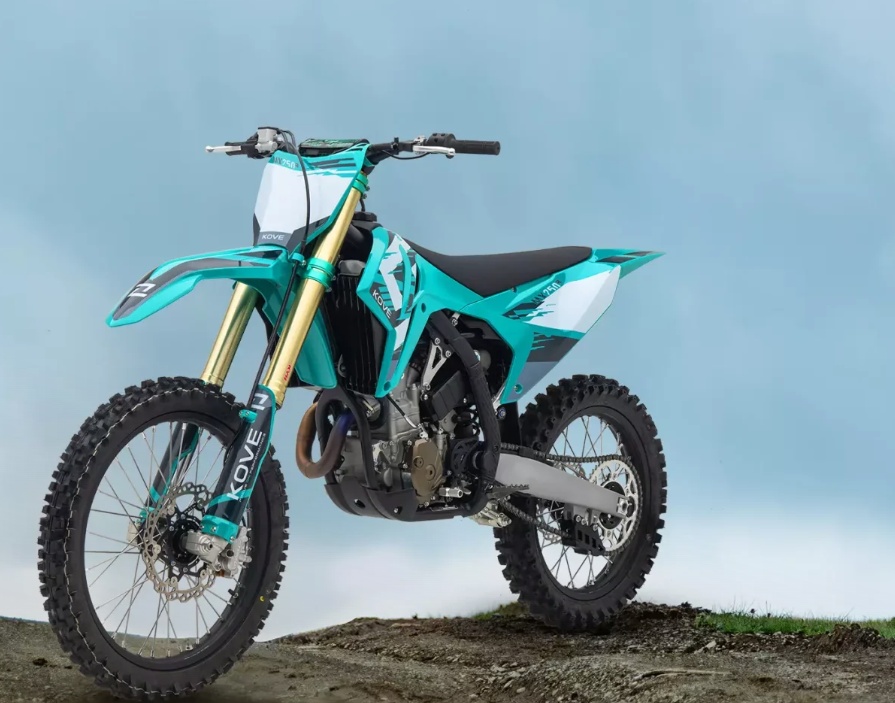
The top speed of 250cc Dirt Bikes can usually be referenced at 65–85 mph, but for off-road models, top speed is not the most important performance metric.
Off-road machines like the KOVE MX250 Cross R lean toward acceleration, traction, suspension travel, vehicle weight, and low-speed handling. Soft ground and rough terrain ask for that. Highway top speed comes last.
What Does 70, 80, 90, or 100 mph Feel Like on a 250cc Motorcycle?
Simply looking at top speed numbers cannot fully reflect the actual riding experience. For 250cc motorcycles, the engine load and speed margin at 70, 80, 90, and 100 mph are not the same.
Around 70 mph
70 mph (about 113 km/h) is typical highway range, yet engine speed there is all over the map across 250cc models. A Motorcyclist test compared the Honda CBR250R, Hyosung GT250R, and Kawasaki Ninja 250R. At 70 mph, they turned about 7,500 rpm, 7,000 rpm, and 9,000 rpm. Same displacement. Same road speed. Different engine speeds.
Around 80 mph
At 80 mph (about 129 km/h), the gaps grow. A Sport or Naked 250 near 100 mph still has margin, while a bike capped at 80–85 is already near its limit.
Around 90 mph
At 90 mph (about 145 km/h), engine power, transmission, and aero all get tested harder. Some Sport 250s still have room, while off-road, cruiser, and multi-purpose 250s are close to the edge.
Around 100 mph
100 mph (about 161 km/h) is already close to the top of the range for many modern 250cc bikes.
At this speed range, wind resistance, rider posture, vehicle weight, transmission system, and actual road and weather conditions all more noticeably affect the final speed.
Why Can Two 250cc Motorcycles Have Different Top Speeds?
250cc is only engine displacement; it cannot directly determine a motorcycle’s top speed.
What truly affects final speed is the entire power and vehicle system—engine power, Power-to-Weight Ratio, Gearing Ratios & Final Drive, aerodynamics, and the total weight of the rider and vehicle.
Engine Configuration
Engine configuration affects power output characteristics, but it cannot determine top speed alone. At the same or similar displacement, engine configuration can be one of the factors affecting a model’s performance.
Power-to-Weight Ratio
The power-to-weight ratio affects a motorcycle’s ability to convert engine power into actual acceleration performance.
When engine power is similar, a lighter motorcycle needs to move less mass, so acceleration performance may differ. However, power-to-weight ratio is not the only factor determining top speed, because air resistance and the transmission system at high speed are also very important.
Gearing Ratios & Final Drive
Gearing Ratios & Final Drive determine how engine speed is converted into wheel speed, so they affect both acceleration and top speed.
A transmission setup biased toward acceleration can let the motorcycle enter its effective power band faster, but it may limit high-speed performance; a setup biased toward highway use may allow the engine to maintain a more suitable operating state at higher vehicle speeds.
This is also why you cannot compare only the engine displacement or maximum power of two 250cc motorcycles; you also need to consider the complete transmission system.
Aerodynamics
At high speed, the effect of air resistance on top speed becomes more and more obvious.
Sport motorcycles with fairings can usually reduce wind resistance on the rider and body more effectively, while Naked or Off-Road models expose more body and rider area, so under the same power conditions, high-speed performance may differ.
Weight and Rider Position
Vehicle weight and rider posture also affect actual acceleration and high-speed performance.
Especially when approaching the vehicle’s performance limit, changes in rider posture, load, and frontal area may affect final speed. Therefore, the top speed published by the manufacturer and the speed measured in actual road conditions may not be exactly the same.
Top Speed vs. Comfortable Highway Cruising Speed
Top speed and comfortable cruising speed are two different concepts.
A 250cc motorcycle may be able to reach 80–100 mph, but that does not mean it is best suited for long-term operation close to its top speed. For many 250cc motorcycles, 60–75 mph (about 97–121 km/h) is a more suitable reference for actual highway cruising than near-top speed.
Different models may sit in different rpm ranges at a given speed—being able to reach a speed and being relaxed there are separate questions. For frequent highway use, look at Power-to-Weight Ratio, Gearing Ratios & Final Drive, wind resistance, riding posture, and engine speed at the target speed. Top speed alone is a weak guide.
What Should You Look for When Choosing a 250cc Motorcycle?
Speed matters in a 250cc purchase. Start with how you will ride it, not with displacement alone.
- City and daily roads: Focus more on vehicle weight, riding posture, and daily power output.
- Highway. Top speed is one piece. Power reserve, transmission system, cruising rpm, wind resistance—those shape the ride.
- Sport riding. Aerodynamics, engine configuration, high-rpm power—those get compared.
- Off-road riding. Suspension travel, ground clearance, vehicle weight, tires, low-speed handling. Often more important. Top speed. Less so.
Final Answer: How Fast Does a 250cc Motorcycle Go?
How fast does a 250cc motorcycle go? A safe general reference is 70–100 mph (113–161 km/h). Actual top speed follows model positioning and overall vehicle design. Sport and Naked models can get near 100 mph, while Cruiser, Dual-Sport, and Dirt Bike models usually sit lower because they balance different riding goals. 250cc is engine displacement. Not a fixed speed class. To judge a specific bike, look at engine configuration, Power-to-Weight Ratio, Gearing Ratios & Final Drive, aerodynamics, vehicle weight, and model usage.