
Are Adventure Motorcycles Good for Two-Up Riding? Tips for Long-Distance Touring
SOURCE: KOVE
One of the best ways to enjoy the open road is to take a long trip with a partner on the same bike. The scenery is wonderful when shared and you get double the stories when you come home. It also raises a reasonable question: is your bike up to it?
Adventure bikes are a favourite choice for two-up riding, but they don’t all deal with the extra weight and miles the same way. This guide covers carrying a passenger, things to check before you ride or buy, sharing the road and preparing for long-distance rides.
Can You Take a Passenger on an Adventure Motorcycle?
Many adventure bikes can take two riders, provided they have a proper passenger seat, footpegs and cargo space for the extra weight.
The catch is that “can” and “should” are not the same thing. Some rally-style or off-road focused models have a slim seat, a lighter rear subframe, or no proper passenger setup at all. Check the maximum load in your owner’s manual and look up local rules too. For example, Ontario’s official motorcycle guidebook states that the seat must be big enough for both people to sit without being cramped and the passenger must have his or her own footrests.

What to Look for in an Adventure Bike for Two
No matter how great the bike, if your passenger is uncomfortable after an hour the adventure is finished. You need enough suspension and the capacity to carry a load other than on the seat to keep the bike stable with a passenger and luggage on board. Here’s a quick checklist to help you compare models.
| Factor | What to Check | Why It Matters |
| Passenger seat | Seat width, padding and available space | Helps reduce discomfort on long rides |
| Rear suspension | Preload adjustment (if available) and support under load | Helps maintain stability with a passenger and luggage |
| Payload capacity | Maximum permitted combined load | Prevents exceeding the motorcycle’s limits |
| Passenger equipment | Footpegs, grab handles and wind protection | Improves comfort and confidence |
| Luggage setup | Available mounting points and storage options | Helps distribute luggage securely |
Tips for Riding an Adventure Motorcycle with a Passenger
Two-up riding requires a team effort, even with the correct bike. A few simple behaviors can make the difference between a relaxed day or a tense one.
Get Comfortable Before You Set Off
Do a few slow laps initially, in a parking lot. This takes the strain off and helps your passenger get a feel for the height and motion of the bike.
- Getting on: Sit on the motorcycle, steady it with both feet down and the brake applied, then signal your passenger to mount.
- Feet: Keep feet on the passenger footpegs while the motorcycle is moving. Follow the rider’s instructions when stopping, getting on and off, and stay clear of hot exhaust parts.
- Posture: Sit comfortable, close to the rider, grasping the waist or the grab handles.
- Gear: Your passenger should wear a sturdy helmet and the same protective gear as you.
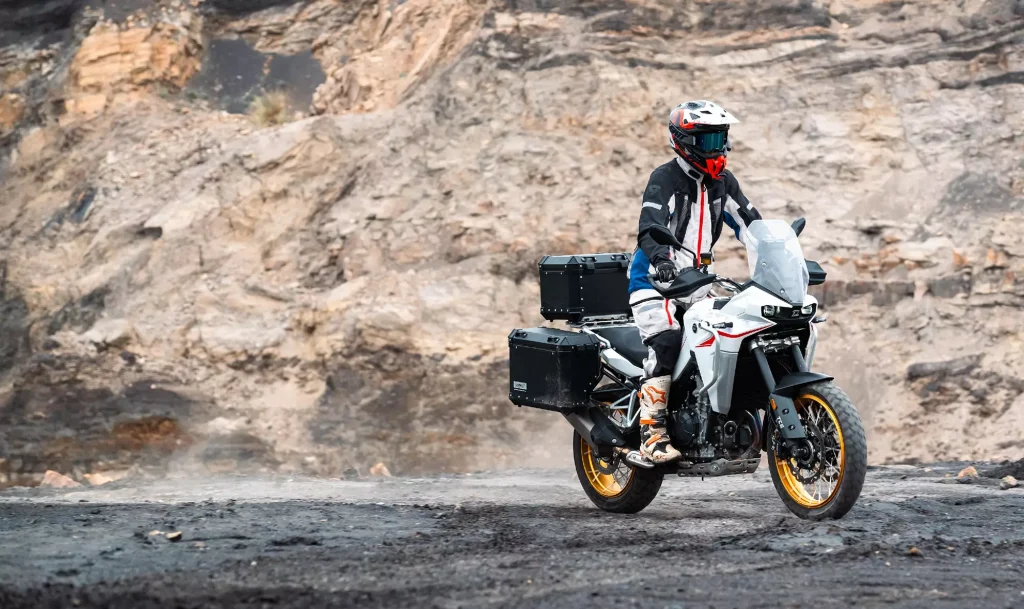
Stay in Sync on the Road
The more weight on board, the slower the bike responds, so you’ll need more room to slow down and more patience in corners.
- Communication: Communication can be achieved through simple gestures like a pat on the shoulder or a helmet intercom.
- Smooth inputs: Ease back on the gas, brake earlier and turn gently.
- Lean together: The passenger should move naturally with the bike through turns and not make sudden movements or lean in the other direction.
Getting Your Bike Ready for a Long Ride with a Passenger
If you are going on a long ride plan beforehand. First, weigh the two riders and all their gear and see how that compares to the load limit of your motorcycle. Adjust the tire pressure for the expected load as specified in the owner’s manual and set the suspension preload accordingly.
A passenger and luggage affect the weight distribution and control of the bike, especially if heavier things are mounted high or toward the back. It’s also wise to plan shorter days than you would ride solo.
| Before the Trip | What to Do |
| Test ride | Take a short ride together before committing to a full-day trip |
| Suspension and tires | Check settings, tire condition and pressure for the expected load |
| Luggage | Pack bags securely and store heavier goods low and balanced |
| Route planning | Allow for regular breaks, fuel stops and reasonable daily lengths |
| Final inspection | Brakes, lights, chain condition, luggage security |
Is a Touring ADV a Better Choice for Two-Up Riding?
Generally yes. A touring-oriented ADV is built for comfort, stability and luggage-carrying, with a bigger seat, bigger windscreen and suspension to suit the extra weight. A rally bike is built for speed and rugged terrain, therefore the seat is frequently narrower and the setup harder. It’s a great machine, just not the most natural fit for a passenger.
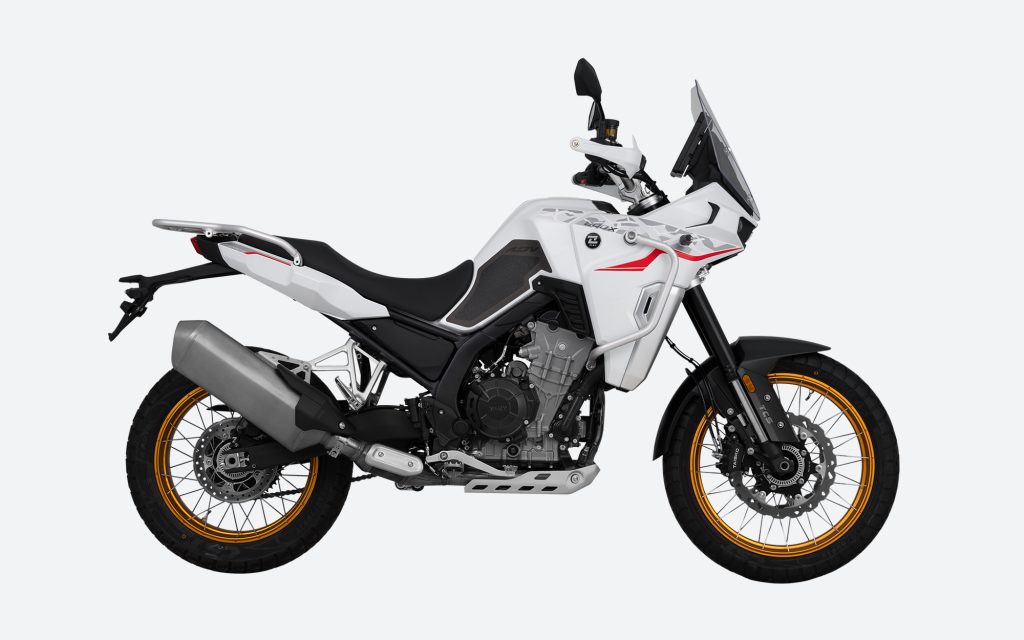
The KOVE 800X Touring is a good example of the touring approach. According to KOVE’s model page, it offers:
- Engine: a 799 cc parallel twin producing 69.5 kW and 79 N·m, for steady power with luggage on board.
- Comfort: a touring-focused seat design, cruise control, heated seat and grips as standard.
- Suspension: KYB preload-adjustable units at both ends, which help when you add weight.
- Fuel and weight: 22 L tank, 215 kg curb weight with three cases.
When purchasing a motorcycle for two-up touring it is necessary to verify the owner’s manual for the permissible maximum load and ensure it can carry both riders, their riding gear and luggage. Specifications and equipment may also vary by market. Check the passenger seat, payload rating and accessories of the specific model sold in your region.
Making Long Rides Better for Both Rider and Passenger
A good two-up trip depends on three things: a bike that suits both riders, proper preparation and smooth riding.
Whichever bike you choose, test it with your passenger and full luggage before committing. If you’re planning your next trip, have a look at the KOVE 800X Touring or contact a local KOVE dealer to see how it fits you and your passenger.